
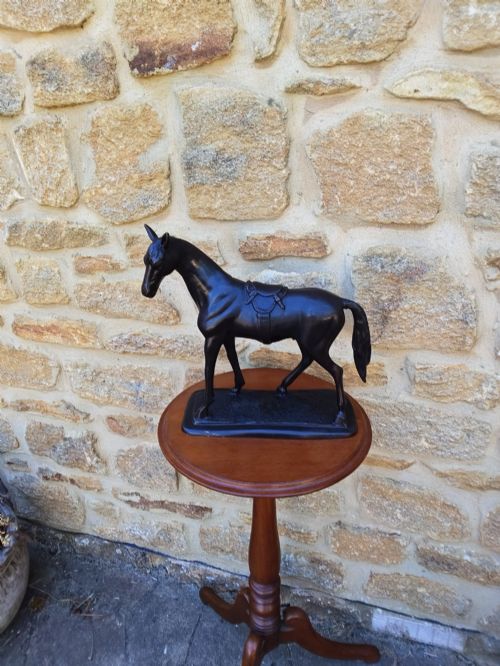
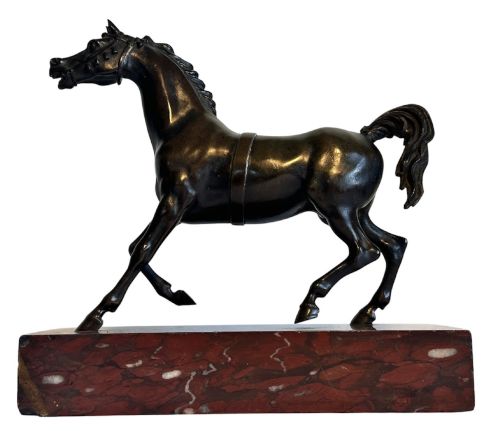
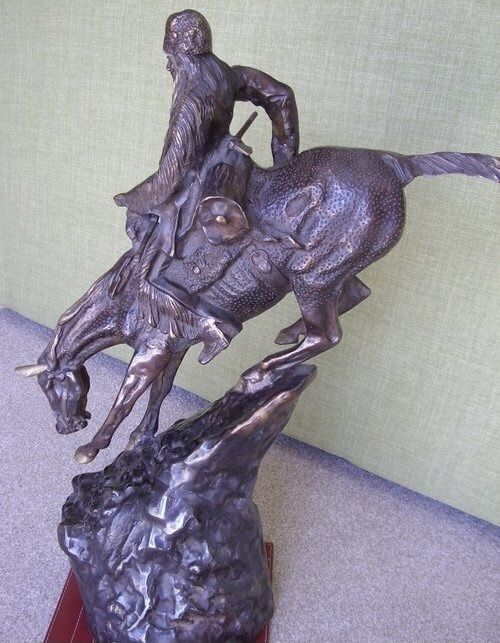
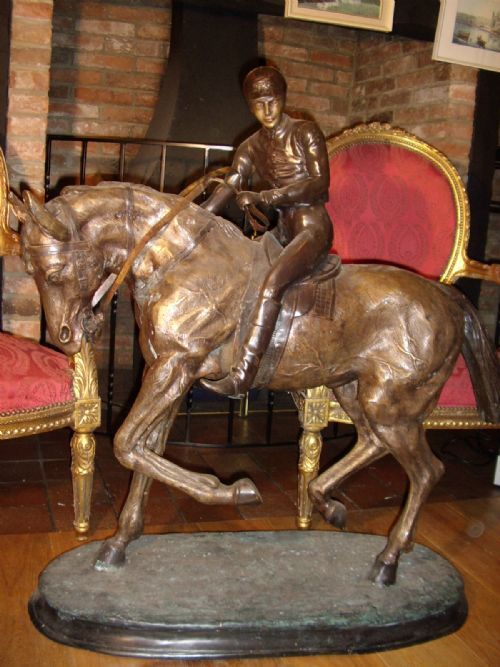
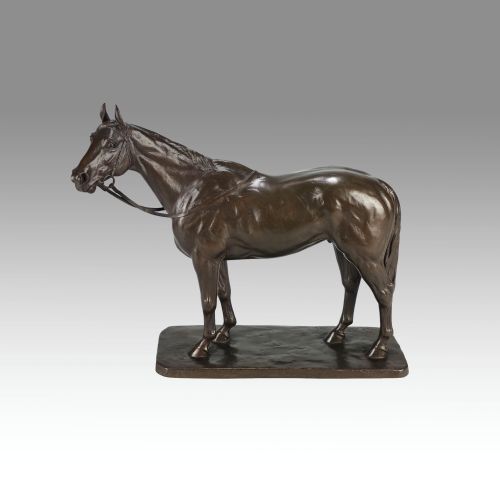
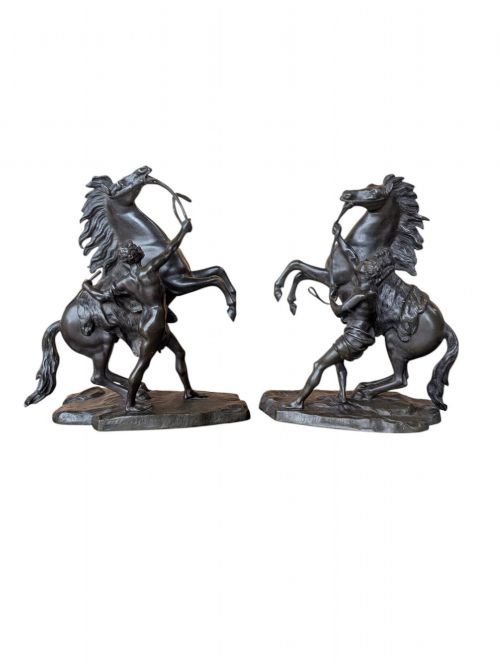
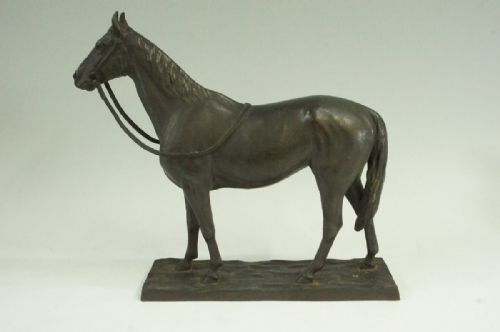
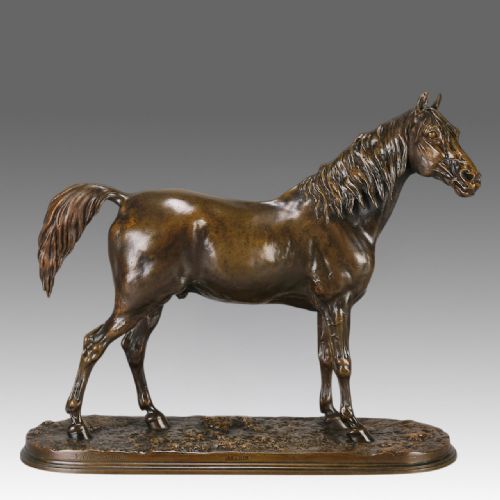
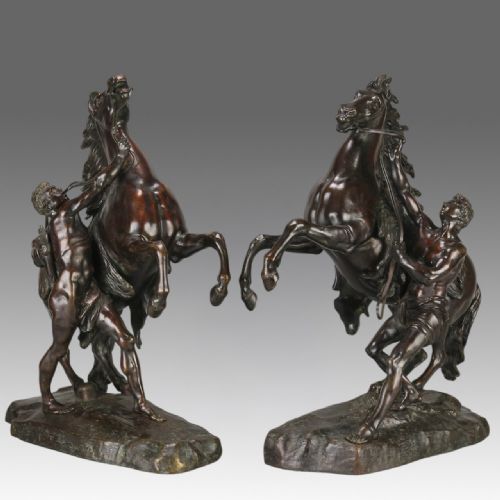
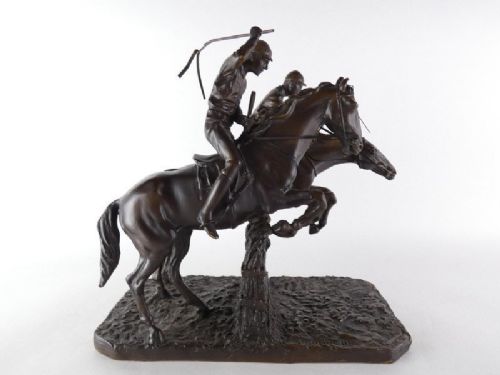


Bronze Equestrian Statue
A bronze equestrian statue captures horse and rider with enduring weight, offering a powerful sculptural presence for any collector.
What a bronze equestrian statue is
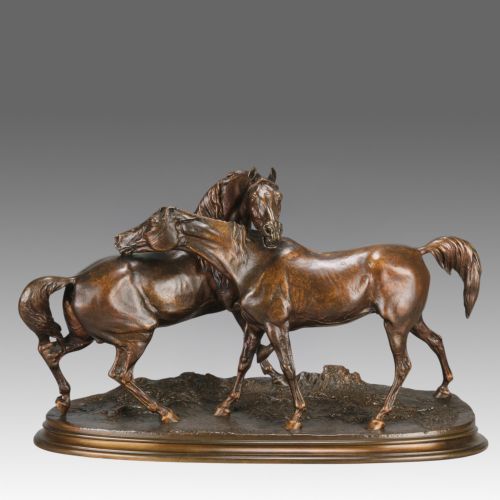
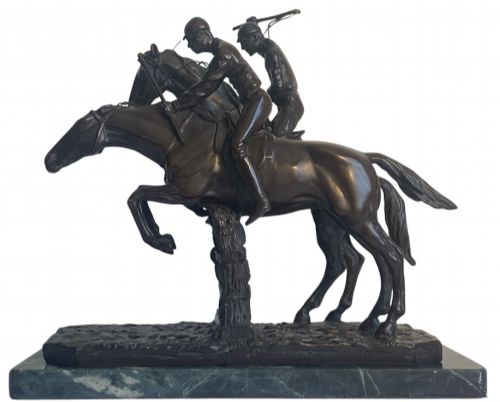
A bronze equestrian statue represents mounted figures, depicting historical leaders, hunting groups, and bucking horses across various periods including the nineteenth century and the Edwardian era. These sculptures often draw upon earlier models by celebrated artists, bringing classical and romantic subjects into domestic and formal interiors.
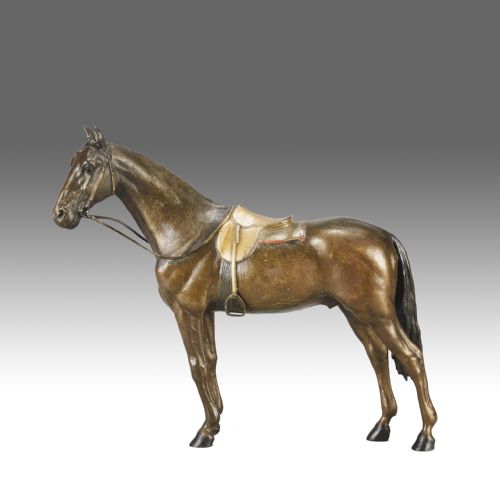
The most common examples on this page follow French Animalier traditions, Western American themes, and Viennese cold-painted techniques. They range from small tabletop figures to substantial sculptural groups mounted on stone plinths.
Makers and foundries span English, Austrian, French, and Russian workshops, reflecting diverse regional approaches to casting and patination. Collectors encounter subjects as varied as Napoleon Bonaparte, classical condottieri, and wild western riders.
How they were made
These pieces are cast in bronze using traditional methods, often utilising marble for bases or plinths to provide stability and visual contrast. Certain works receive cold-painted finishes to add colour and detail to the metal surface.
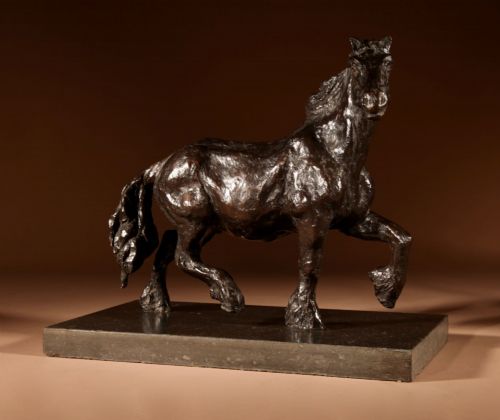
Patination techniques create varied dark, brown, or patinated surfaces that highlight the musculature of the horse and the posture of the rider. Foundries such as Cox and Sons employed skilled metalworkers to finish each cast by hand.
Retail Price Guide 2026
Typical UK retail prices for bronze equestrian statue, calculated from the Sellingantiques database of over a million retail prices indexed since 2003. This retail price guide relies exclusively on Sellingantiques data; no external sources or auction records are used, so the figures do not describe the wider market.
Listings feature works spanning the nineteenth century, the Edwardian period, and the early twentieth century up to nineteen twenty, utilising bronze, marble, and paint.
What varies in quality
Quality depends upon the fidelity of the casting and the crispness of the chisel work applied after the metal leaves the mould. Superior examples retain fine details in the harness, costume, and facial expressions without obscuring the texture under heavy finish.
The integration between the bronze figure and its marble base also marks the distinction between standard production and works of higher artistic ambition. Strong composition in dynamic subjects like hurdling horses or bucking riders demonstrates the sculptor's mastery.
Franz Bergman·Isidore Jules Bonheur·John Willis Good·Nikolai Lieberich
The Bronze Equestrian Statue Glossary
- Animalier
- A nineteenth-century artistic movement focused on the realistic depiction of animals, particularly horses and hounds. Sculptors in this tradition studied anatomy closely.
- Cold-painted
- A method where enamel or oil paint is applied to a cold bronze object rather than fired in a kiln. This technique is especially characteristic of Austrian workshops.
- Patination
- The chemical treatment or natural ageing process that colours the surface of bronze. A deliberate patina enhances depth and tonal variation.
- Marly Horses
- A famous pair of monumental marble sculptures depicting unruly horses restrained by grooms. Copies in bronze are popular decorative subjects.
- Plinth
- The solid base upon which a statue stands. In these pieces, marble is frequently utilised for this purpose.
Frequently Asked Questions
What are these sculptures made from?
These pieces are cast primarily in bronze, frequently incorporating marble for the bases or plinths. Some examples also feature cold-painted polychrome decoration on the metal surface.
The combination of heavy bronze and stone gives each sculpture considerable weight and a durable finish suitable for long-term display.
Who created these bronze equestrian figures?
The works originate from various European and American traditions, including French Animalier sculptors, Austrian foundries, and Russian artists. Many pieces are later casts produced after models by prominent nineteenth-century sculptors.
Foundries such as Cox and Sons also produced specialised hunting groups and historical subjects during the Victorian period.
How do I display them at home?
Because of their substantial weight and detailed casting, these statues sit best on sturdy wooden surfaces, desks, or dedicated pedestals. They require stable placement away from damp environments to protect the metal patina and marble bases.
Positioning them where directional light can catch the surface highlights the musculature of the horses and the fine details of the riders.
How can I tell different periods apart?
Periods are identified through stylistic cues, casting techniques, and specific signatures or foundry marks on the base. Nineteenth-century and Edwardian pieces often display distinct patination styles and mounting methods compared to later twentieth-century productions.
Subject matter also provides a guide, as Western American themes and cold-painted Viennese works gained particular prominence around nineteen hundred.