




French Bronze Equestrian Sculpture
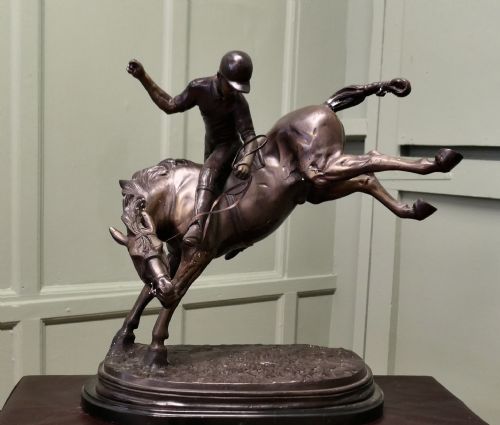
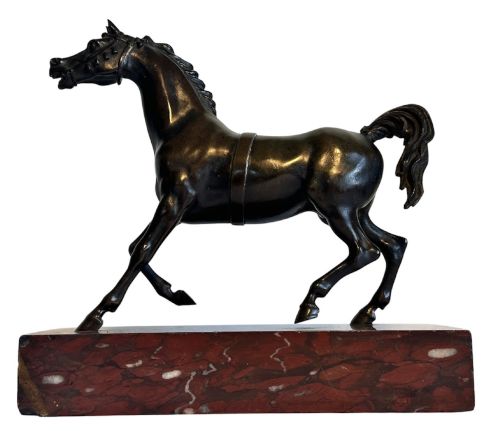
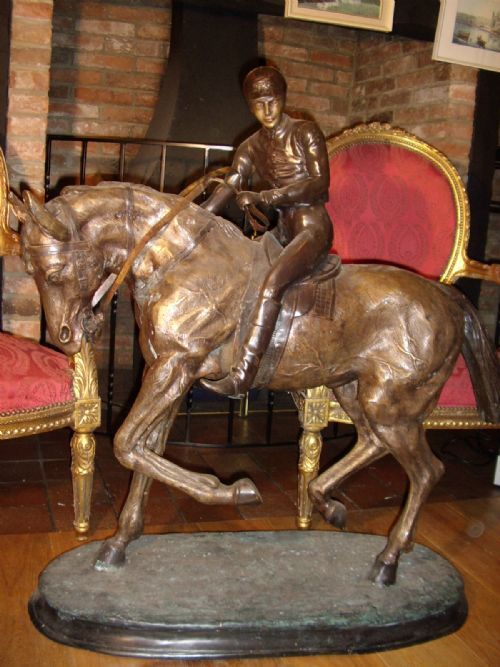
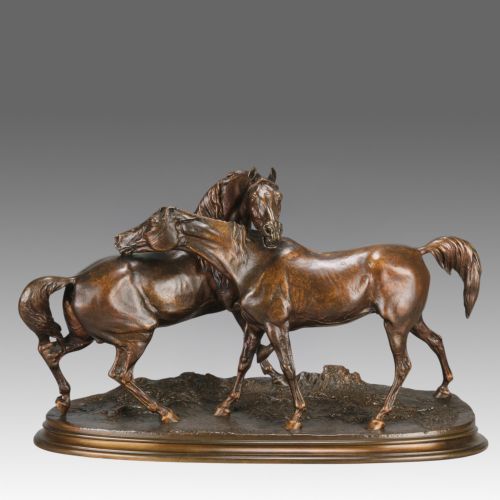
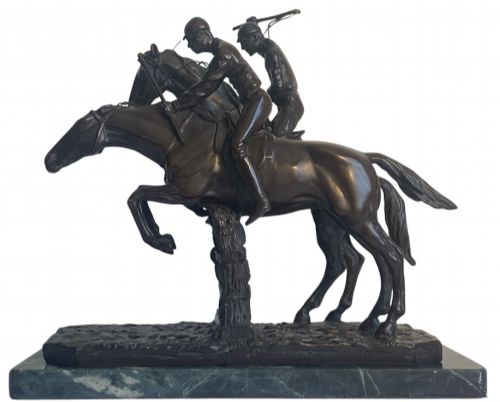
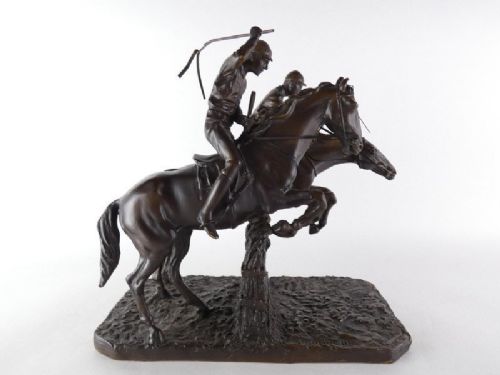
These pieces of french bronze equestrian sculpture capture horse and rider with muscular tension and foundry weight, bringing animalier realism to any mantel or desk.
French Bronze Equestrian Sculpture
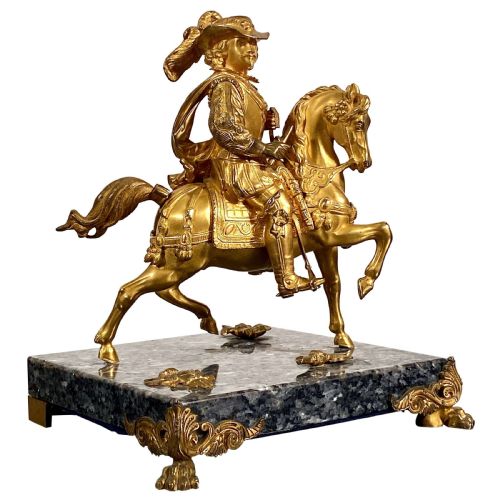
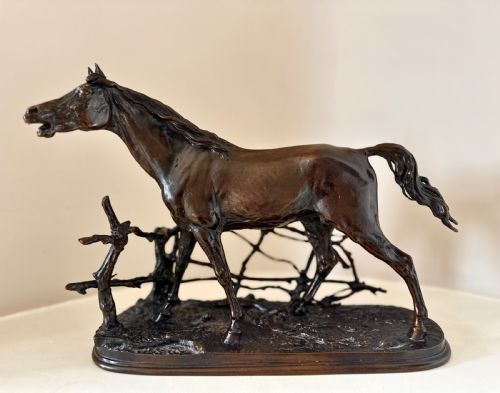
A french bronze equestrian sculpture depicts horses, riders, and historical figures in metal, originating primarily from the nineteenth century alongside later twentieth-century iterations. The works on this page span the French Animalier school, French Empire, and French Neoclassical styles, capturing subjects from racing and steeplechase to military leaders on horseback.
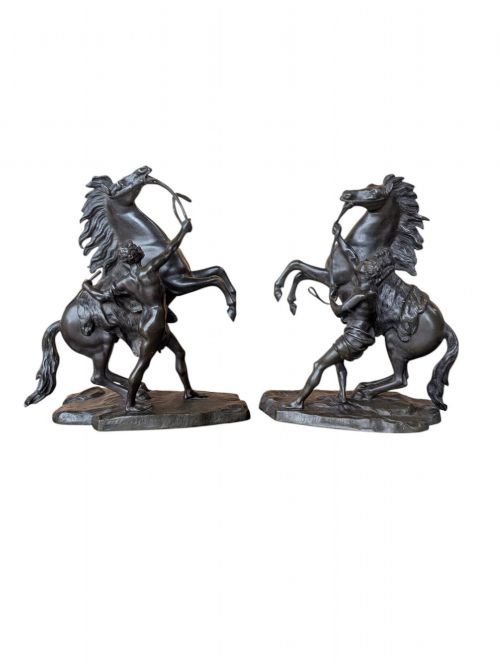
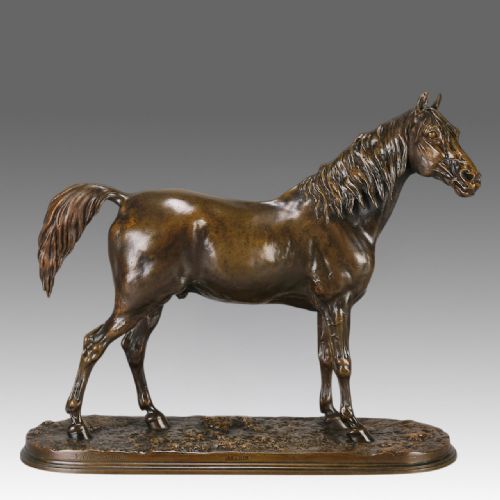
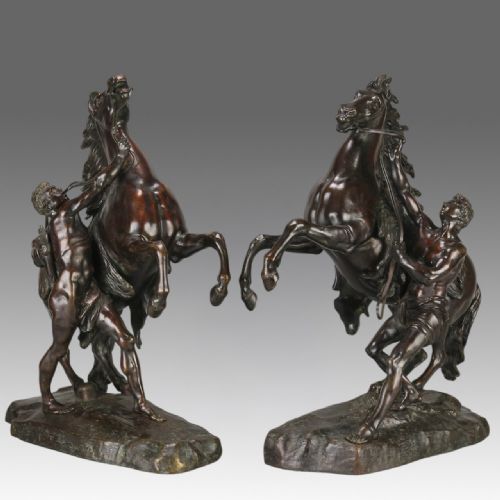
Buyers encounter subjects such as the Marly horses after Coustou, Arab stallions, polo players, and huntsmen mounted on bronze. Many sit upon heavy bases made from marble, green marble, or slate, anchoring the metal figures securely.
The assortment includes mantel clocks featuring gilt bronze and ormolu, alongside standalone sculptures and figurines. Signatures and attributions frequently link these works to prominent nineteenth-century animalier sculptors.
What varies in quality
The depth and nuance of the patina differentiate individual works, with skilled chemical treatments creating subtle tonal variations across the bronze. Surface finishing on associated marble or slate bases, including secure mounting and clean edges, further separates standard foundry output from superior artistic productions.
The listings span the nineteenth and twentieth centuries, incorporating materials such as bronze, gilt bronze, marble, green marble, and slate.
Pierre Jules Mene·Jules Bonheur·Isidore Jules Bonheur·Alfred Dubucand·Charles Crozatier·Pierre Lenordez·Xavier Raphanel·Paul Joseph Gayrard
The French Bronze Equestrian Sculpture Glossary
- Animalier
- A nineteenth-century artistic movement focused on the realistic depiction of animals, particularly horses, lions, and dogs. Sculptors in this tradition studied living subjects closely to render natural movement and anatomy.
- Patinated bronze
- A metal sculpture treated with chemical solutions to produce a specific surface colour, most commonly rich brown, black, or green. This layer protects the underlying alloy and defines the visual tone.
- Ormolu
- A method of applying finely ground high-carat gold to a bronze object using a mercury amalgamation process. This technique creates a bright, durable golden finish frequently seen on decorative mounts and clock cases.
- Marly horses
- Iconic monumental sculptures depicting rearing horses restrained by grooms, originally carved by Guillaume Coustou for the Château de Marly. Miniature and full-size bronze iterations became popular decorative subjects.
- Foundry mark
- A stamp, signature, or symbol cast into or punched onto the metal by the workshop that poured the bronze. These marks help identify the producing establishment and the period of manufacture.
French Bronze Equestrian Sculpture: Frequently Asked Questions
What is an animalier sculpture?
An animalier sculpture depicts animals in realistic poses, capturing anatomical accuracy and natural movement. This genre gained immense popularity in nineteenth-century France through the work of specialised bronze founders.
Artists observed horses, hounds, and wild animals in motion to translate their energy into solid metal. These pieces range from small desk ornaments to substantial group sculptures set on stone plinths.
How do I care for bronze?
Bronze requires minimal maintenance, needing only an occasional dusting with a soft, dry cloth. Avoid using liquid cleaners, polishes, or abrasive cloths that can strip the chemical patina.
Keeping the sculpture away from direct sunlight and excessive humidity protects both the metal surface and the underlying marble or slate base.
Are these sculptures solid bronze?
Most nineteenth-century sculptures of this scale are hollow-cast rather than solid metal, which reduces weight while maintaining structural integrity. Founders poured molten bronze into moulds to create an even metal wall of consistent thickness.
Heavier elements often come from the dense marble or green marble bases that anchor the lighter metal figures.
What are Marly horses?
Marly horses represent two famous monumental marble sculptures created by Guillaume Coustou for the royal residence at Marly. They depict rearing horses held in check by straining grooms.
Nineteenth-century foundries frequently produced reduced-scale bronze copies of these iconic groups for domestic display on mantelpieces and side tables.