




Classical Bronze Horse Sculpture
These classical bronze horse sculpture pieces capture equine form with spirited weight, offering a tangible link to Grand Tour travels and academic study.
Classical Bronze Horse Sculpture
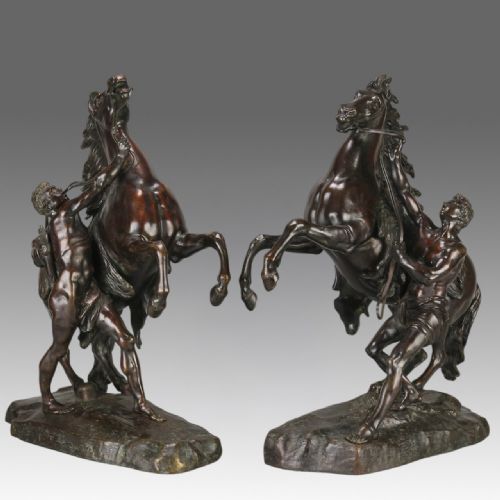
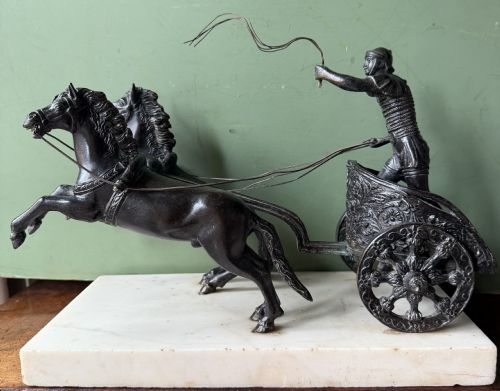
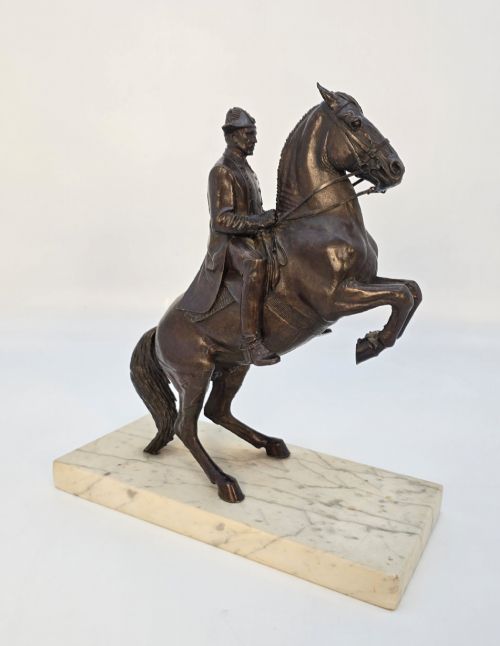
When you search for a classical bronze horse sculpture, you encounter depictions of horses and riders drawn from French Neoclassical, Academic Realism, and Grand Tour traditions. These works range from figures after Coustou and Verrocchio to souvenir studies of charioteers and Spanish Riding School scenes.
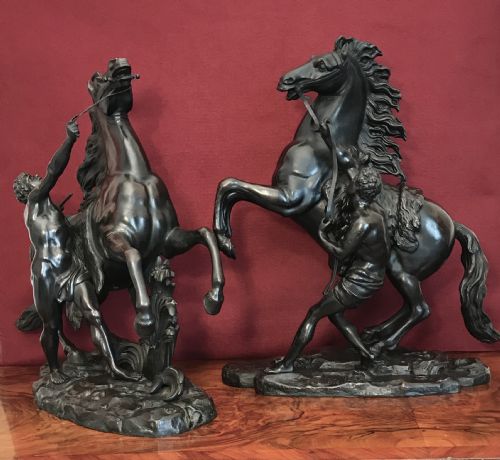
The most common examples on this page are reductions of famous monumental works, notably the Marly Horses and the Colleoni monument. These bronzes frequently sit upon marble or wood plinth bases, presenting subjects scaled for nineteenth-century interiors.
Beyond complete equine figures, the selections encompass sculptural fragments and equestrian pairs. The materials span solid bronze to patinated and gilded variants, reflecting diverse European foundry outputs.
How they were made
Foundries utilised the lost-wax casting method or sand-casting techniques to capture musculature and harness detail in bronze. Metal alloys were finished with patination, gilding, or bronzed metal coatings to achieve varied surface textures.
Many works incorporate distinct mounting materials, attaching bronze figures securely to white marble plinths or wooden bases. This construction provided stability and elevation for cabinet and desk display.
The listings feature works spanning the nineteenth and twentieth centuries, utilising materials such as patinated bronze, marble, and spelter.
What varies in quality
The finesse of the chasing work after casting determines the crispness of muscle definition, mane texture, and facial expression. Superior examples preserve the anatomical precision intended by the original sculptor.
The depth and richness of the bronze patina contribute significantly to the visual weight and character of the piece. Base materials, such as solid marble plinths, also indicate the care taken in final presentation.
Charles Crozatier·Coustou·Verrocchio
The Classical Bronze Horse Sculpture Glossary
- Grand Tour
- A traditional trip through Europe undertaken by upper-class young men in the eighteenth and nineteenth centuries. Souvenirs collected on these journeys included small bronzes after famous antiquities.
- Marly Horses
- Large marble sculptural groups commissioned for Louis XIV, depicting spirited horses restrained by grooms. Reduced bronze versions became popular decorative subjects in the nineteenth century.
- Patinated bronze
- Metal treated with chemical solutions to produce a specific surface colour or aged finish. This process protects the bronze while enhancing sculptural depth.
- Plinth base
- A solid block of marble or wood supporting the sculpture. It provides a stable foundation and visually frames the bronze figure.
- Spelter
- A zinc-based alloy used as a less expensive alternative to bronze. It was often given a bronzed finish to imitate solid metal sculpture.
Classical Bronze Horse Sculpture: Frequently Asked Questions
What are Grand Tour bronzes?
Grand Tour bronzes are small-scale souvenir sculptures acquired by travellers visiting cultural sites in Italy and France during the nineteenth century. They replicated famous monuments and classical sculptures for home display.
These pieces brought classical antiquity and Renaissance art into domestic interiors, serving as tangible memories of European travel and education.
How do I identify a Marly Horse?
Marly Horses depict a rearing horse held in check by an athletic groom, mirroring the monumental public groups created for French royalty. They are recognised by the dynamic tension between man and beast.
Most surviving examples date from the Victorian period onwards, cast as decorative pairs or single figures following the well-known models.
What is the difference between bronze and spelter?
Bronze is a durable alloy of copper and tin that takes fine detail and deep patination. Spelter is a softer zinc alloy utilised as an economical substitute.
Spelter figures are lighter than bronze and often display a surface finish designed to simulate genuine patinated metal.
How should I display these sculptures?
These sculptures suit placement on desks, sideboards, or dedicated display tables where their patination and form remain visible. Many feature integrated marble or wooden plinths designed for stable placement.
Keep them away from direct heat sources and clean them gently with a dry, soft cloth to preserve the surface finish.