
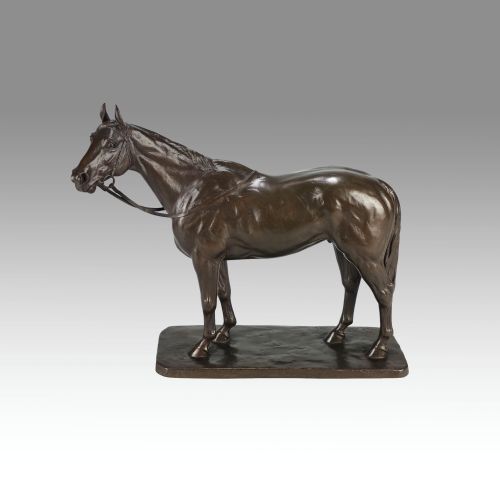
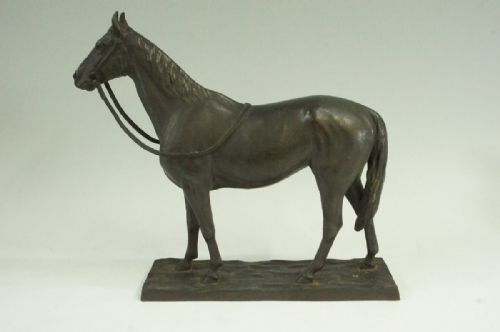


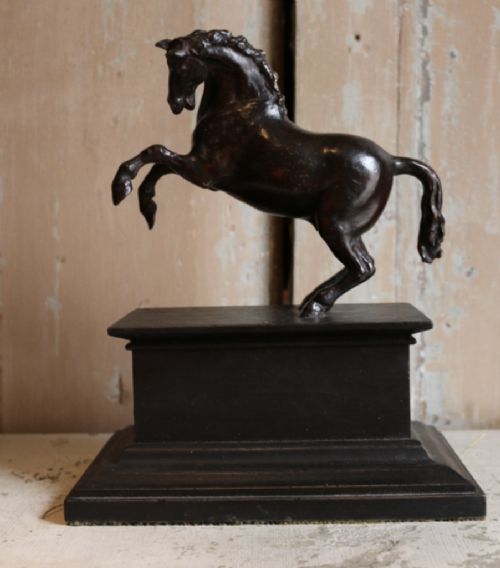


Patinated Bronze Horse Figure
A patinated bronze horse figure brings muscular equine form and rich surface tone into a room, capturing movement and power.
Patinated Bronze Horse Figure
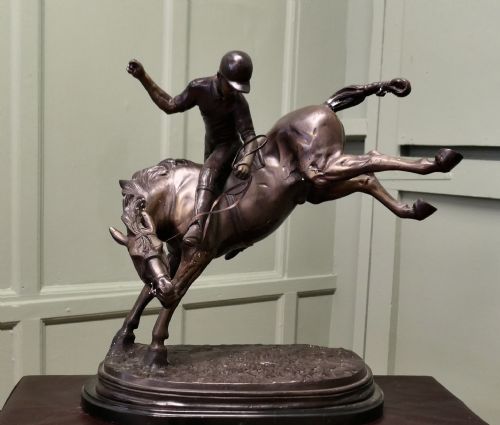
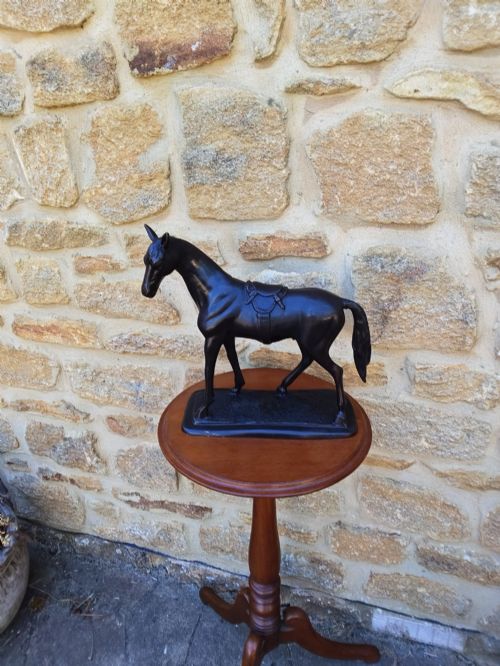
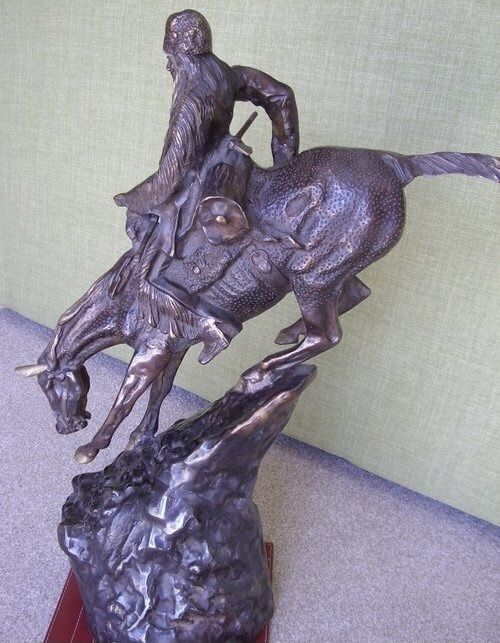
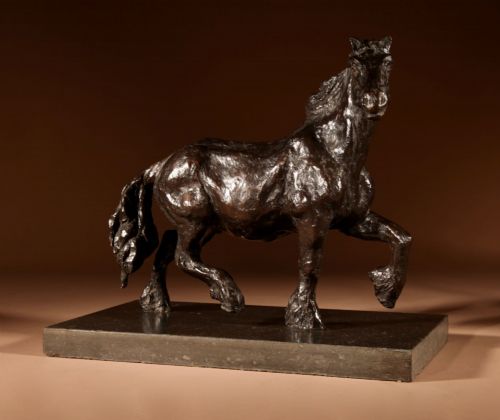
A patinated bronze horse figure represents the equine form cast in metal and treated to produce a darkened, weathered, or polished surface colour. When you search for a patinated bronze horse figure, you encounter depictions of draft animals, polo ponies, rearing stallions, and equestrian riders spanning multiple centuries.
The pieces on this page originate from diverse cultural traditions and periods, including French Animalier works, Victorian interpretations of the Marly horses, and Japanese Meiji or Taisho period castings. You are most likely to meet sculptures mounted on marble or stone bases, ranging from cabinet-sized table pieces to large dramatic statues.
How they were made
Foundries produced these sculptures primarily through the lost-wax method or sand casting, pouring molten bronze into moulds to capture fine muscular detail and equipment like bridles or saddles. Artisans then applied chemical treatments, acids, and heat to the bare metal to achieve the characteristic patinated surface, ranging from deep brown to dark green.
Many works incorporate integrated or separate heavy plinths, mounting the bronze directly onto marble, green marble, stone, or wood bases to provide stability and visual contrast.
Materials paired with the bronzes across these listings include marble, green marble, stone, and wood.
What varies in quality
The depth and nuance of the patination also separate standard castings from finer examples, as skilled patination creates subtle tonal variations across the horse's flanks and musculature rather than a flat, uniform coat of dark paint or lacquer.
Frederic Remington·Renee Sintenis·Kunio Itô·Charles Crozatier·Pierre Lenordez·Verrocchio·Sakai Kōzan·Pierre Jules·P J Mene·Coustou
The Patinated Bronze Horse Figure Glossary
- Patinated bronze
- Bronze metal treated with chemical solutions to alter the surface colour and create a stable oxidised layer. This process protects the metal while enhancing visual depth.
- Animalier
- A nineteenth-century artistic movement dedicated to the realistic representation of animals. Sculptors in this tradition focused closely on animal anatomy and movement.
- Lost-wax casting
- A traditional manufacturing method where a model is encased in wax, melted out, and replaced with molten metal. This technique allows for intricate, undercut details in sculpture.
- Marly horses
- Iconic monumental marble sculptures of rearing horses restrained by grooms, originally created by Guillaume Coustou for the Château de Marly. Miniature and full-sized bronze copies became popular decorative items in the nineteenth century.
- Grand Tour
- A traditional trip through Europe undertaken by upper-class scholars and collectors to acquire art and antiquities. Bronzes purchased on these journeys often replicate famous classical or Renaissance monuments.
Patinated Bronze Horse Figure: Frequently Asked Questions
What is an Animalier sculpture?
An Animalier sculpture focuses primarily on realistic depictions of animals in naturalistic or dynamic poses. This genre gained immense popularity in nineteenth-century Europe, particularly in France.
Artists studied live animals closely in menageries to capture accurate musculature, tension, and movement in bronze.
Why are some horses mounted on marble?
Marble and stone bases provided both physical stability for heavy metal castings and an aesthetic frame that elevated the artwork. Heavier bases prevented top-heavy rearing figures from tipping over.
Different coloured stones, such as green marble, were often selected to complement the dark tones of the patinated bronze.
How can I tell an older cast from a later copy?
Examine the underside of the sculpture and the mounting points for signs of age, such as patination inside core holes or older screw types. Finer castings preserve sharp details in the hair, tack, and muscles that tend to soften in subsequent generations of moulds.
Signatures or foundry marks, when present, offer further clues regarding the workshop of origin and period of production.