





Grand Tour Bronze Horses
Grand tour bronze horses bring classical sculpture into the study, cast in patinated or gilded bronze and often mounted on marble.
Grand Tour Bronze Horses
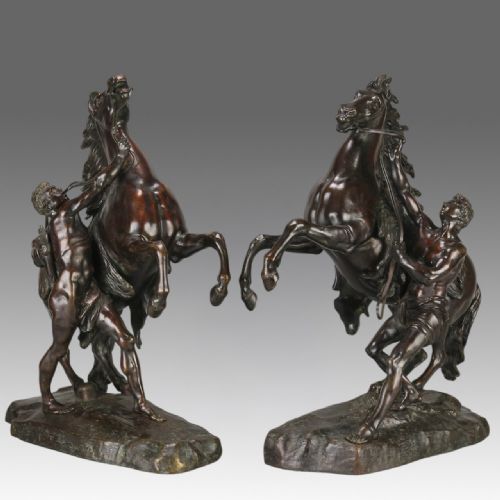
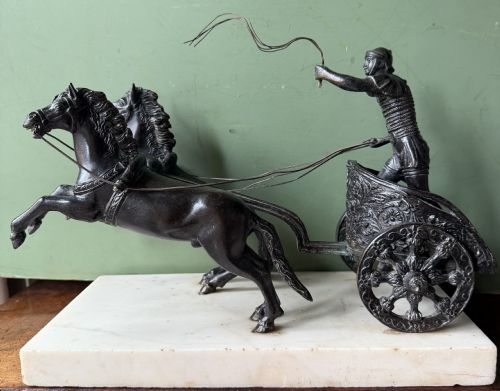
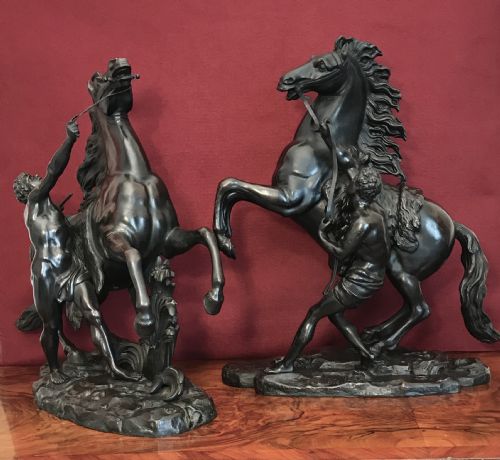
Grand tour bronze horses are small cabinet sculptures and souvenirs collected during European travels, reflecting classical antiquity and Renaissance art. These pieces include pairs of Marly horses after Coustou, studies of charioteers on white marble plinths, and figures of Colleoni after Verrocchio.
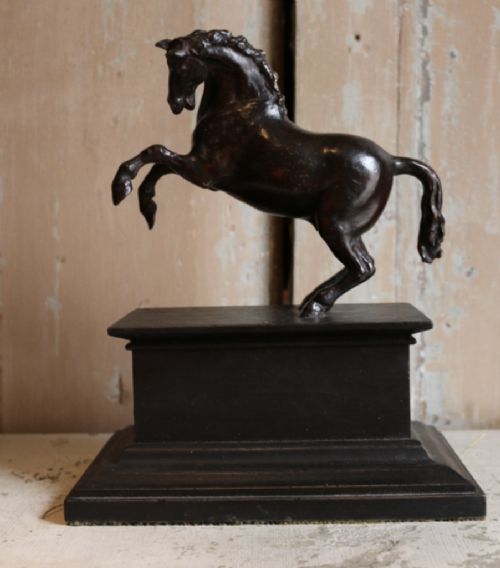
The selection ranges from Victorian casts and Italian souvenirs to earlier works, including a 17th-century rearing horse and a 20th-century sculptural fragment. Buyers encounter both single figures and matched pairs, frequently set upon stone or wooden bases.
How they were made
Foundries cast these pieces in bronze, patinated bronze, and gilt or gilded bronze, capturing musculature and harness detail. Many examples are mounted upon bases fashioned from white marble, wood, or olive wood.
Makers drew upon renowned monumental sculptures, reducing large public works into portable bronze studies suited for domestic display.
Listings feature periods from the 17th century through the Victorian era, utilising bronze, marble, and olive wood.
What varies in quality
The refinement of the casting and the depth of the patination define the upper tier of these sculptures. Finer pieces retain crisp detail in the musculature, manes, and bases, whereas weaker examples lose definition in the secondary elements.
The choice of mounting also elevates a piece, particularly when original white marble plinths or turned olive wood bases accompany the bronze.
Charles Crozatier
The Grand Tour Bronze Horses Glossary
- Grand Tour
- A traditional trip through Europe undertaken by upper-class young men to absorb classical art and culture. Souvenirs purchased along the way included small bronze sculptures.
- Marly Horses
- Replicas of the monumental marble sculptures by Guillaume Coustou depicting unruly horses and their grooms. These dynamic pairs became popular subjects for Victorian bronze casters.
- Patinated Bronze
- Metal treated with chemicals to produce a darkened, stable surface finish. This technique enhances the play of light across the horse's musculature.
- Plinth
- A heavy base supporting a sculpture, commonly rendered in white marble or olive wood among these bronzes.
- Gilt Bronze
- Metal decorated with a thin layer of gold applied to the surface. It offers a bright finish distinct from dark patination.
Grand Tour Bronze Horses: Frequently Asked Questions
What are grand tour bronze horses?
These pieces are small bronze sculptures collected as souvenirs during travels through Europe, reproducing famous classical and Renaissance monuments.
Foundries produced them in various sizes to sit upon desks, shelves, and mantelpieces in 19th-century homes.
Who made these bronze horses?
European foundries and workshops cast them, often reproducing famous works such as the Marly horses by Coustou or Verrocchio's Colleoni.
Individual makers sometimes signed their work, while many others remain anonymous commercial souvenirs.
How do I date a bronze horse?
Dating relies on the style of the casting, the nature of the patination, and the materials used for the base.
Victorian pieces often show specific casting techniques and wear patterns consistent with nineteenth-century production methods.
Why are some mounted on marble?
Marble plinths provided a stable foundation and an architectural contrast to the dark metal of the bronze.
Italian souvenir workshops frequently paired their bronze studies with white marble or olive wood bases.