



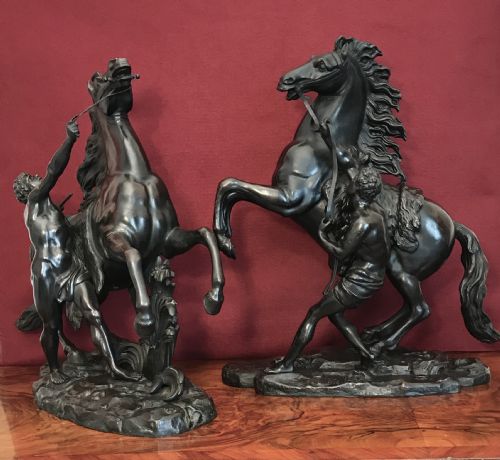


Pair Bronze Horse Statues
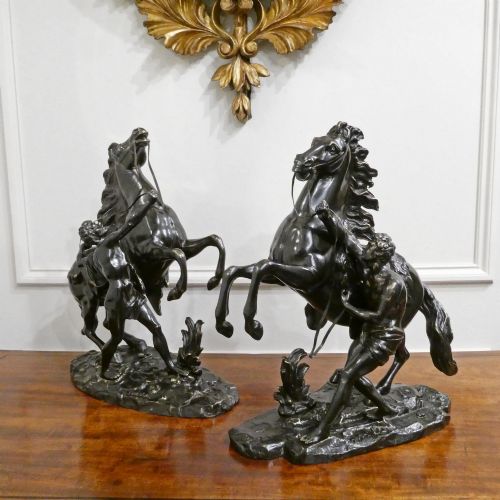
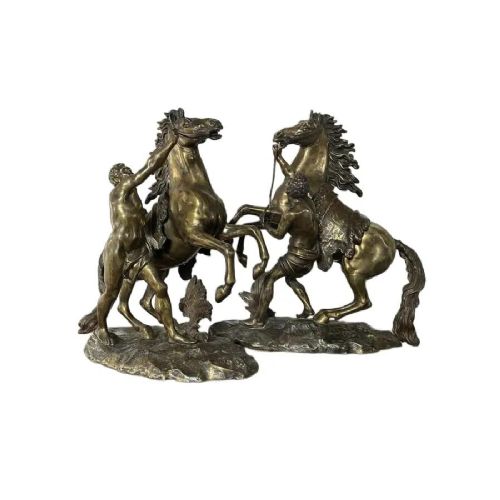
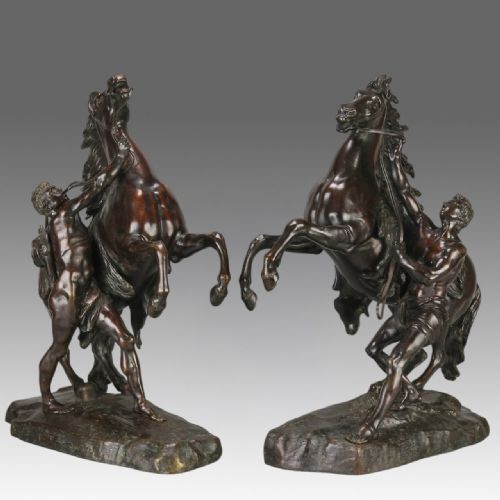
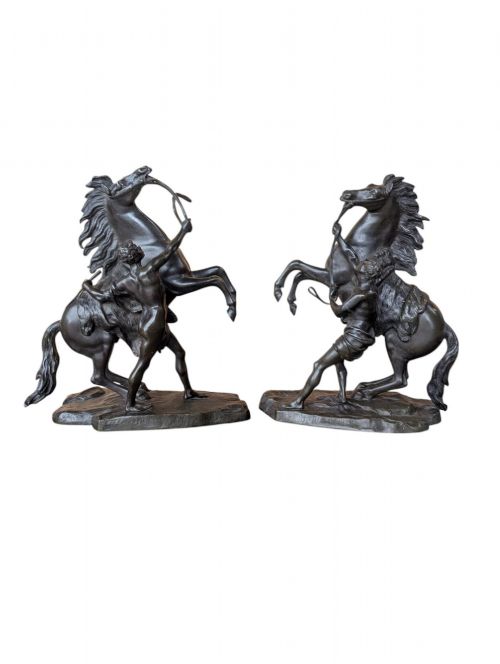
These pair bronze horse statues bring heavy classical and animalier weight to a room, cast after famous monumental models.
Pair Bronze Horse Statues
When you search for pair bronze horse statues, you encounter sculptural groups cast during the Victorian and nineteenth-century periods. These figures often reproduce iconic models such as the Marly horses after Coustou or capture animalier studies of mares and stallions.
The pieces on this page span French Neoclassical, Italian, and Chinese Asian art traditions. You meet them mounted on olive wood bases or standing as free-patinated groups designed for mantelpieces and display tables.
How they were made
Foundries shaped these works using cast bronze, gilt bronze, ormolu, and patinated bronze, alongside alternative metals like bronzed metal and spelter. Makers finished surfaces with painted details or rich patination to accentuate the musculature of the animals.
Certain examples incorporate natural elements, pairing the metal castings with carved olive wood bases that ground the composition. Casting methods followed nineteenth-century animalier and classical traditions to achieve sharp anatomical definition.
Pair Bronze Horse Statues Retail Price Guide 2026
Typical asking prices for pair bronze horse statues among the pieces listed under this phrase on Sellingantiques today, from the lower quarter to the upper quarter. They describe what is for sale here now, not the wider market.
Even stationary metal horses manage to look like they are about to bolt off the mahogany.
What varies in quality
Quality rests upon the crispness of the casting and the depth of the finish, distinguishing refined bronze work from simpler metal alloys. Masterful chasing preserves the tension in the muscles and the finer details of the harness or mane.
The integrity of the patina or gilding dictates the visual weight of the sculpture, while integrated bases of materials like olive wood complete the composition with structural harmony.
P. J. Mene·Coustou
The Pair Bronze Horse Statues Glossary
- Animalier
- A nineteenth-century artistic genre focused on the realistic depiction of animals. Sculptors in this tradition studied anatomy closely to capture creatures in motion.
- Marly Horses
- Large marble sculptures commissioned for Louis XIV, depicting restrained horses held by grooms. Nineteenth-century founders frequently reduced these iconic monuments into tabletop bronzes.
- Patina
- The surface sheen and colour developed by metal over time or applied chemically by the foundry. A deep patinated finish highlights the underlying texture of the casting.
- Ormolu
- Finely ground high-carat gold applied to a bronze object using a mercury amalgamation process. This technique yields a brilliant golden surface characteristic of French classical decorative arts.
Pair Bronze Horse Statues: Frequently Asked Questions
What are pair bronze horse statues?
These pieces are nineteenth-century metal sculptures depicting horses, often cast as matching pairs after famous classical monuments or animalier studies.
They draw on French Neoclassical and Victorian design, utilising materials from solid bronze and gilt bronze to patinated metal and spelter.
How were these statues used?
Victorian and nineteenth-century homes displayed them on mantelpieces, side tables, and pedestals as symbols of classical taste and equestrian appreciation.
Their heavy metal construction and detailed bases made them centrepieces for libraries and formal reception rooms.
How do I live with bronze horses?
Place them on stable, level surfaces where their substantial weight is supported safely, away from excessive moisture that might affect the metal or wooden bases.
Dust them gently with a soft cloth to preserve the patinated or gilt surface without harming the finish.
How do I tell periods apart?
Nineteenth-century and Victorian pieces often show distinct casting techniques, signatures, and patination styles that reflect the period's foundry practices.
Look at the treatment of the base, such as turned olive wood, and the sharpness of the animalier details to understand the origin.