



Marly Horse Sculptures
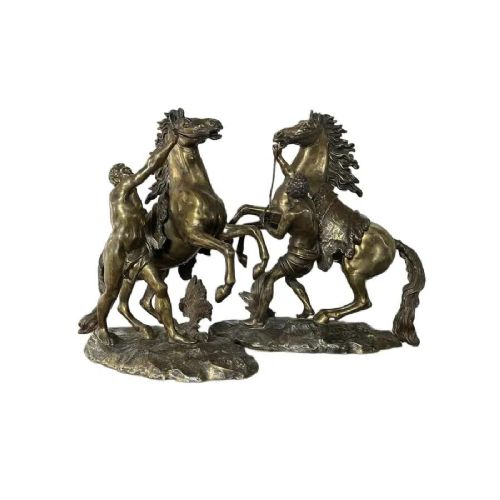
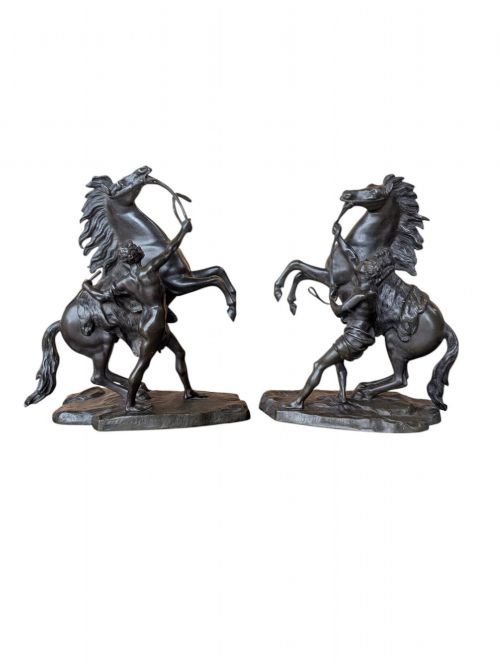
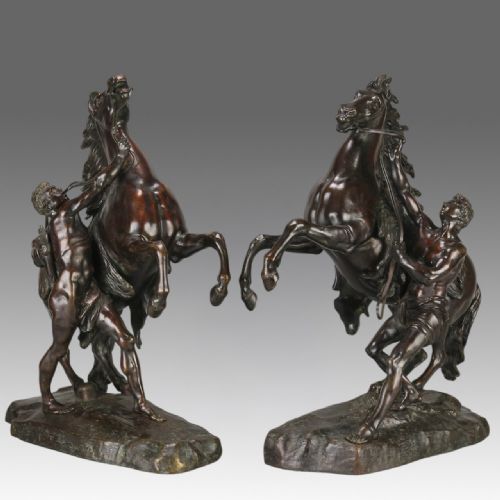
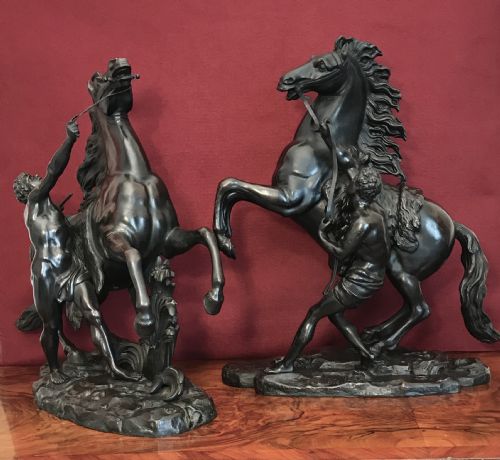
These marly horse sculptures capture raw equine energy and are sought after for their dramatic Neoclassical stance.
Marly Horse Sculptures
When searching for marly horse sculptures, you are looking at dramatic depictions of rearing horses and their handlers, rooted in famous monumental works. The examples you are most likely to meet on this page take the form of pairs cast in metal or modelled in porcelain.
The pieces on offer span the Victorian period and the nineteenth century, alongside later twentieth-century iterations. Originating from French Neoclassical traditions, these sculptures recreate the tension of an unrestrained animal through dynamic equine forms.
Materials and construction
The physical pieces rely heavily on bronze, patinated bronze, and bronzed metal, alongside alternative media such as porcelain with glaze. Makers utilised traditional casting and modelling techniques to achieve the muscular definition characteristic of these equestrian subjects.
Surfaces often feature deliberate patination or paint layers to enhance depth and simulate age. Brass elements and spelter also appear among the material record for these figures.
Marly Horse Sculptures Retail Price Guide 2026
Typical asking prices for marly horse sculptures among the pieces listed under this phrase on Sellingantiques today, from the lower quarter to the upper quarter. They describe what is for sale here now, not the wider market.
Several handlers wear remarkably detailed historical hats while struggling to restrain very enthusiastic horses.
Assessing quality
Quality rests primarily on the crispness of the casting and the fidelity of the musculature and harness details. Finer examples retain sharp surface definition and balanced patination, whereas lesser versions lose anatomical clarity in the extremities.
The presence of signatures or attribution to known modellers elevates certain casts above unsigned commercial productions. Heavier, more substantial metalwork generally indicates superior workshop standards compared to lighter alloys.
Charles Crozatier·Royal Dux
The Marly Horse Sculptures Glossary
- Patinated bronze
- Bronze treated with chemicals to produce a specific surface colour. This finish protects the metal and accentuates sculptural detail.
- Spelter
- A zinc alloy frequently used as a cheaper alternative to bronze. It takes plating well to mimic more expensive metals.
- Neoclassical
- A style drawing inspiration from the classical art and culture of ancient Greece and Rome. It prioritises proportion, restraint, and heroic subjects.
- Grand Tour
- A cultural journey undertaken by wealthy young Europeans to study classical antiquities. Smaller bronzes were often acquired as souvenirs of these travels.
Marly Horse Sculptures: Frequently Asked Questions
What are marly horse sculptures based on?
These pieces are based on the famous monumental marble sculptures originally commissioned for the Palace of Marly. They depict rearing horses held by handlers.
Artists recreated these large public works as smaller decorative bronzes and figures for domestic display.
Are these sculptures usually found as pairs?
Many of the surviving examples appear as symmetrical pairs representing the matching horses from the original sculptural group. This format suits mantelpieces or console tables.
Single figures do occur, though matched pairs remain a primary focus for collectors.
How do I identify a nineteenth-century cast?
Nineteenth-century pieces typically exhibit heavier metal composition, deeper patination, and hand-finished chasing on the surface. Examination of the underside and fastening bolts often reveals period assembly methods.
Later reproductions may show softer details and different base constructions.
What materials were used besides bronze?
While bronze and patinated bronze dominate the records, makers also utilised bronzed metal and spelter. Porcelain with glaze appears in ceramic interpretations of the subject.
Each material yields a different weight and surface texture.