



Pair Equestrian Statues
Pair equestrian statues bring the noble form of the horse into a room, cast in bronze or brass to stand as balanced mantel ornaments.
Pair Equestrian Statues
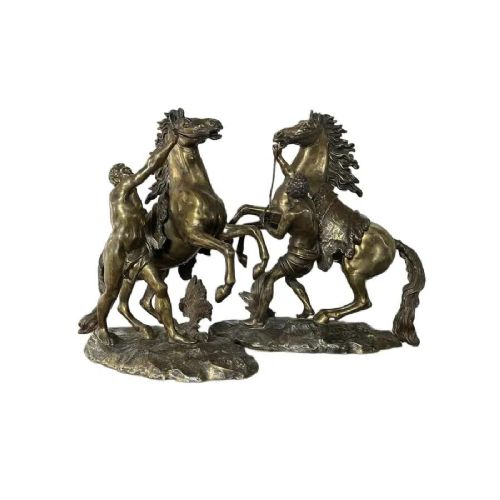
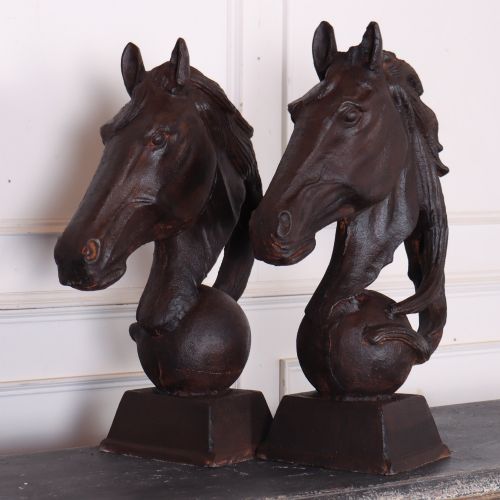
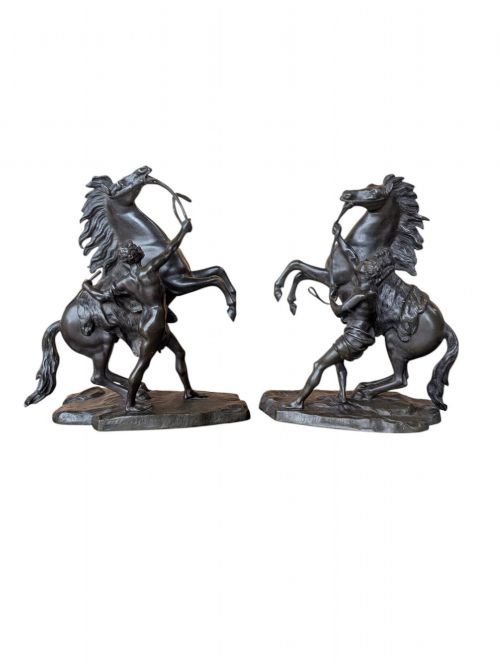
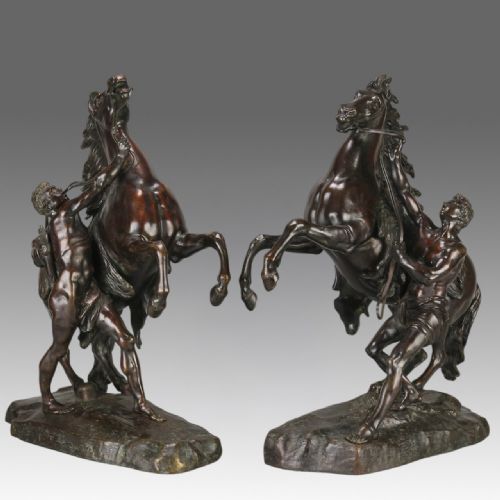
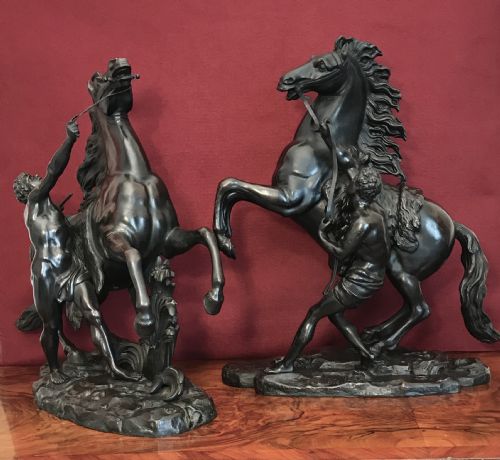
When searching for pair equestrian statues, a buyer looks at twin representations of horses, often cast in bronze, brass, or iron, alongside ceramic and earthenware figures. These objects take the form of horseheads, full animals after classical models such as the Marly horses, or mounted historical figures.
The versions most likely to meet a buyer on this page originate from the nineteenth century, including Victorian and Edwardian examples, alongside French Neoclassical designs and twentieth-century pieces. They function as chimney ornaments, doorstops, and sculptural figures displayed in pairs.
How they were made
Metal pieces rely on casting techniques in bronze, brass, and cast iron, sometimes enhanced with gilt finishes or mounted on olive wood bases. The bronze castings frequently capture dynamic animal forms following established sculptors.
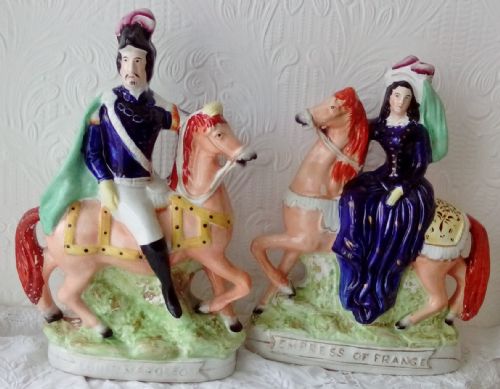
Ceramic and earthenware figures utilise moulding and kiln firing, finished with painted details or enamel decoration to delineate figures and subjects.
Pair Equestrian Statues Retail Price Guide 2026
Typical asking prices for pair equestrian statues among the pieces listed under this phrase on Sellingantiques today, from the lower quarter to the upper quarter. They describe what is for sale here now, not the wider market.
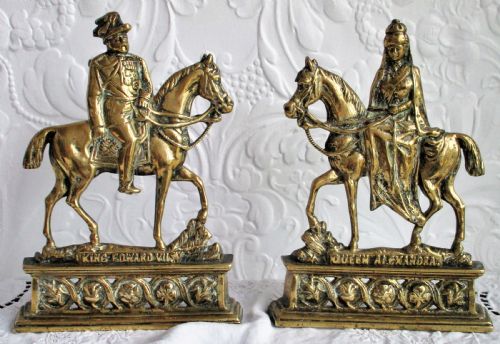
Several bronze horses share shelf space with King Edward VII and Queen Alexandra.
What varies in quality
The top of the range is distinguished by the crispness of the cast and the fidelity of the sculptural detail, particularly in the musculature and mane of the horse. Finer bronzes show careful chasing of the metal surface after casting.
Painted and glazed earthenware variants differ in the precision of the hand-applied colour and the stability of the glaze. Base materials also separate standard production pieces from those mounted on specialist woods like olive.
P. J. Mene·Royal Dux
The Pair Equestrian Statues Glossary
- Bronze
- An alloy of copper and tin utilised for durable sculptural casting. It takes fine detail and patinates well over time.
- Chimney ornament
- A decorative object designed to sit upon a mantelpiece. These figures often matched in pairs to balance a fireplace.
- Earthenware
- Porous pottery fired at lower temperatures. It is glazed or painted to form decorative figures.
- Gilt bronze
- Bronze metal coated with a thin layer of gold. This finish adds lustre and prevents tarnish.
- Marly horses
- Sculptural representations of rearing horses based on the famous works by Coustou. They appear frequently in nineteenth-century casts.
Pair Equestrian Statues: Frequently Asked Questions
What materials are these statues made from?
The pieces utilise cast metals including bronze, brass, and iron. Other examples appear in earthenware and ceramic.
Some metal castings feature gilt finishes or rest upon wooden bases.
How were these figures originally displayed?
Many served as chimney ornaments placed symmetrically upon mantelpieces. Others functioned practically as doorstops or hitching posts.
Pairs were designed to balance either end of a domestic space or architectural feature.
How do I identify nineteenth-century pieces?
Nineteenth-century examples often display the weight and casting characteristics typical of Victorian and Edwardian foundries. Stylistic references to classical models like the Marly horses also point to this era.
Signatures or patination can further indicate the period of manufacture.
What is an animalier sculpture?
Animalier refers to the realistic nineteenth-century artistic focus on animal subjects. Sculptors captured horses and other creatures with anatomical precision.
These works range from wild mares and stallions to historical pairings.