
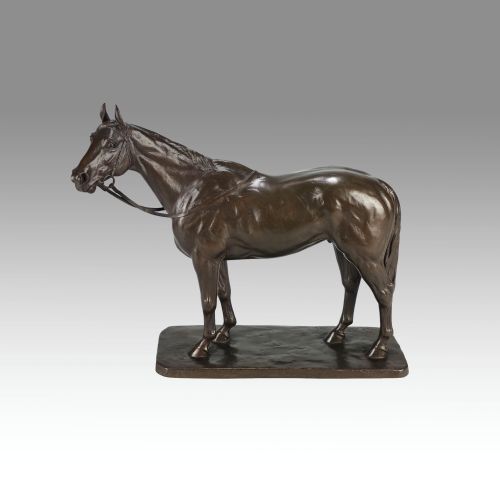
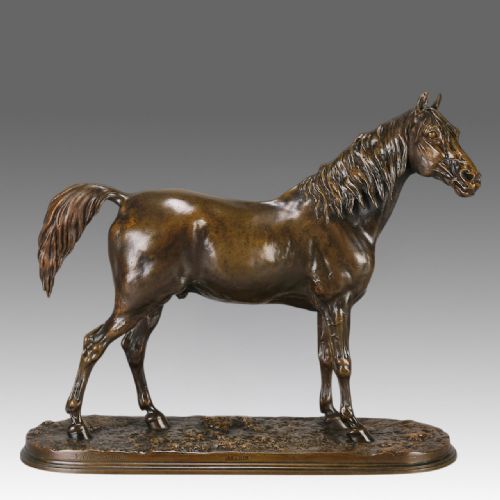
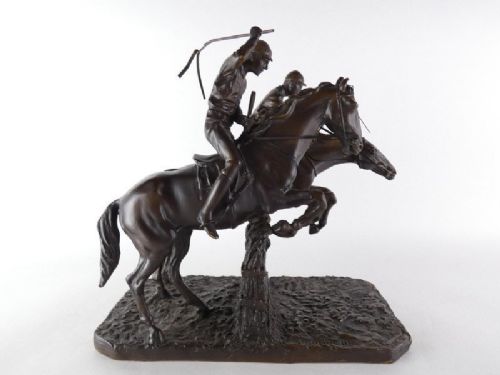


Animalier Bronze Horse
An animalier bronze horse captures equine power with anatomical precision, offering collectors a tangible piece of nineteenth and twentieth-century sculpture history.
Animalier Bronze Horse
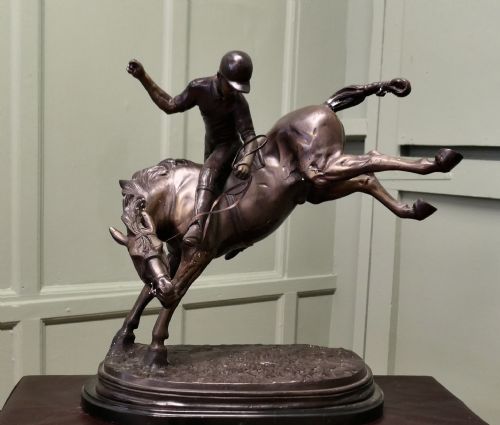
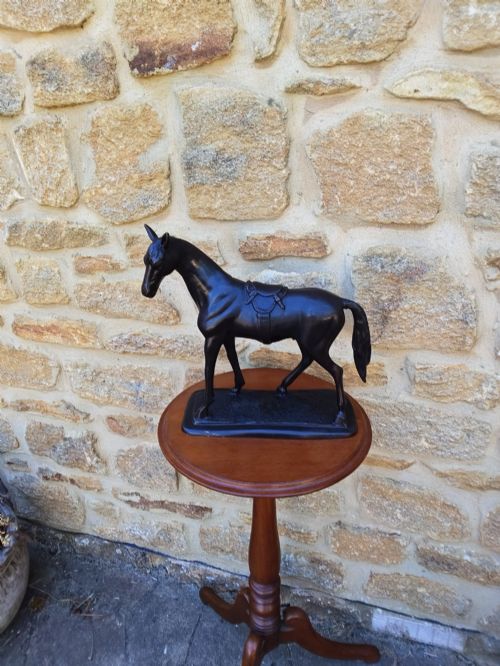
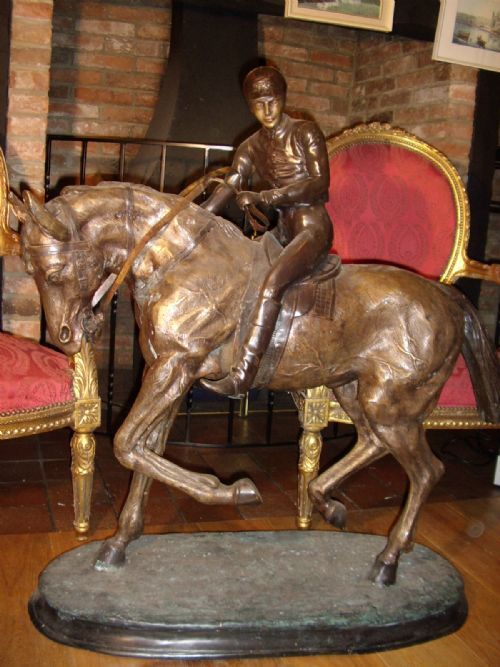
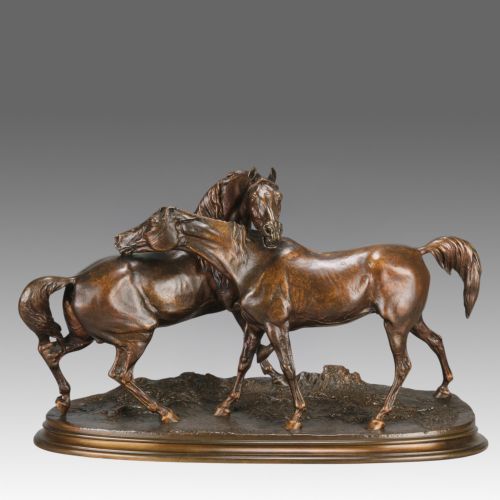
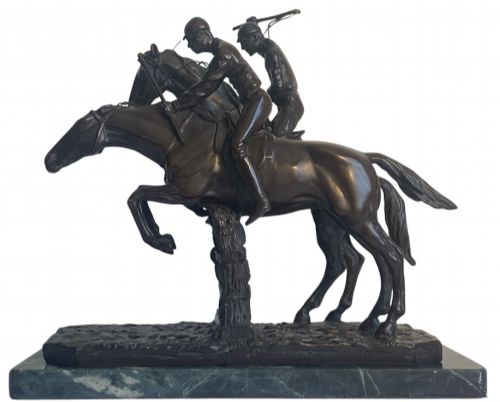
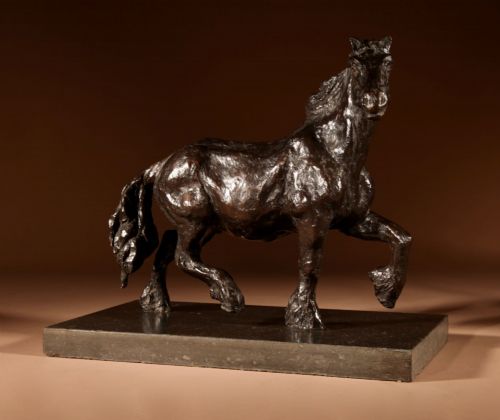
An animalier bronze horse represents the naturalist study of equine form, produced extensively across Europe during the nineteenth and twentieth centuries. Buyers searching for an animalier bronze horse typically encounter French and Austrian interpretations depicting draft animals, racehorses, and hunting scenes.
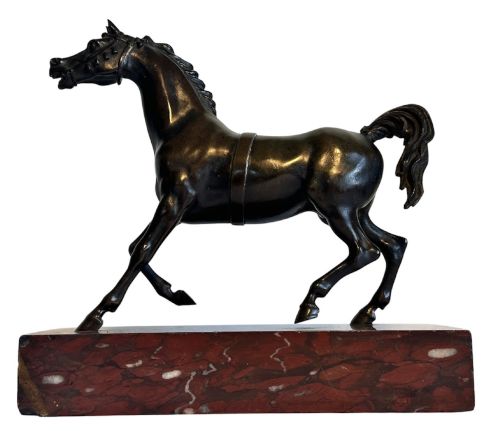
The selections span from mid-nineteenth century Romantic realism through to later modernist and Japanese Taisho period interpretations. Most examples combine the metal sculpture with a fitted stone, marble, or wood base.
How they were made
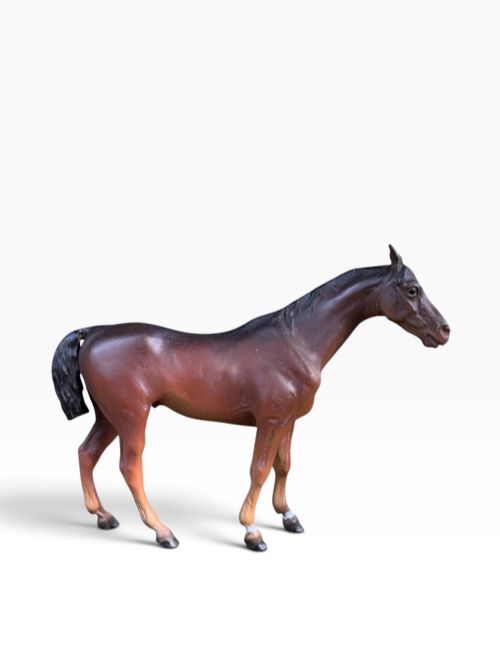
These sculptures utilise traditional cast bronze techniques, often finished with detailed patination to emphasise muscle and coat texture. Selected examples incorporate cold painted techniques or feature integral bases of marble, stone, and wood.
Castings frequently rely on the lost-wax method to capture fine anatomical details and textures. Surface finishes range from dark brown patinas to brightly painted polychrome surfaces seen in Viennese workshops.
Monkeys take the reins in one notable nineteenth-century casting, proving that horse racing enthusiasts are not strictly human.
What varies in quality
Quality rests upon the crispness of the chasing and the fidelity of the anatomical modelling. Superior examples display refined surface texture and clear signature markings rather than softened details from worn secondary moulds.
The integration between the bronze figure and its stone or marble base further distinguishes workshop standards. Heavier, well-balanced bases and rich patination indicate superior craftsmanship.
Pierre Jules Mene·Isidore Jules Bonheur·John Willis Good·Charles Crozatier·Nikolai Lieberich
The Animalier Bronze Horse Glossary
- Animalier
- A nineteenth-century art movement dedicated to the realistic portrayal of animals. Practitioners focused heavily on anatomical accuracy and dynamic movement.
- Patina
- The chemical coloration applied to the surface of the bronze. This finish protects the metal and defines the visual tone.
- Cold painted bronze
- A method where the bronze is painted with layers of cold enamel rather than fired in a kiln. This technique is particularly associated with Austrian workshops.
- Lost-wax casting
- A process where a molten metal is poured into a mould that has been created by means of a wax model. It allows for intricate undercuts and fine surface detail.
Animalier Bronze Horse: Frequently Asked Questions
How do I identify a nineteenth-century animalier horse?
Nineteenth-century animalier bronzes generally exhibit heavy, dense casting and distinct patination characteristic of period foundries. Signature placement and foundational casting methods provide further clues to age.
Examine the underside of the sculpture and the mounting hardware to check for period screws or pins. Contemporary reproductions often lack the nuanced musculature and crisp chasing found in nineteenth-century works.
What is the difference between French and Austrian pieces?
French animalier bronzes typically focus on naturalistic patinas, capturing muscular tension and dynamic motion in subjects like racehorses and draft animals. Austrian pieces frequently utilise cold painted techniques with bright enamel colours.
French founders often worked closely with the sculptor to ensure rigorous anatomical precision. Austrian production, centred largely in Vienna, leaned towards decorative charm and distinct polychrome finishes.
How should I clean a bronze horse sculpture?
Maintain the surface by dusting gently with a soft, dry cloth to remove particulate matter. Avoid abrasive cleaners, oils, or waxes that might interact adversely with the historic patina.
Preserving the original patina is essential for maintaining the character and historical integrity of the piece. Consult a professional restorer if the metal requires deeper conservation.
Why do some horses stand on marble bases?
Many nineteenth and twentieth-century animalier sculptures were mounted on marble, stone, or wood bases to provide stability and visual elevation. These plinths complement the heavy weight of the cast bronze.
The inclusion of a fitted base often reflects the standard presentation style favoured by European salons and galleries. The material and profile of the base can also help date the piece.