
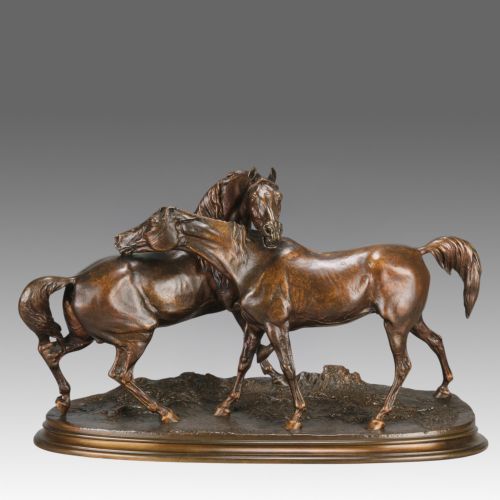
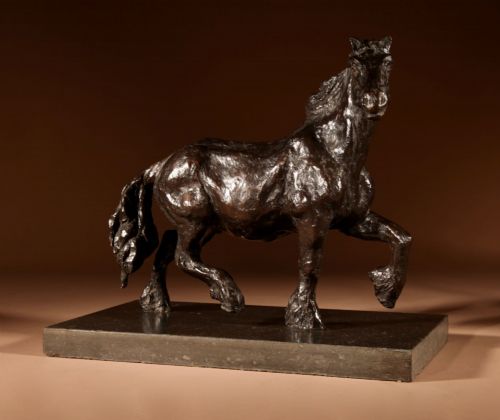
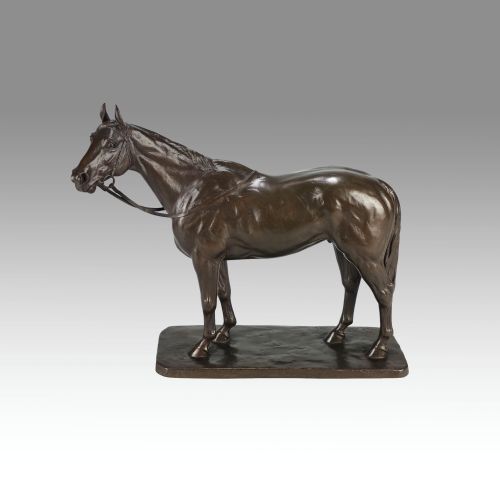
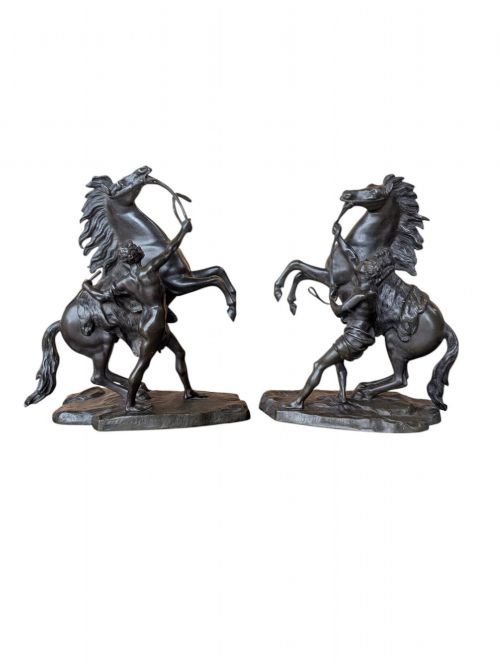
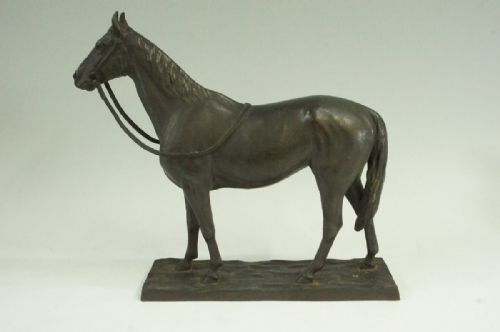
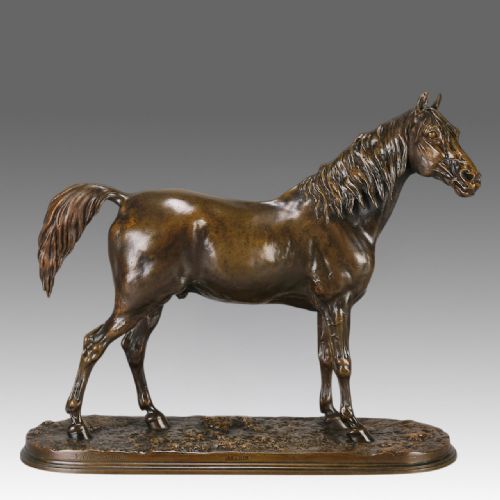


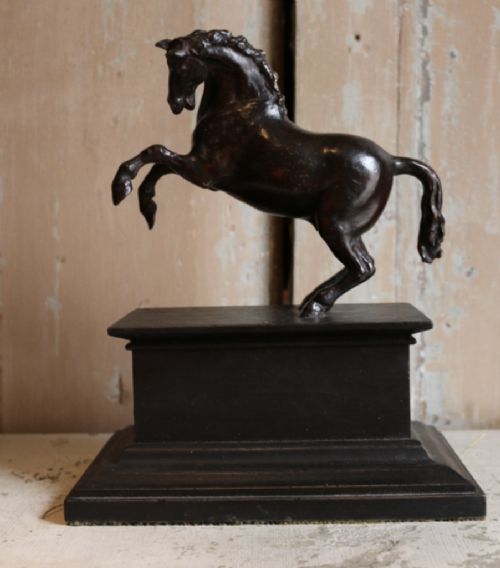

Patinated Bronze Horse
A patinated bronze horse brings the dynamic movement and tactile warmth of animalier sculpture or neoclassical casting directly into a room.
Patinated Bronze Horse
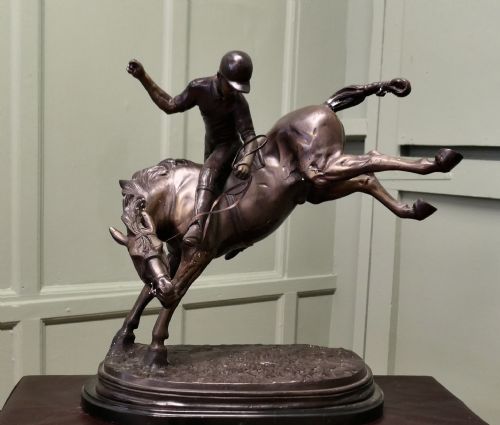
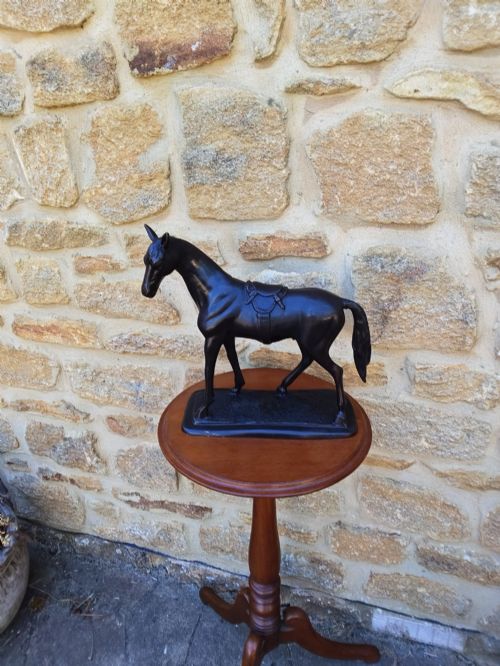
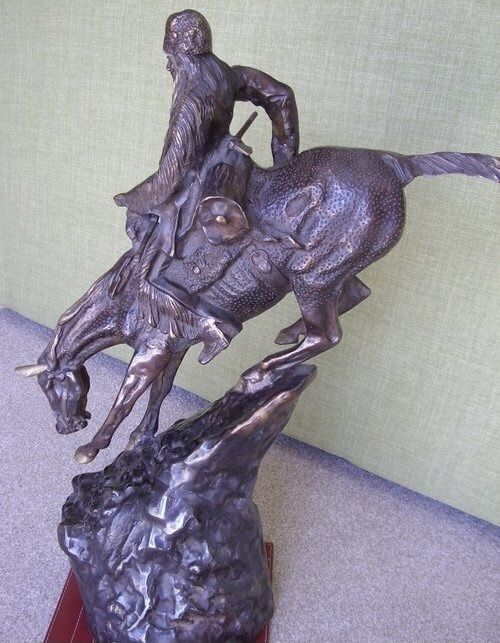
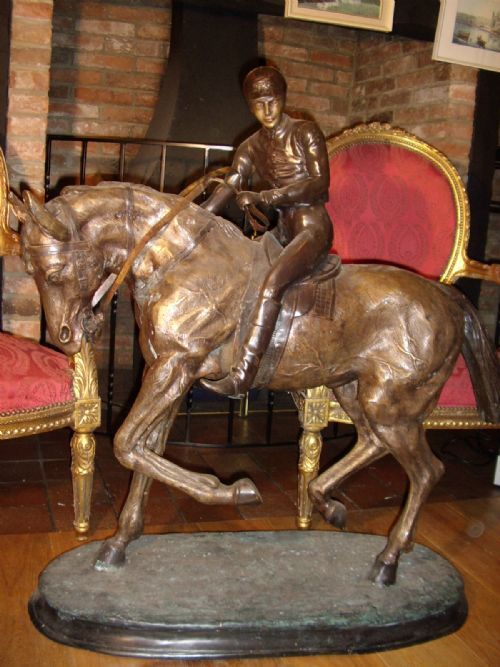
A patinated bronze horse represents sculptural works cast from the nineteenth and early twentieth centuries, capturing animals in motion or repose. The selections span French animalier subjects, Western Americana cowboy figures, and Japanese foundry pieces mounted on stone bases.
Buyers encounter subjects ranging from racehorses and draft animals to complex groupings with jockeys, riders, or handlers. These figures appear independently or incorporated into mantel clocks and candlesticks from Victorian and Art Deco periods.
The regional origins stretch across French, Japanese, Italian, and English workshops, utilising traditional casting methods. Pieces often reference classical monuments or famous Salon sculptors through deliberate post-casting patination.
How they were made
Foundries produced these sculptures primarily through the lost-wax technique or sand-casting methods, translating detailed clay or wax models into molten metal. Metalworkers then chased the cooled bronze surface with chisels and files to sharpen muscle definition and mane texture.
Makers applied chemical solutions and heat to the finished metal surface to build up the characteristic patination, ranging from deep brown and black tones to green verdigris. Sculptures were frequently mounted onto heavier supports of marble, wood, or stone to anchor the composition.
Patinated Bronze Horse Retail Price Guide 2026
Typical asking prices for patinated bronze horse among the pieces listed under this phrase on Sellingantiques today, from the lower quarter to the upper quarter. They describe what is for sale here now, not the wider market.
The documented periods stretch from the seventeenth century through the Victorian era and into the Art Deco epoch.
What varies in quality
Quality rests in the crispness of the chasing and the depth of the patination layers applied across the bronze surface. Superior castings retain anatomical precision in the musculature and harness details without softening during the mould-making stage.
The integrity of the mounting materials and the fidelity of the signature or foundry mark distinguish exceptional studio outputs from standard commercial editions. Heavier bases of sienna or green marble indicate careful assembly alongside the main equestrian figure.
Pierre Jules Mêne·Kunio Itô·Charles Crozatier·Luigi Secchi·John Willis Good
The Patinated Bronze Horse Glossary
- Patinated bronze
- A bronze sculpture treated with chemical compounds to alter the surface colour and create protective tones. This chemical layer develops distinct shades of brown, green, or black over time.
- Animalier
- A nineteenth-century artistic movement dedicated to the realistic depiction of animals. Sculptors in this tradition focused closely on anatomical accuracy during movement.
- Marly Horses
- Large sculptural groups depicting rearing horses restrained by grooms. The compositions derive from the monumental marble statues carved for Louis XV.
- Grand Tour
- A traditional trip through Europe undertaken by upper-class scholars and collectors to acquire cultural artefacts. Associated bronze reductions served as portable mementos of famous monuments.
- Lost-wax casting
- A metalworking process where a molten metal is poured into a mould that has been created by melting away a wax model. This method allows for intricate surface details to transfer to the finished sculpture.
Patinated Bronze Horse: Frequently Asked Questions
How do I clean a bronze horse?
Dust the surface gently with a soft, dry brush to remove particles without disturbing the underlying chemical layer. Avoid abrasive cloths, water, or commercial metal polishes that strip away historical patination.
Apply a very thin coat of microcrystalline wax periodically to protect the metal from atmospheric moisture. Buff the wax off gently with a clean cloth to maintain a stable finish.
Are these sculptures solid bronze?
Most figurative bronze sculptures from these periods are hollow cast to save weight and metal, utilising a relatively thin wall thickness. Heavier elements may include internal support rods or weighted bases made of marble.
Solid bronze castings appear primarily in smaller cabinet pieces, fragments, or specific decorative items like candlesticks. The weight often derives from the stone plinth rather than the metal figure alone.
How can I tell the period?
Dating relies on stylistic markers, casting technology, foundry marks, and the specific composition of the underlying metal alloy. Victorian and nineteenth-century pieces often feature tighter anatomical chiselling and distinct animalier signatures.
Later twentieth-century examples incorporate Art Deco streamlined forms or specific Japanese Meiji and Showa period stamps. Comparing the patination style to documented foundry practices helps narrow down the decade of production.
Where should I display it?
Position the sculpture away from direct sunlight, heating vents, and damp areas to prevent thermal shock and surface degradation. A stable wooden console table, desk, or mantelpiece provides a secure foundation for heavy marble bases.
Ensure the display height allows viewers to appreciate the fine chasing and patination details from a standing or seated position.