
Engraved Stemware
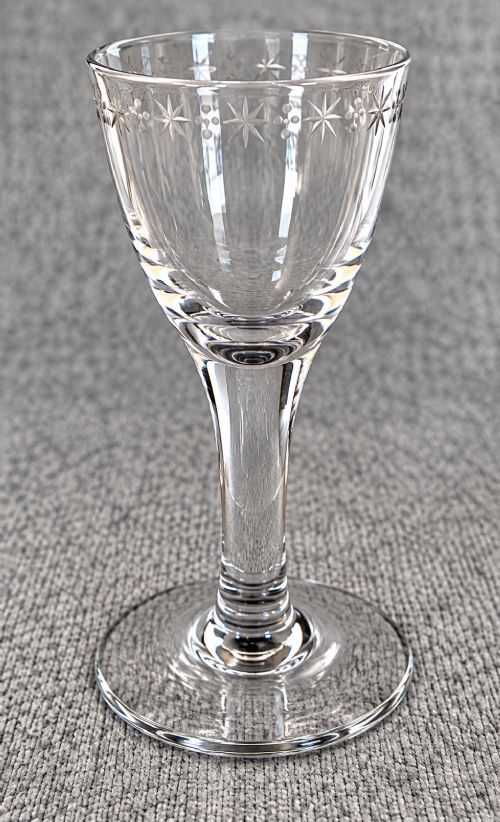
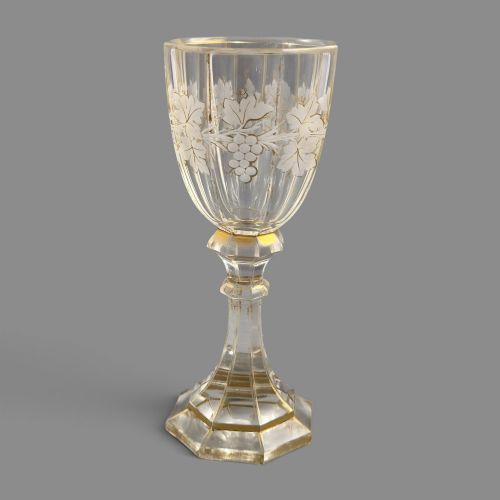
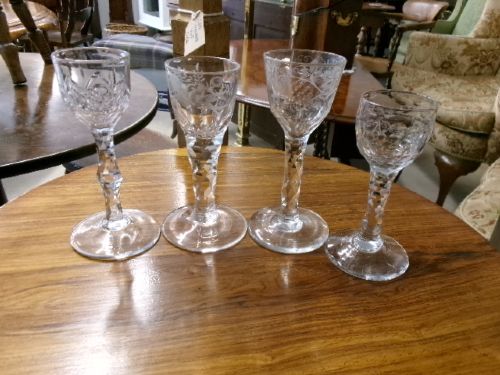
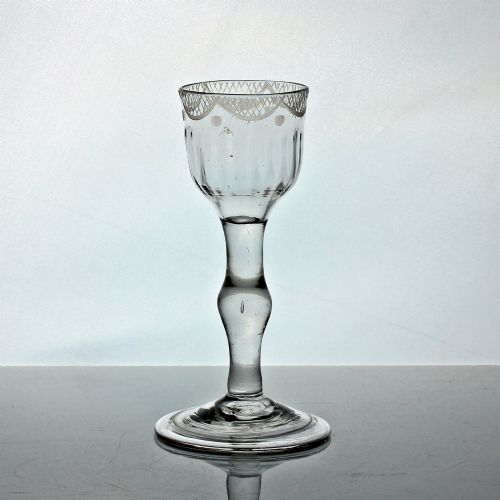
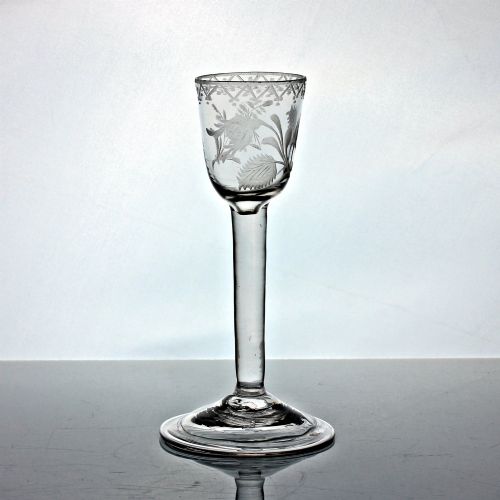
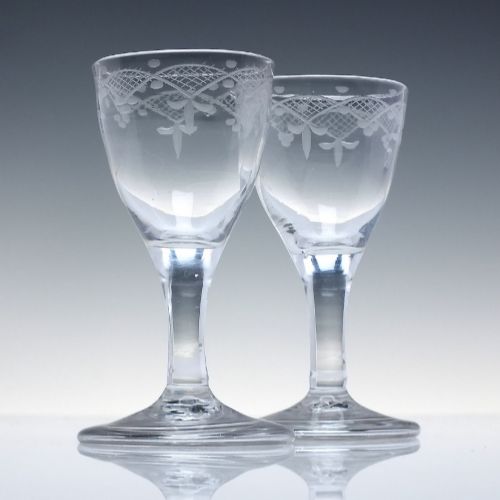
These pieces of engraved stemware range from delicate Georgian dram glasses to substantial Victorian goblets, offering drinking vessels decorated with wheel-cut and etched designs.
Engraved Stemware
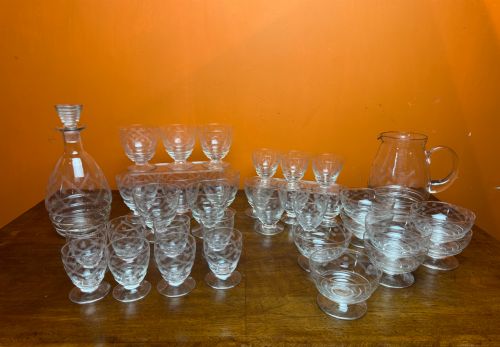
When you search for engraved stemware, you encounter drinking vessels featuring surface decoration cut into the material. The selection spans from eighteenth-century wine glasses and dram glasses to nineteenth-century rummers and twentieth-century French Art Deco drinking suites.
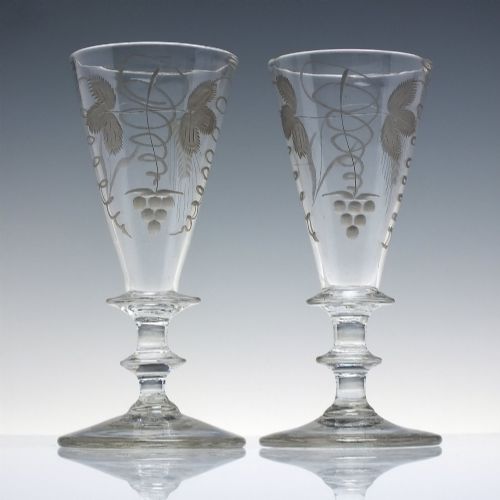
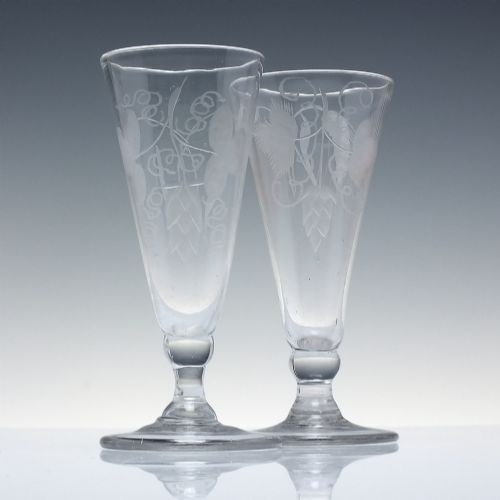
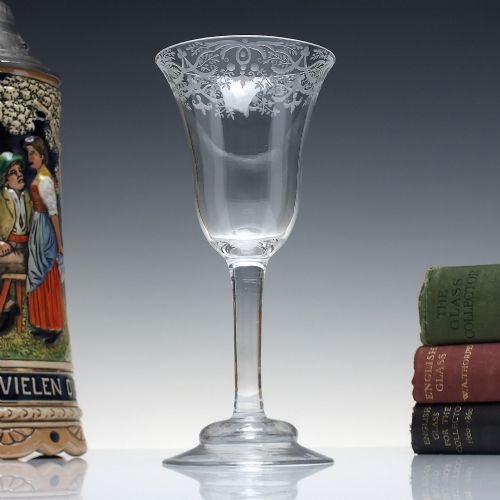
The versions you meet most frequently on this page belong to the Georgian and Victorian periods. These take forms such as ale glasses, wine goblets, champagne coupes, and rinsers, shaped from lead glass or clear glass.
Originating largely from English, French, and Bohemian workshops, these items serve as both functional drinkware and historical objects carrying armorials, floral motifs, or commemorative inscriptions.
Materials and Technique
The makers of these items utilised lead glass, flint glass, and lead crystal as primary materials, sometimes combining them with sterling silver or applying gilding and enamel. Glass was blown into moulds or free-blown, then shaped into stems, bowls, and wide foot bases.
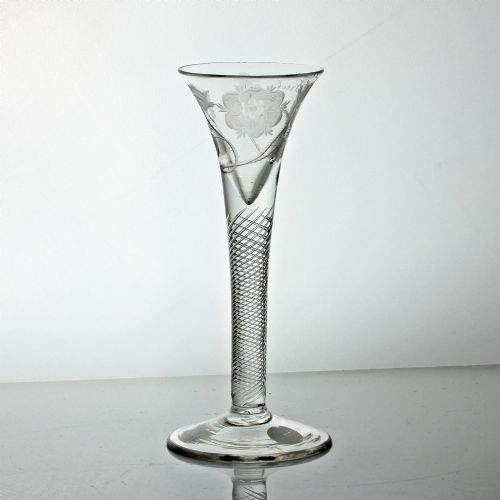
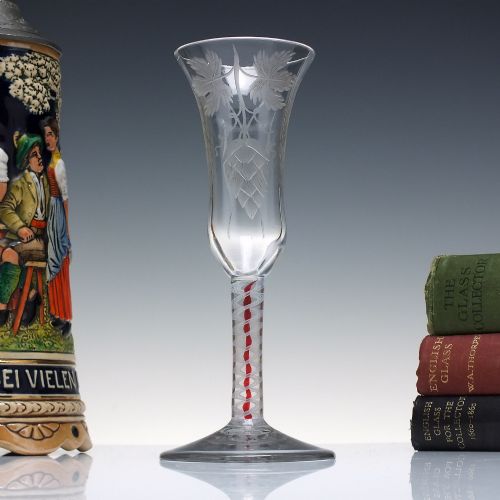
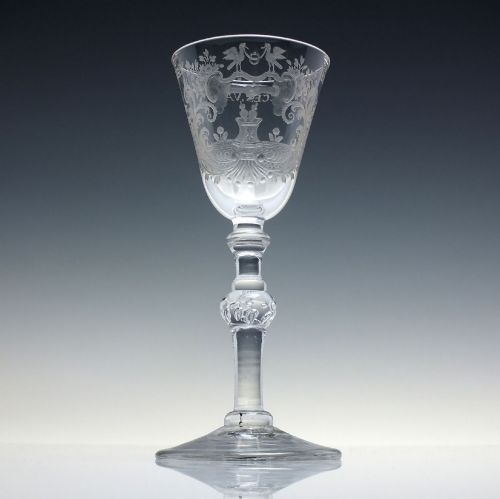
Decoration was achieved through wheel-engraving, intaglio engraving, and etching. Artisans pressed wheels of varying sizes against the glass surface to carve detailed motifs such as hop and barley, swags, and armorial bearings.
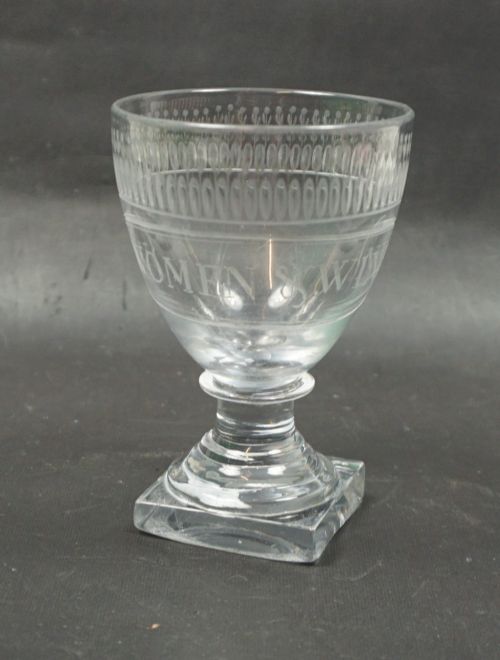
A small rummer bears the sentiment 'Women & Wine', capturing eighteenth-century tavern toast culture in wheel-engraved lines.
Assessing Quality and Execution
Quality in these pieces rests upon the crispness of the wheel-cut decoration and the clarity of the metal. Superior examples display deep, precisely articulated intaglio work where motifs maintain sharp definition rather than soft edges.
Proportion and weight also dictate standard. The balance between the bowl, stem, and folded or plain foot, alongside the absence of heavy manufacturing bubbles in the crystal, separates standard production items from masterworks.
Moser Bohemian·Webb Corbett
The Engraved Stemware Glossary
- Rummer
- A large, heavy drinking glass popular in the eighteenth and nineteenth centuries, often featuring an engraved bowl on a short stem.
- Air Twist
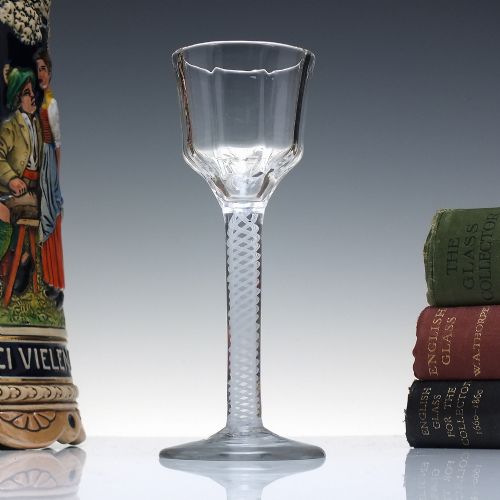
- A stem formation containing elongated internal air bubbles drawn out into a spiral thread during manufacture.
- Ogee
- A double-curved architectural line shaping the bowl of a drinking glass, curving out at the rim and in at the base.
- Intaglio
- A technique where the design is sunk below the surface of the glass, creating a cameo effect when viewed.
- Baluster
- A thick, swelling stem form reminiscent of a stair baluster, seen frequently on eighteenth-century drinking vessels.
Engraved Stemware: Frequently Asked Questions
What were rummers used for?
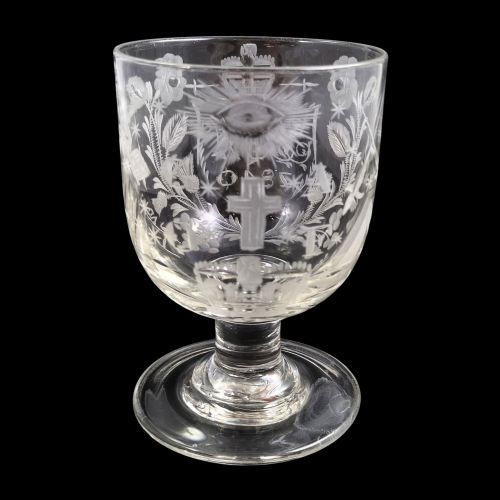
Rummers served as substantial drinking vessels for ale, beer, or punch during the Georgian and Regency periods. Their sturdy proportions made them practical for everyday tavern or domestic use.
Many featured commemorative or armorial engravings celebrating events like the Sunderland Bridge or local agricultural yields.
Can I use antique stemware daily?
While these pieces were made for drinking, their age and delicate engraved surfaces require careful handling. Hand washing in lukewarm water is essential to preserve the glass and any potential gilding.
Avoiding sudden temperature changes prevents thermal shock, which can crack fragile historic lead glass.
What is an air twist stem?
An air twist stem is created by trapping air inside the molten glass and drawing it out into a spiral as the stem is pulled and twisted. This technique was popular among glassmakers during the eighteenth century.
It produces a delicate internal pattern that catches the light through the clear lead glass.