

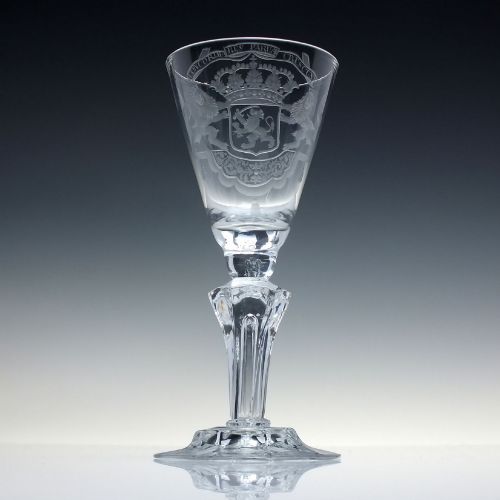


Wheel Engraved Wine Glass
These wheel engraved wine glass pieces are historic drinking vessels carrying intricate wheel-cut decoration, prized by collectors for their tactile depth and age.
Wheel Engraved Wine Glass
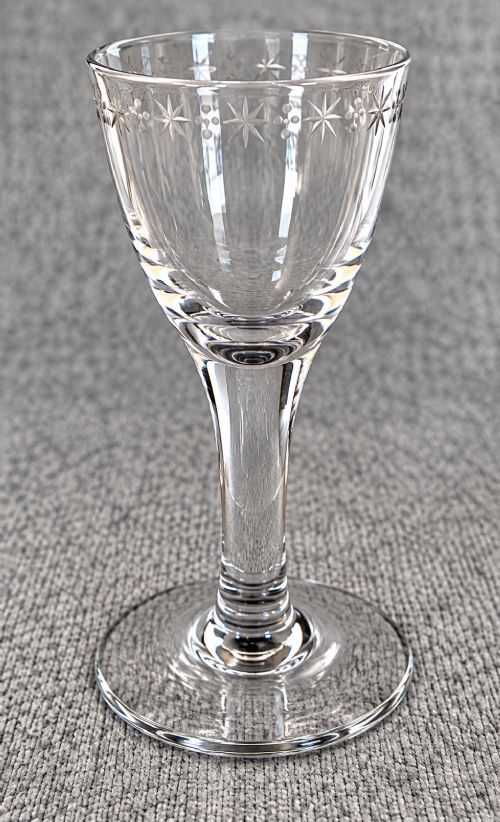
A wheel engraved wine glass is a historic drinking vessel shaped by hand and decorated using a small abrasive rotating wheel to cut designs directly into the surface. When buyers search this phrase, they encounter pieces ranging from delicate Georgian dram glasses to substantial Victorian rummers and grand Edwardian services.
The selection here spans several centuries, touching upon the Georgian, Victorian, and Edwardian eras alongside continental European examples. English lead glass and clear lead crystal predominate, augmented by coloured variants in amethyst, ruby, and amber hues.
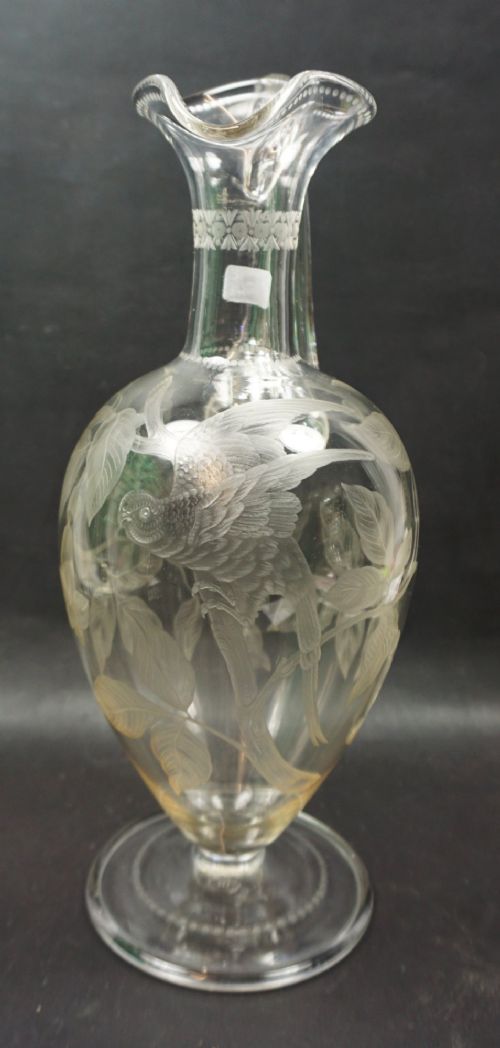
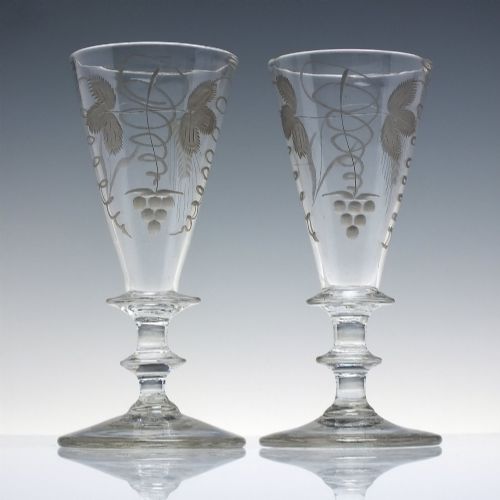
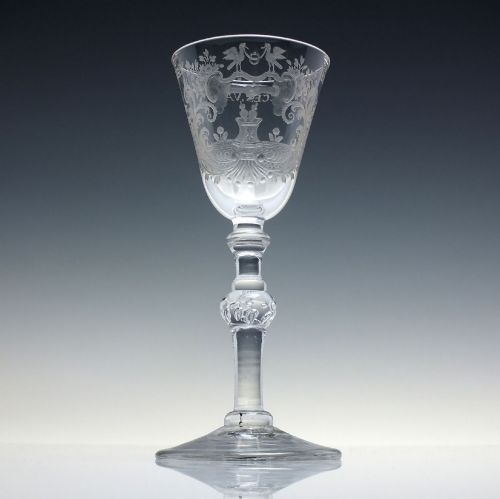
Forms extend beyond standard wine vessels to encompass goblets, dram glasses, ale glasses, decanters, and rinsers. Pieces frequently display floral motifs, fruiting vines, armorial bearings, or Jacobite symbols cut cleanly into the body.
How they were made
Glassmakers shaped these pieces using traditional glassblowing techniques, gathering molten metal on a pontil iron and manipulating it by hand or in a mould. The metal utilised includes lead glass and clear lead crystal, providing the necessary weight and clarity for deep cutting.
Engravers applied surface decoration by holding the glass against small, rapidly spinning copper or stone wheels fed with an abrasive slurry of oil and emery. This technique allowed craftsmen to achieve varied depths and textures, from fine linear details to wide, polished hollows.
Wheel Engraved Wine Glass Retail Price Guide 2026
Typical asking prices for wheel engraved wine glass among the pieces listed under this phrase on Sellingantiques today, from the lower quarter to the upper quarter. They describe what is for sale here now, not the wider market.
Object types recorded include wine glasses, dram glasses, rummers, decanters, ewers, rinsers, and complete drinking services.
What varies in quality
Quality rests upon the skill of the wheel engraver and the clarity of the underlying glass. Superior pieces exhibit precise control, depth, and polish within the cut motifs, whereas lesser examples show hesitation or shallow scratching.
The structural form also dictates standard, with well-balanced stems, straight posts, and properly finished pontil marks distinguishing finer glassware from utilitarian output.
Webb Corbett
The Wheel Engraved Wine Glass Glossary
- Wheel engraving
- A technique where a glass vessel is held against a rotating abrasive disc to cut designs into the surface. This method produces crisp lines and smooth, polished hollows.
- Pontil mark
- The rough scar left on the base of a vessel where the pontil rod was snapped off after blowing. Its presence indicates traditional manufacture before modern grinding became universal.
- Lead crystal
- A heavy, clear glass containing lead oxide that increases brilliance and softness for cutting. It forms the foundation of much fine English drinking vessels.
- Air twist
- An internal decorative feature within a glass stem formed by drawn air bubbles pulled into a spiral. This technique appears frequently in 18th-century drinking vessels.
- Roemer
- A traditional continental European drinking goblet featuring a wide bowl and a studded stem. These pieces often appear in coloured glass with elaborate wheel-cut foliage.
Wheel Engraved Wine Glass: Frequently Asked Questions
Were these glasses used for everyday dining?
Many of these vessels served specific roles at the table, from formal toasts to consuming drams, ale, or rum during 18th and 19th-century gatherings. Their robust build often suited active household use.
Over time, changing fashions transformed them from functional dining wares into decorative display pieces collected for their historic craftsmanship.
How can I tell a Georgian glass from a Victorian one?
Georgian examples often feature lighter proportions, plain or baluster stems, and simpler handling marks consistent with 18th-century workshops. Their engraving tends towards heraldry, Jacobite motifs, or delicate floral sprays.
Victorian and Edwardian pieces frequently display heavier lead crystal, bolder cut patterns, and broader forms such as rummers or ewers reflecting industrial advances in production.
What is Jacobite engraving on a wine glass?
Jacobite engraving refers to symbolic imagery applied to 18th-century glasses in support of the exiled Stuart kings. Common motifs include the white rose of York and specific oak leaves.
These covert political symbols allowed sympathizers to toast the king over the water during clandestine gatherings.