



Georgian Crystal Glassware
Georgian crystal glassware comprises drinking vessels and table items shaped from lead glass and clear glass during the eighteenth and early nineteenth centuries.
Georgian Crystal Glassware
When searching for georgian crystal glassware, buyers encounter wine glasses, ale glasses, rummers, jelly glasses, and dram glasses originating from the eighteenth and nineteenth centuries.
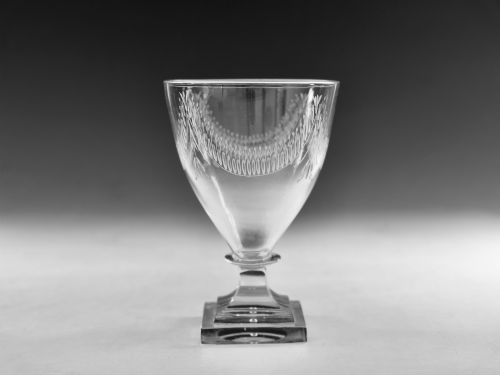
The selection on this page centres heavily on English and Irish drinking vessels, ranging from early baluster dram glasses to Regency cut glass rummers and celery vases.
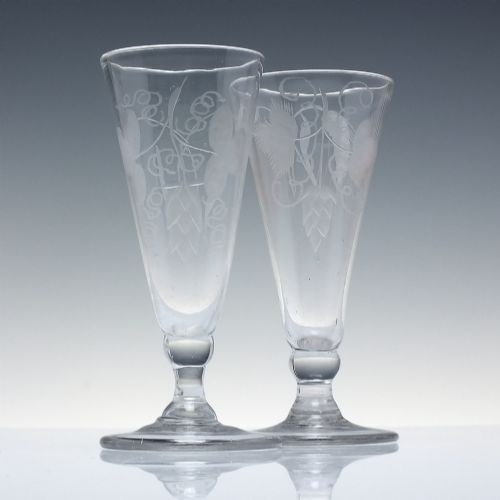
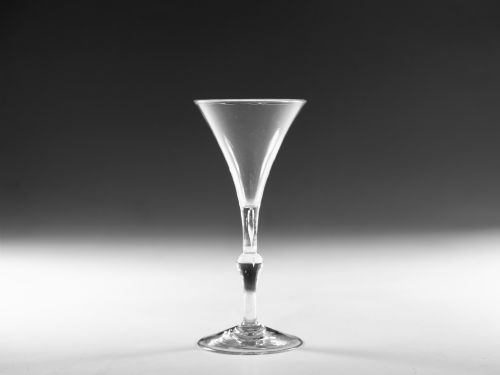
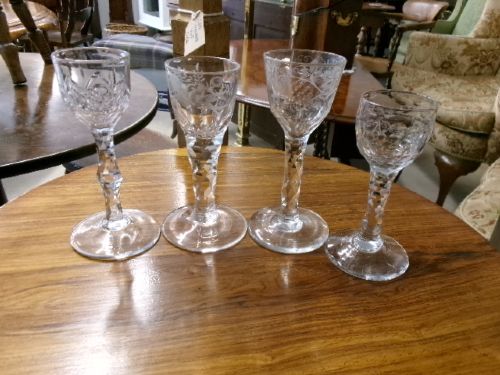
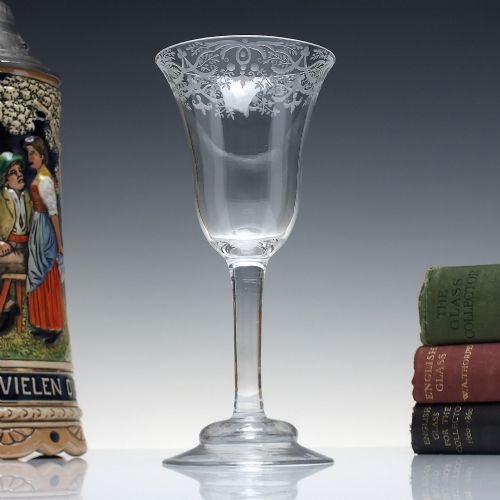
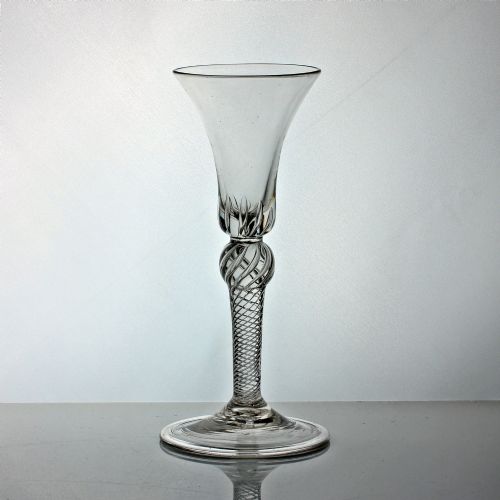
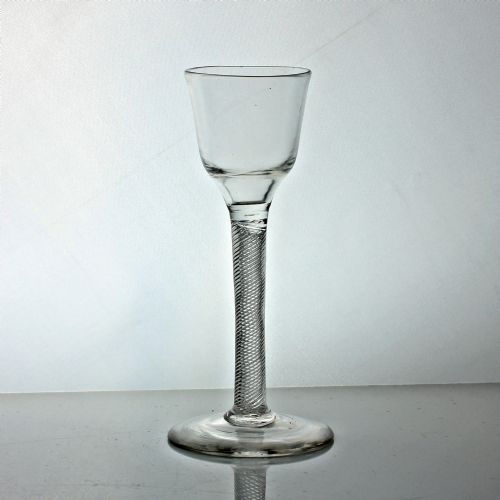
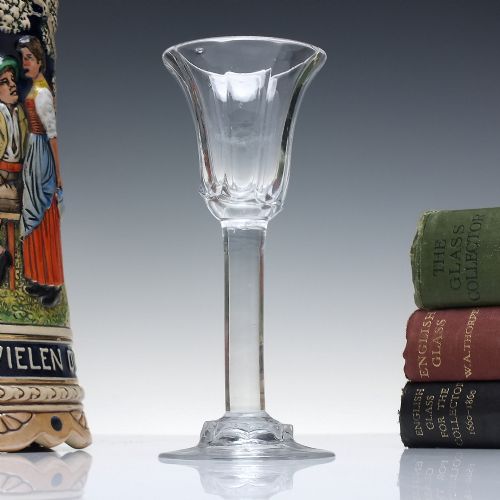
Forms include wine glasses featuring air twists, opaque twists, and plain stems, alongside decorated bowls with engraved hops and barley or faceted designs.
How they were made
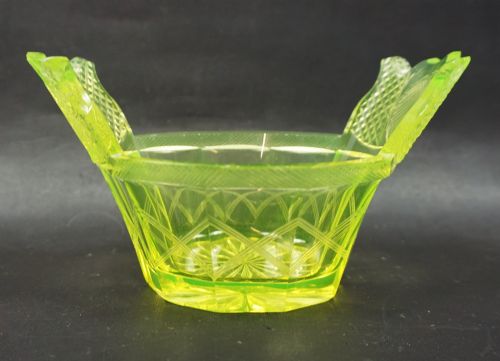
Maker operations utilised lead glass, flint glass, and clear glass formulas, often shaped through rib moulding, petal moulding, or facet cutting on stems and bowls.
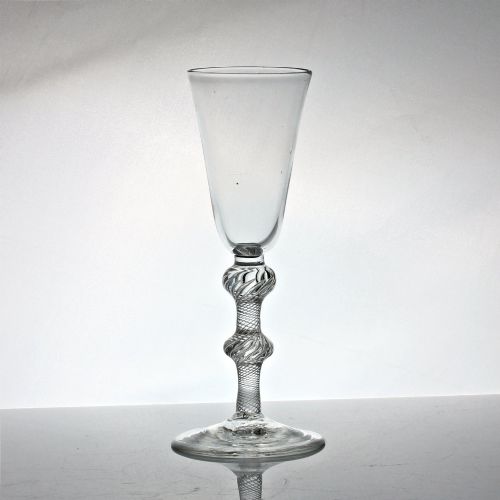
Air twist and opaque twist stems required intricate manipulation of internal bubbles or white enamel threads during the blowing process before being joined to wide foot bases.
Toastmaster glasses featured thick solid bases designed so hosts could appear to drink matching volumes while actually consuming very little.
What varies in quality
Quality rests upon the clarity of the metal, the precision of the twist or cut facets, and the symmetry of the bowl and folded foot.
Pieces bearing specific engravings, such as hops and barley or historical Jacobite motifs, demonstrate superior craftsmanship compared to standard utilitarian vessels.
The Georgian Crystal Glassware Glossary
- Rummer
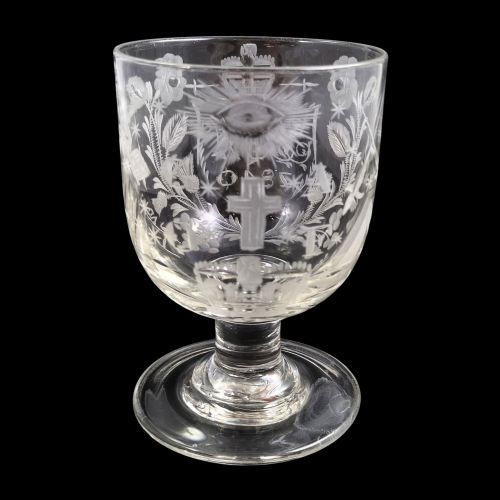
- A large heavy drinking glass popular in the eighteenth and nineteenth centuries for wine, beer, or grog. These pieces often sit on lemon squeezer feet or circular bases.
- Air twist
- A stem formation containing elongated internal spirals of trapped air created by drawing and twisting the glass rod while hot. This technique appears frequently in mid eighteenth century wine glasses.
- Opaque twist
- A stem enclosing one or more white or coloured enamel threads twisted into spiral patterns inside the clear glass. These threads create a stark contrast against the bowl.
- Baluster
- A thick, heavy stem style featuring swelling nodes reminiscent of architectural balusters, typical of early eighteenth century drinking vessels. This form provides a substantial weight in the hand.
- Jelly glass
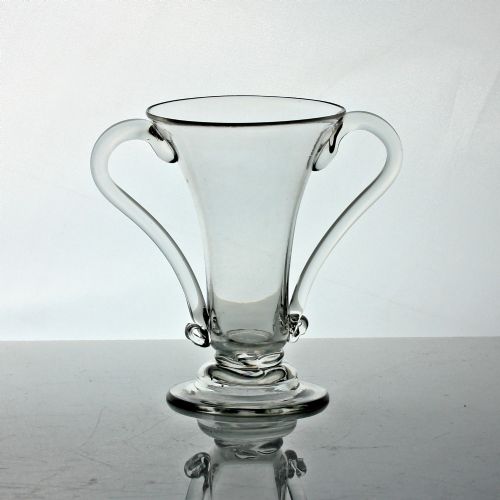
- A small, often handled vessel designed for serving sweet jellies at the dining table. They frequently exhibit moulded ribs or plain lead glass bodies.
Georgian Crystal Glassware: Frequently Asked Questions
How do I identify a genuine eighteenth century wine glass?
Examine the metal for heavy lead content, surface wear on the foot rim, and hand formed characteristics like pontil marks. Older pieces display tool marks and slight irregularities absent in later machine made items.
Check the stem construction, whether air twist, opaque twist, or plain stem, to confirm it aligns with documented eighteenth century manufacturing methods.
What is the difference between a rummer and a wine glass?
Rummers are substantially larger and heavier drinking vessels designed for robust everyday use or serving ale and punch. Wine glasses feature smaller bowls and more delicate stems suited for fortified wines.
Many rummers date from the Regency period and feature cut glass decoration or square lemon squeezer bases.
How should I care for antique glass?
Wash pieces by hand in warm water using mild soap, avoiding harsh scrubbing or sudden temperature changes. Place a towel at the bottom of the sink to protect fragile rims and feet during cleaning.
Dry them immediately with a lint free cloth to prevent water spots on the clear lead glass surface.
Why do some glasses have folded feet?
Folded feet provide additional strength to the rim of the base, reducing chipping during heavy tavern or dining use. This technique was common on eighteenth century wine and ale glasses.
Run a finger gently around the underside of the foot rim to feel the folded edge.