

Engraved Lead Glass
These engraved lead glass vessels carry the weight of centuries, offering a tangible link to past toasts and formal dining tables.
Engraved Lead Glass
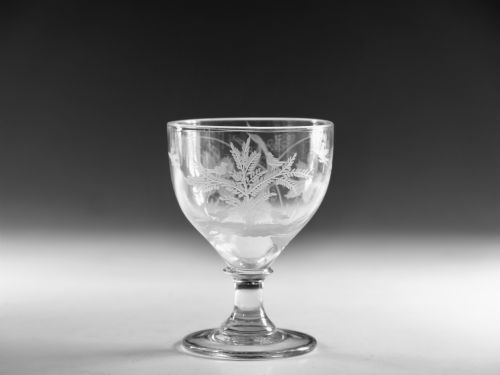
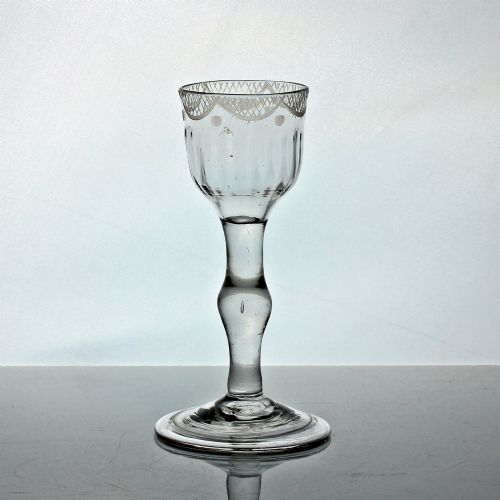
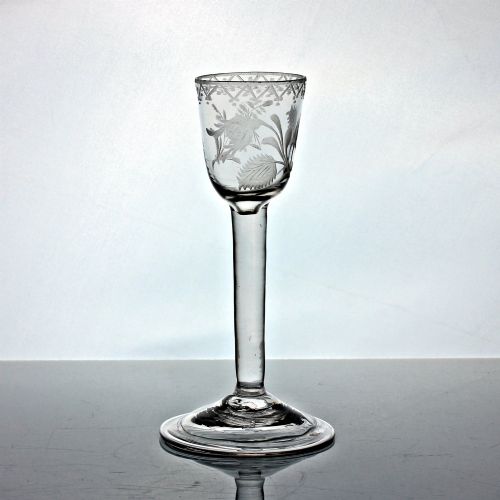
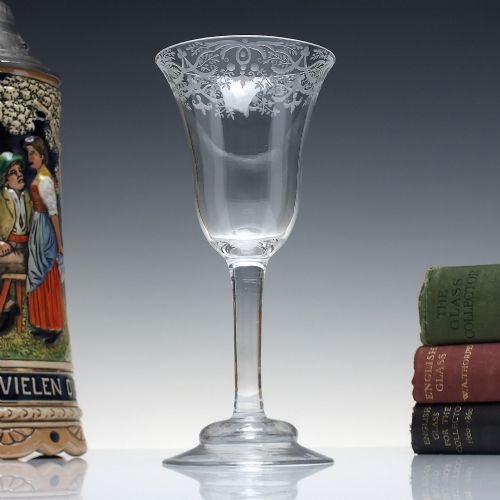
When you search for engraved lead glass, you encounter drinking vessels and serving pieces created primarily during the eighteenth and nineteenth centuries. The selection centres heavily on Georgian and Regency forms, alongside occasional Victorian and Edwardian examples.
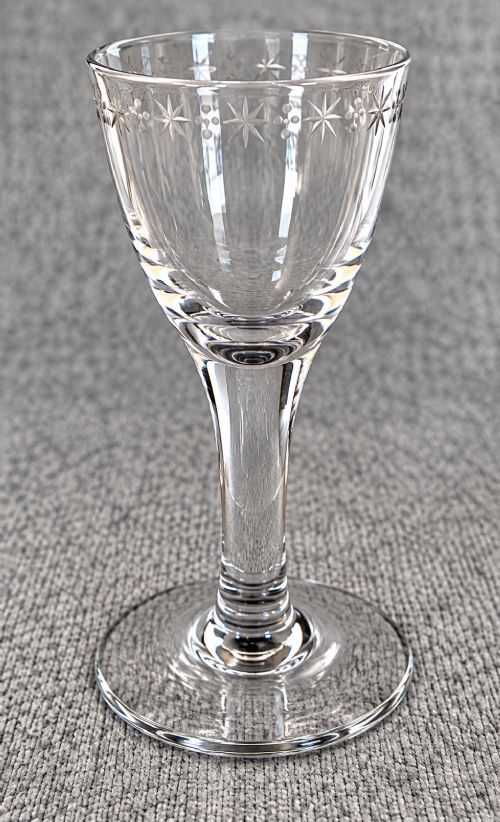
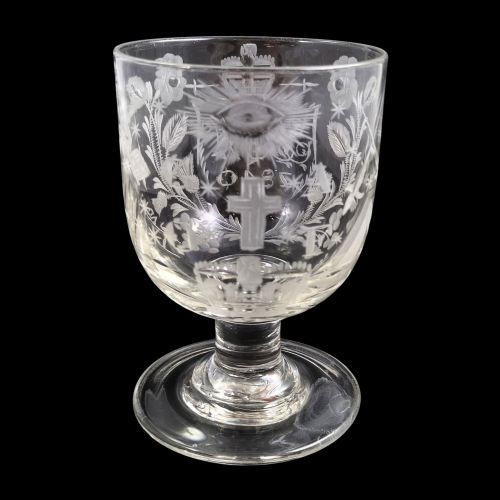
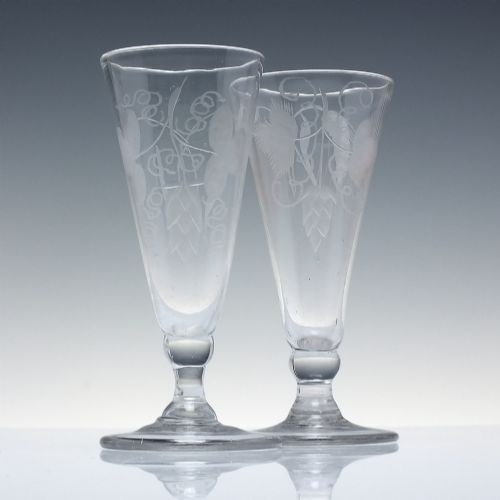
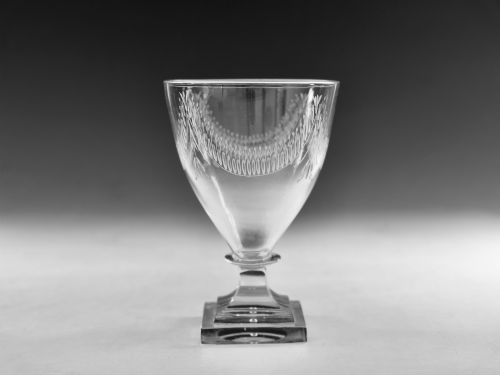
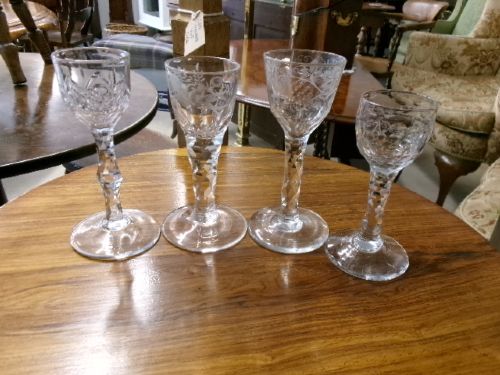
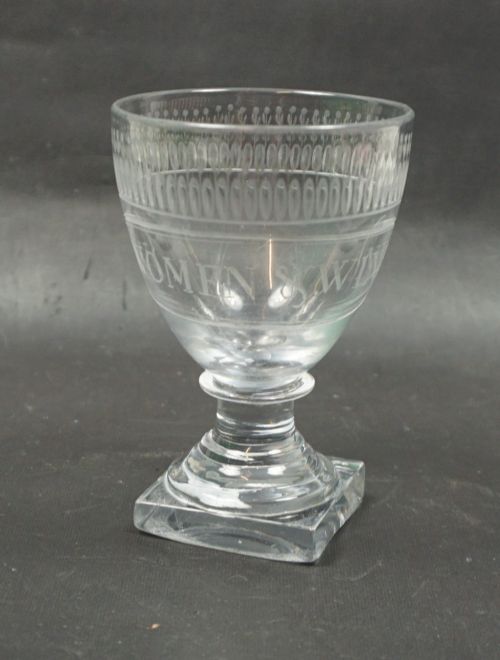
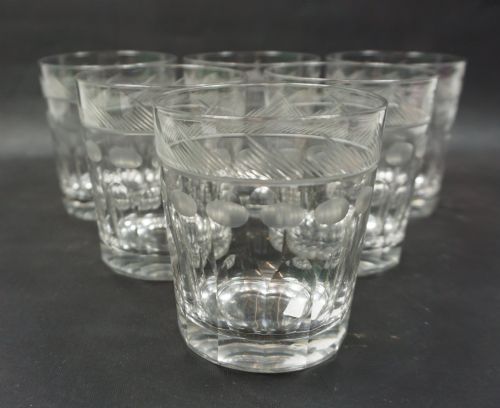
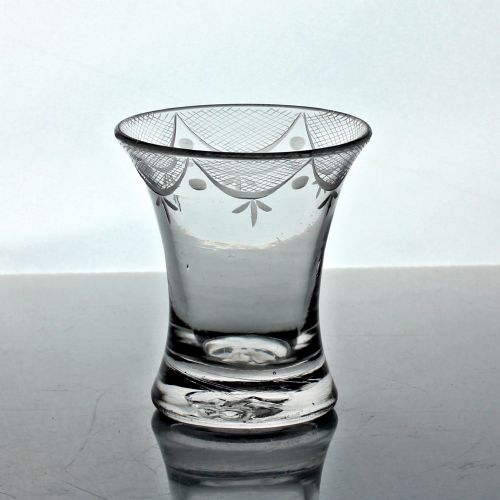
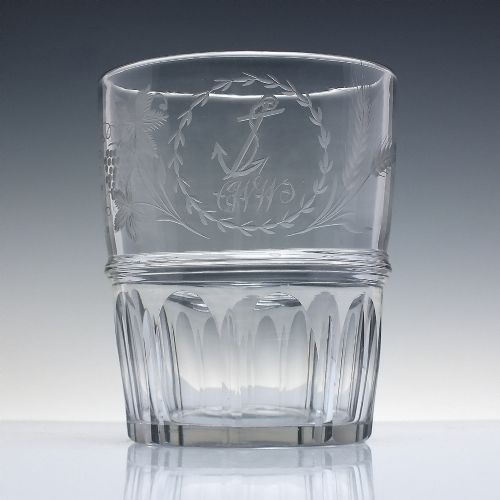
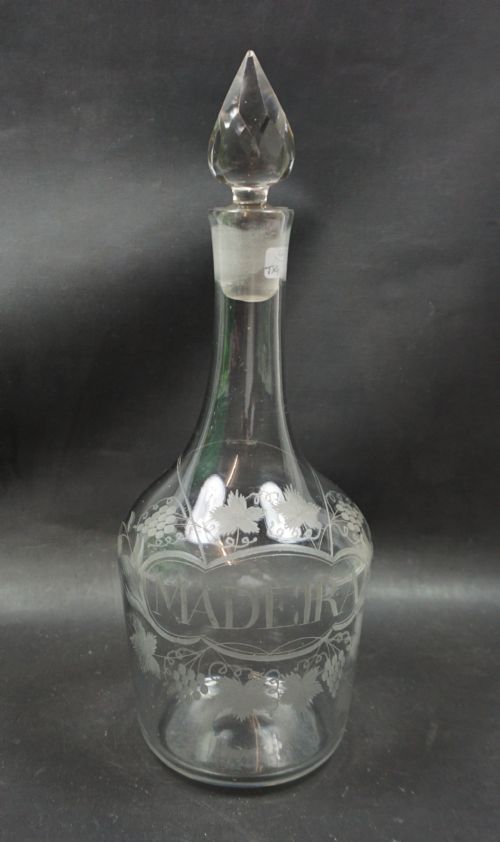
The objects span a diverse range of domestic and ceremonial items, including wine glasses, dram glasses, rummers, beer and ale glasses, decanters, and large goblets. These pieces frequently feature detailed wheel-cut or diamond-point ornamentation upon clear lead glass.
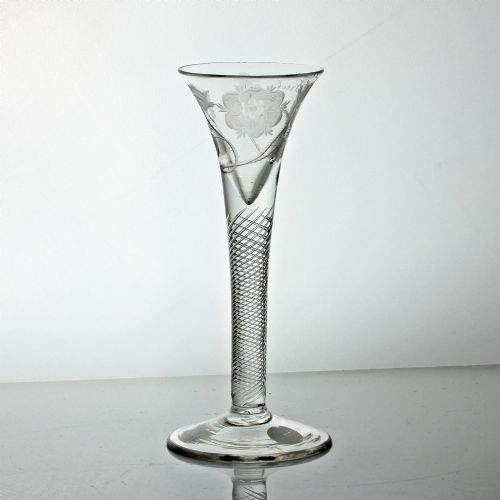
Examples from the mid-eighteenth century onward display distinctive stem formations and bowl shapes, from plain and balustroid stems to faceted and twist variations. The surviving items range from small firing glasses and gin glasses to substantial armorial rummers and decanters labelled for brandy or whisky.
Materials and Techniques
The foundation of these pieces is heavy lead glass or clear lead crystal, sometimes enhanced through optical blowing, nut moulding, or facet cutting. Craftsmen utilised the dense material to achieve deep brilliance and structural clarity.
Decoration was applied manually, employing wheel engraving and intaglio techniques to render motifs such as hops, barley, swag and tail patterns, or commemorative armorial designs. Certain items also incorporate opaque enamel or coloured glass bodies.
Judging Quality
The standard of an engraved lead glass piece depends on the crispness and depth of the wheel engraving, which distinguishes a master's hand from a naive local workshop execution. Clarity of the metal, balanced proportions, and the complexity of the stem formation also dictate the distinction.
Weight and metal density play significant roles, as heavier lead crystal displays superior light refraction. Exceptional examples often incorporate sophisticated internal elements such as air twists or opaque twists, maintaining structural integrity alongside intricate surface decoration.
James Powell
The Engraved Lead Glass Glossary
- Rummer
- A large drinking glass popular from the late eighteenth century onwards, typically featuring a short stem and a capacious bowl used for beer, wine, or punch.
- Firing glass
- A heavy-based drinking glass designed to be banged on a table to create a sharp sound resembling a musket volley during toasts.
- Air twist
- A decorative stem formation enclosing spiral channels of trapped air created by drawing and twisting heated glass rods.
- Opaque twist
- A stem featuring internal threads of white or coloured enamel glass enclosed within clear flint glass.
- Balustroid stem
- A heavier, shaped stem design derived from seventeenth-century architectural balusters, often found on mid-eighteenth-century drinking vessels.
Engraved Lead Glass: Frequently Asked Questions
What is an engraved lead glass rummer used for?
These robust vessels served generous portions of ale, beer, or wine during communal dining and tavern gatherings. Their thick walls and sturdy bases suited them for frequent daily use.
Over time, many evolved into presentation pieces or commemorative items, often decorated with specific toasts, bridges, or armorial bearings.
How can I date an 18th century wine glass?
Dating relies heavily on the stem construction, bowl shape, and foot profile, moving from heavy baluster forms through air and opaque twists to facet-cut designs. The composition of the metal and the presence of pontil marks on the underside also provide key chronological clues.
Engraving styles can further pinpoint an era, reflecting either Jacobite sentiments, political allegiances, or standard floral motifs of the period.
Are these glass pieces suitable for regular use?
While durable due to the dense lead content, antique glassware requires careful handling and hand washing to preserve the delicate surface engraving and polished finish. Sudden temperature changes should be avoided to prevent thermal shock.
Many collectors prefer to display them or reserve them for special occasions to protect the historical surface from modern wear.
What does a hop and barley engraving mean?
Motifs of hops and barley directly reference the ingredients used in brewing beer and ale, frequently adorning rummers and pint glasses. This imagery celebrated agricultural abundance and the contents of the vessel itself.
Such decorations are particularly common on English drinking glasses produced during the Georgian and Regency eras.