


Georgian Engraved Rummer
A georgian engraved rummer brings substantial weight and narrative wheel-engraving to the table, offering a tangible link to eighteenth and nineteenth-century toasts.
Georgian Engraved Rummer
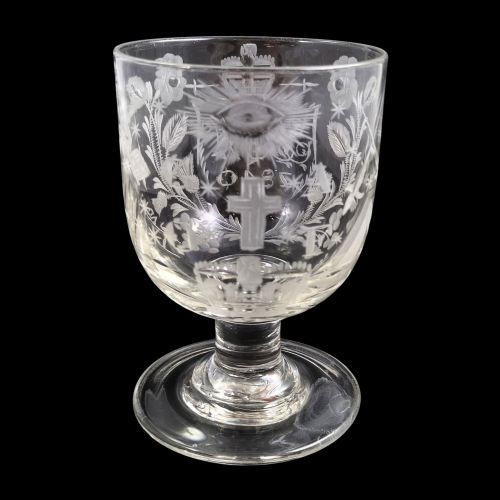
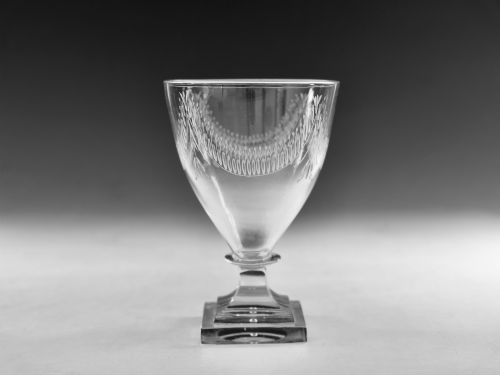
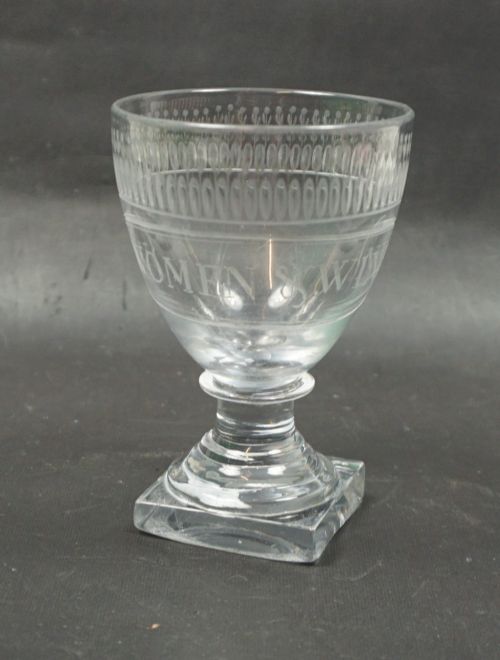
A georgian engraved rummer is a heavy drinking vessel designed for ale, wine or spirits, appearing most frequently from the eighteenth and nineteenth centuries with deep bowls and sturdy feet. The specimens seen here range from compact domestic vessels to large serving pieces, often bearing wheel-engraved motifs that reflect the social habits of their era.
Buyers encounter forms resting on square lemon-squeezer bases, plain stems or ovoid bowls, frequently decorated with agricultural symbols like hops and barley. These vessels served practical tavern and home use, which explains their robust build and capacity to hold generous measures.
Originating largely from English workshops, these items span the Georgian, Regency and later revival periods, demonstrating how drinking culture evolved across generations. The survival of such heavy lead-glass pieces points to their value as household possessions long before modern mass production.
Materials and construction methods
Makers utilised lead glass, crystal glass and flint glass to achieve the characteristic heft and brilliant clarity required for these substantial goblets. Hand-blown manufacturing methods allowed artisans to shape thick walls that could withstand the friction of deep wheel-engraving.
Engraving was executed by holding the glass against rotating stone or copper wheels charged with abrasive paste, creating detailed scenes, armorial bearings and inscriptions. Bases were often moulded separately or pressed into square forms, such as the distinctive lemon-squeezer foot, before being joined to the bowl.
Engraved bridges and ships reveal that Georgian drinkers toasted local engineering triumphs as readily as their favourite beverages.
Distinctions in quality and execution
The precision and depth of the wheel-engraving separate standard domestic vessels from superior examples, with finer work showing crisp detail in subjects like ships, bridges or commemorative mottoes. Surface polish and the relative clarity of the lead glass also indicate the skill applied at the furnace.
Proportion and weight dictate the desirability of a piece, as heavier crystal and well-balanced square bases demand greater technical mastery from the glassblower. Minor variations in wall thickness and tool marks remain standard evidence of hand manufacture rather than flaws.
The Georgian Engraved Rummer Glossary
- Lemon-squeezer base
- A square, moulded foot with bevelled corners resembling the domestic kitchen tool used for extracting citrus juice. This distinctive base appears frequently on Georgian rummers.
- Wheel-engraving
- A decoration technique where the glass vessel is pressed against small rotating wheels to grind away the surface. It produces deep, matte cuts with rounded contours.
- Hop and barley
- Agricultural motifs frequently engraved on drinking vessels to denote the ingredients of beer and ale. These symbols point to the primary beverages consumed from rummers.
- Lead glass
- A heavy glass composition containing lead oxide that increases refractive index and workability. This material provides the characteristic ring and weight found in antique rummers.
- Ovoid bowl
- An egg-shaped vessel profile that tapers gently towards the rim. This form helps concentrate aromas in drinking glasses.
Georgian Engraved Rummer: Frequently Asked Questions
What were rummers used for?
These large vessels were primarily used for drinking ale, wine or punch during social gatherings and tavern toasts. Their heavy build made them durable enough for daily passing around a table.
Over time, larger examples also functioned as serving pieces or centrepieces on dining tables before evolving into decorative display items.
How do I date a georgian engraved rummer?
Dating relies on combining the bowl shape, stem type and foot style with the specific style of the engraving. Square lemon-squeezer bases and ovoid bowls frequently point toward the transition from the eighteenth to the nineteenth century.
Additionally, commemorative subjects, bridges and specific historical figures mentioned in inscriptions help narrow down the period of manufacture.
Are these glasses safe to use?
While historic lead glass remains physically robust, collectors generally avoid using antique rummers for acidic drinks or daily dining due to potential surface wear and chemical leaching over time. Hand washing in lukewarm water is essential if owners choose to use them.
Most buyers prefer to display these pieces or use them strictly for dry storage to preserve the fragile engraved surfaces.
What is a lemon-squeezer base?
A lemon-squeezer base is a moulded square foot with indented corners that mimics the shape of contemporary kitchen implements. This heavy base provides exceptional stability to tall drinking vessels.
Its presence on a rummer usually indicates early nineteenth-century or late eighteenth-century English manufacturing methods.