

Engraved Drinking Goblet
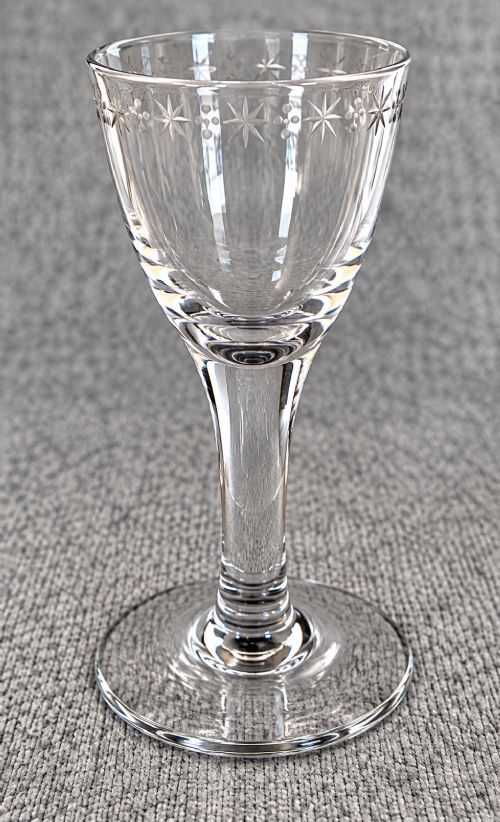
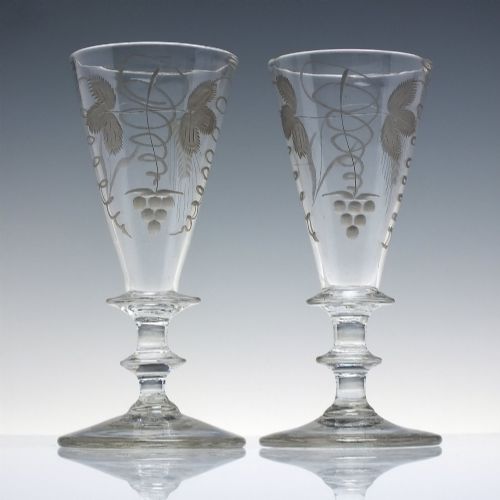
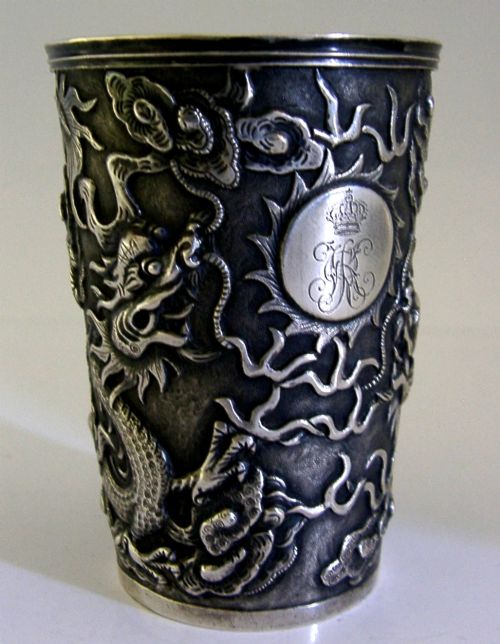
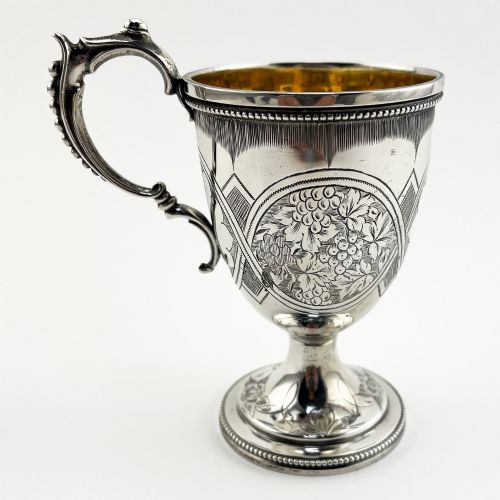
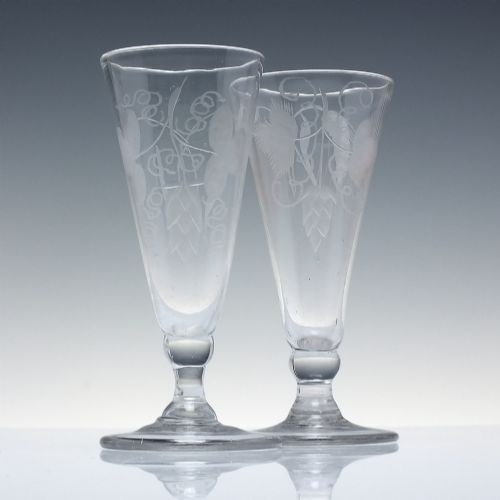
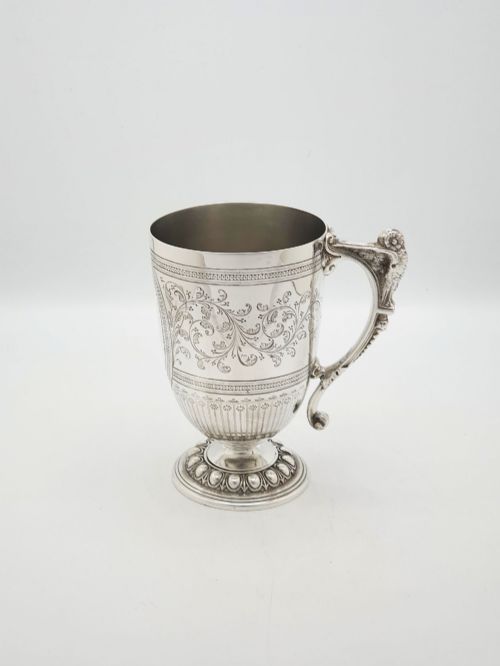
An engraved drinking goblet brings tangible weight and historic detail to the table, spanning Georgian dram glasses to Victorian silver vessels.
Engraved Drinking Goblet
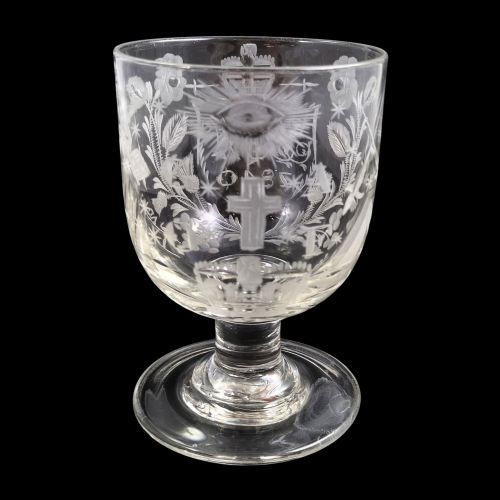
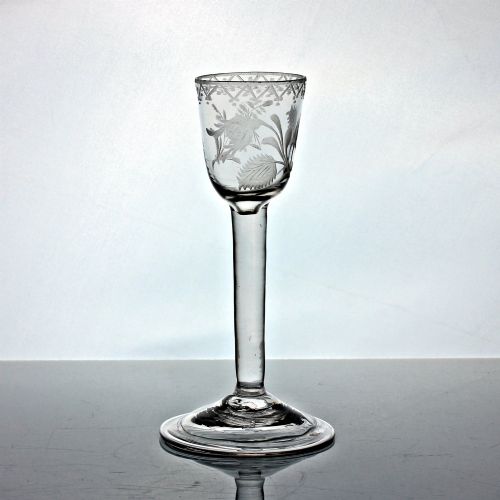
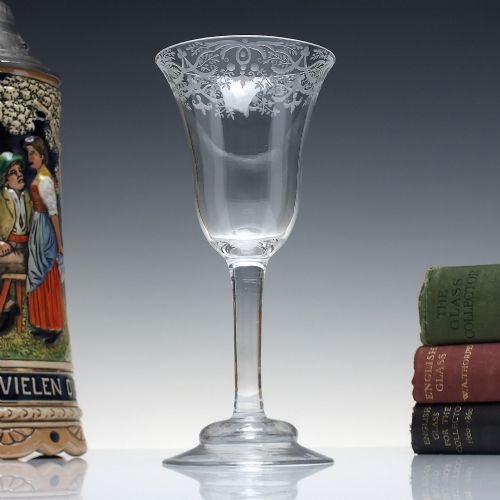
An engraved drinking goblet covers a broad range of historic vessels designed for wine, ale, rum, and ceremonial toasts. When searching for an engraved drinking goblet, buyers encounter pieces stretching from the early eighteenth century through the Victorian and Edwardian eras.
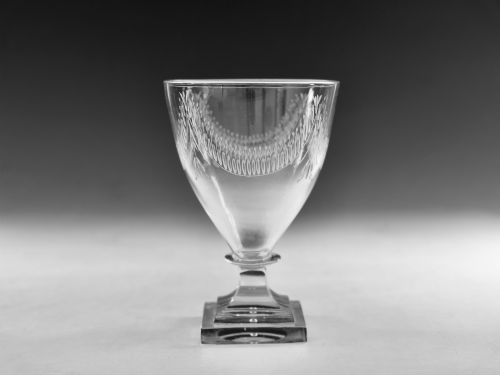
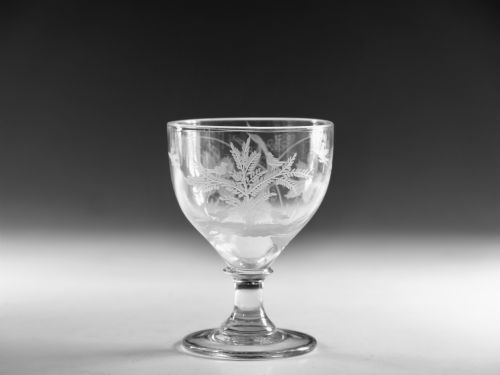
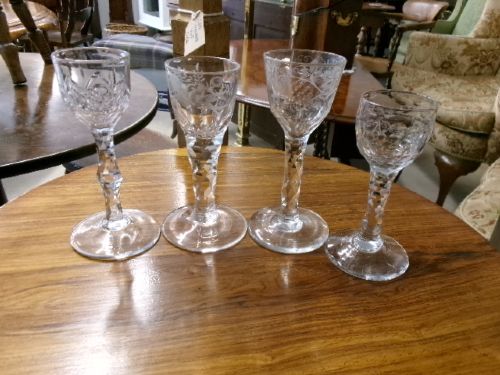
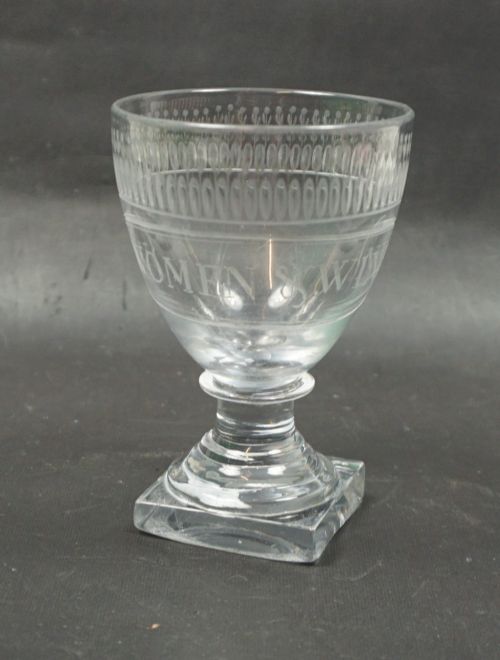
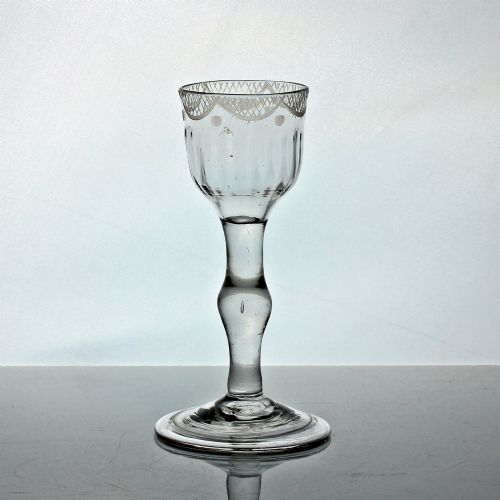
The selection on this page leans heavily towards Georgian lead glass rummers, dram glasses, and wine vessels alongside later silver and silver-plated examples. Forms vary from sturdy square-footed rummers to slender baluster stems and heavy commemorative goblets.
Origins are predominantly English, though pieces span regional workshops such as Newcastle alongside Chinese export silver beakers. Collectors find both intimate domestic drinking vessels and substantial commemorative pieces marked with ciphers, crests, and floral motifs.
Evaluating quality and execution
Quality rests upon the crispness of the wheel engraving and the clarity of the metal or glass body. Fine execution shows deep, deliberate cuts on the bowl and balanced proportions across the stem and foot.
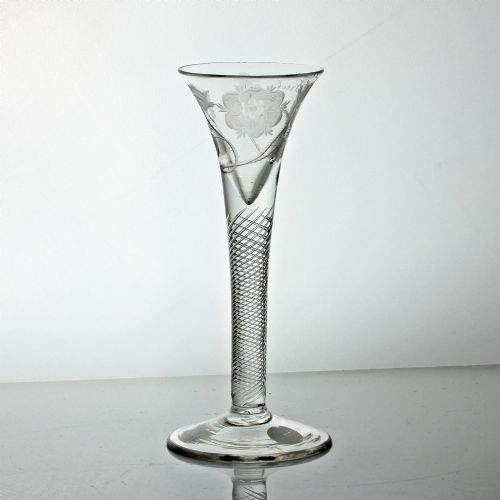
Weight and tactile presence distinguish superior pieces, particularly in lead crystal rummers and cast silver goblets. The complexity of internal stem formations, such as multi-spiral air twists, elevates the technical merit of glass examples.
The Engraved Drinking Goblet Glossary
- Rummer
- A large heavy drinking glass popular in the eighteenth and nineteenth centuries, often set on a thick stem or square lemon squeezer foot.
- Baluster stem
- A thick, swelling stem shape reminiscent of architectural balusters, seen on eighteenth-century drinking vessels.
- Air twist
- A decorative spiral of tiny air bubbles trapped inside a glass stem during manufacture.
- Intaglio
- A design carved into the surface of glass or metal so that the impression sits below the flat plane.
- Lemon squeezer foot
- A square, moulded glass base with indented corners resembling nineteenth-century kitchen presses.
Engraved Drinking Goblet: Frequently Asked Questions
How do I date an old glass goblet?
Dating relies on combining the form of the bowl, the construction of the stem, and the type of metal oxide used in the glass composition. Eighteenth-century pieces often display plain stems, baluster profiles, or twisted air channels, while later nineteenth-century examples shift towards heavy pressed rummers and Victorian etching.
Foot styles also provide clues, such as folded rims on early pieces or square lemon squeezer bases around eighteen hundred. Comparing the specific engraving style and motifs against documented period examples confirms the era of production.
What is the difference between a rummer and a wine glass?
Rummers are substantially larger and heavier drinking vessels designed for ale, rum, or punch rather than delicate table wines. They typically feature robust bowls resting on short stems and sturdy square or circular feet.
Wine glasses from the eighteenth century tend to have slender profiles with long stems enclosing air or glass twists. Their smaller bowls suited the fortified and lighter wines served during formal dining.
Can I use antique glass goblets for drinks?
Historic glass and silver vessels remain functional for dining and special occasions provided they receive careful handling. Hand washing in lukewarm water preserves the surface and prevents thermal shock to older metal or glass bodies.
Harsh detergents and automatic dishwashers should be avoided entirely to protect delicate wheel engraving and prevent clouding on early lead glass. Storing them securely away from edge hazards ensures these pieces survive for future toasts.
What do Jacobite engravings on glass mean?
Jacobite glasses feature secret symbols and portraits supporting the exiled House of Stuart following the seventeenth-century uprisings. Common motifs include the white rose of Scotland, specific oak leaves, and inscriptions in Latin or covert cyphers.
Sympathisers used these vessels to toast the king over the water during clandestine political gatherings. Today, collectors examine the specific petal counts and bud arrangements to distinguish period political glassware from later nineteenth-century revivals.