
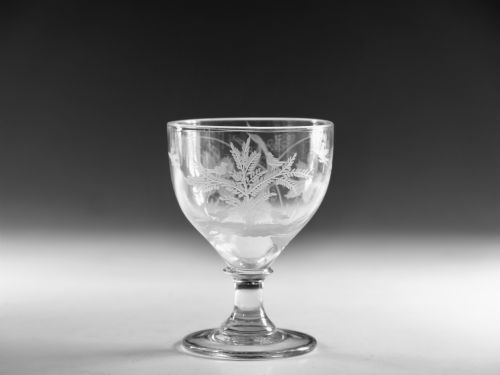
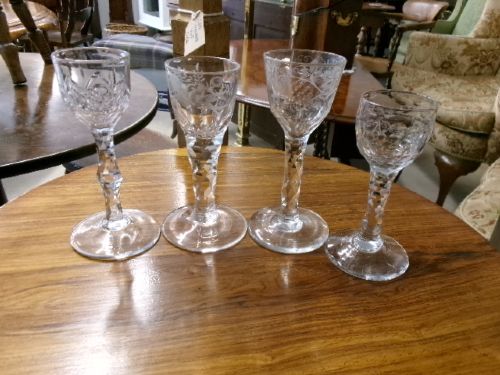
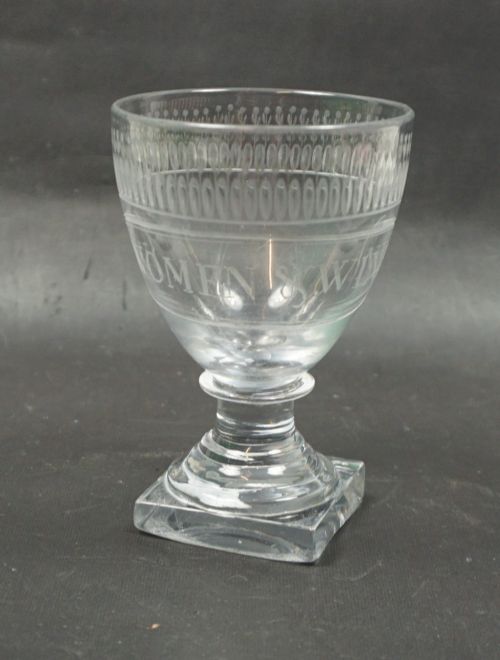
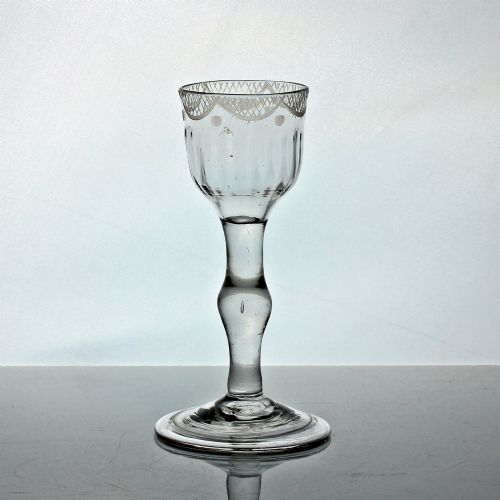
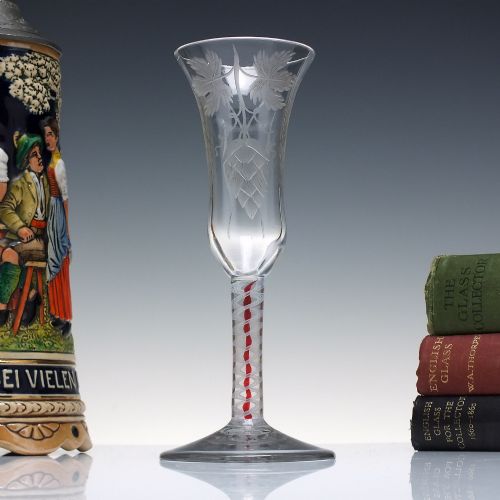
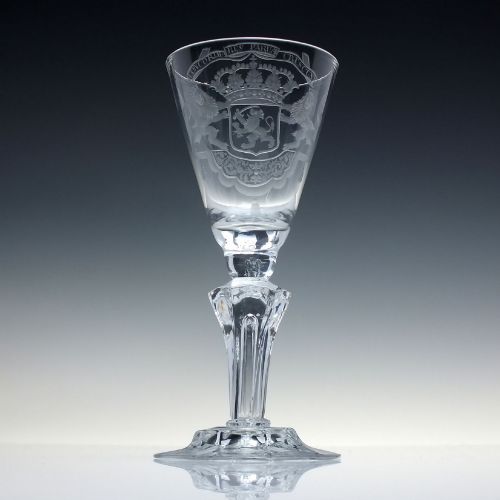
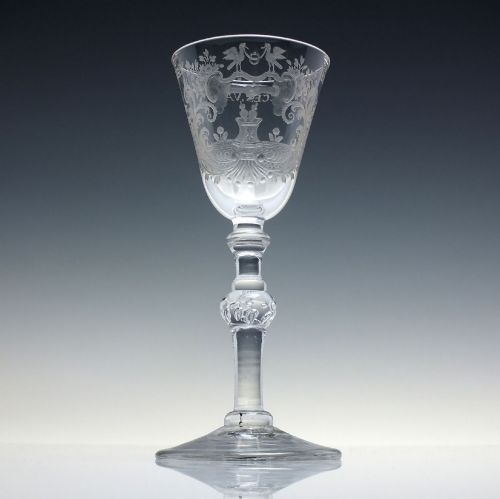
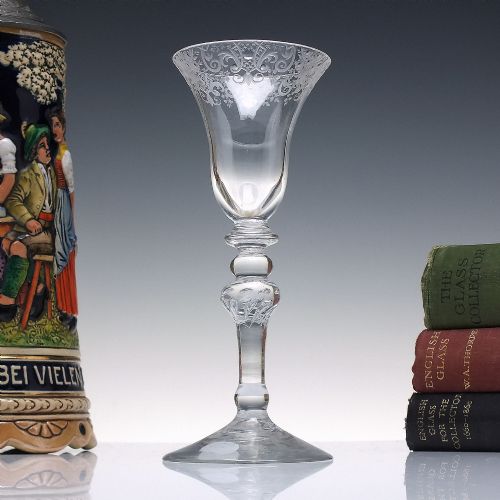
Clear Engraved Wine Goblet
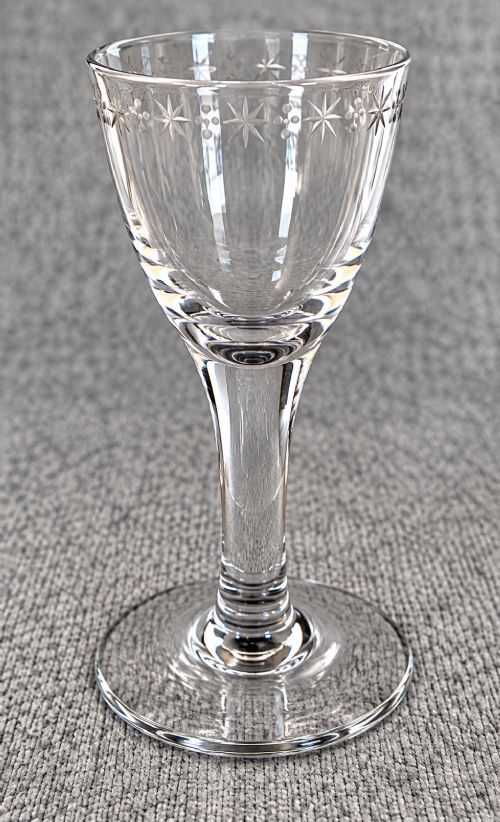
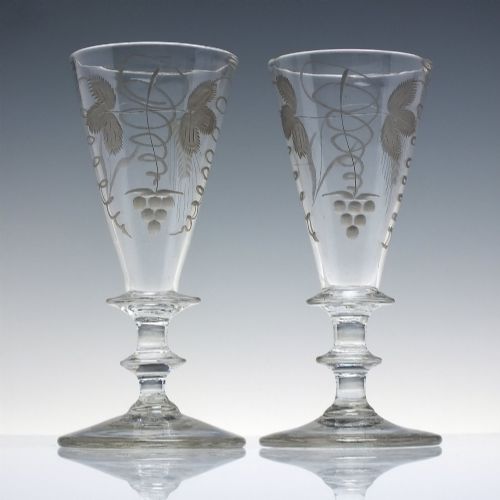
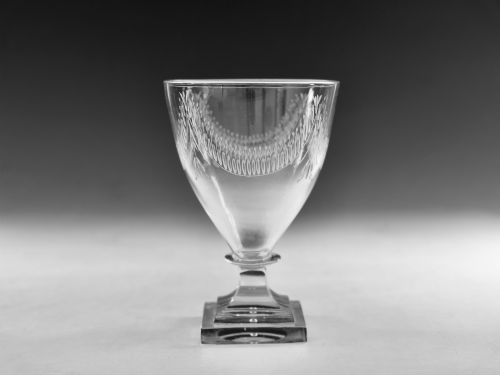
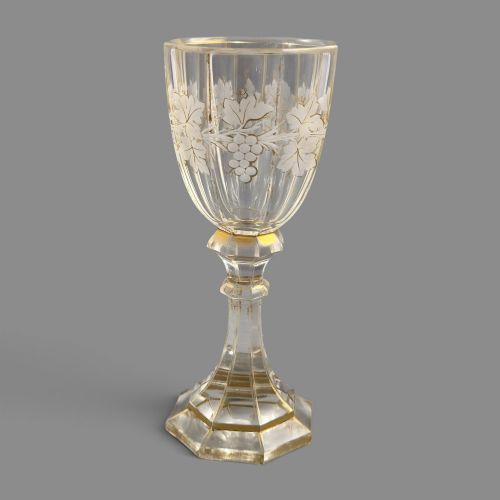
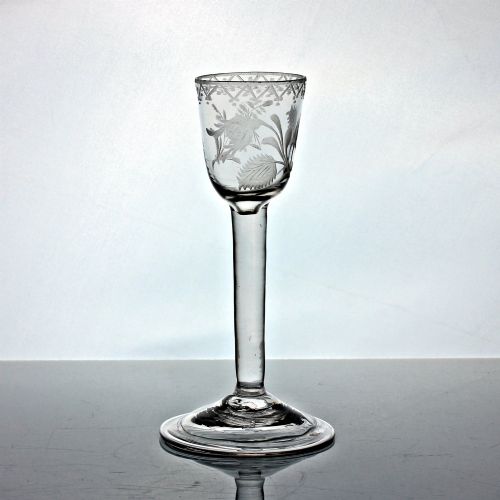
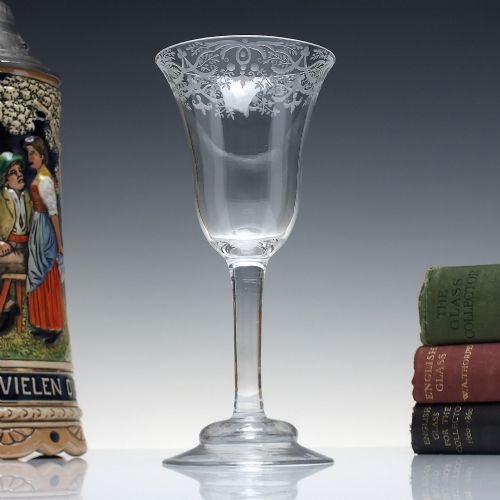
These clear engraved wine goblet examples unite heavy lead crystal, wheel-engraved symbolism, and centuries of British drinking traditions.
Clear Engraved Wine Goblet
A clear engraved wine goblet search brings up drinking vessels spanning from the early eighteenth century through the Edwardian period, with Georgian examples dominating the selection.
Forms range from intimate dram glasses and delicate air twist wine glasses to substantial rummers and ceremonial armorial goblets.
Most items originate from English workshops or Bohemian furnaces, reflecting domestic drinking habits and continental decorative arts alike.
Materials and Technique
The primary material is clear lead glass or crystal, shaped into bowls, stems, and wide foot bases through free-blowing or moulding.
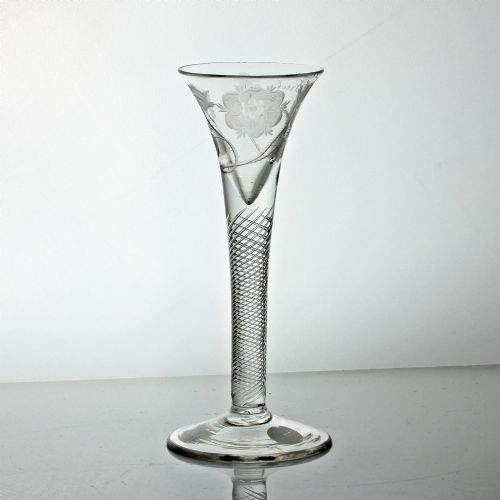
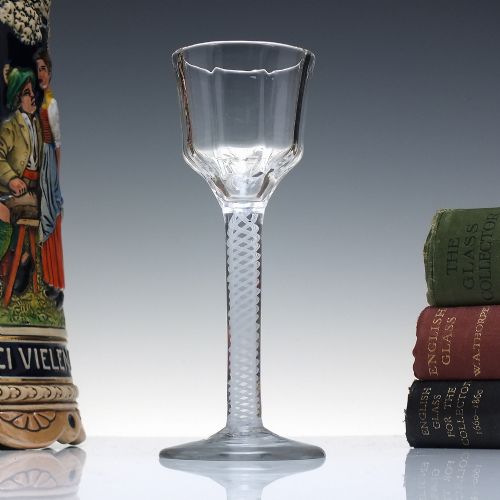
Decoration relies on wheel-engraving, diamond-point etching, and occasionally opaque white enamel twists incorporated into the stems during manufacture.
Higher-end pieces integrate gilding or intricate intaglio cutting, requiring precise hand-workmanship by skilled glass cutters.
Some eighteenth-century vessels carry hidden political toasts engraved into bowls so small they held little more than a single sip.
Judging Quality
Quality rests upon the clarity of the metal, the crispness and depth of the wheel engraving, and the structural balance of the stem and foot.
Early pieces show subtle imperfections such as tool marks or tiny entrapped air bubbles that indicate hand-blown fabrication.
Superior items maintain sharp surface ornamentation and harmonious proportions without cloudiness in the body.
Moser Bohemian·Webb Corbett
The Clear Engraved Wine Goblet Glossary
- Rummer
- A large, heavy drinking glass popular for wine, punch, or ale during the Georgian era. These vessels usually feature sturdy stems and capacious bowls.
- Air twist
- A stem formation enclosing spiral threads of tiny air bubbles trapped within the molten glass. Makers achieved this effect by drawing and twisting heated glass rods.
- Opaque twist
- A stem decorated with internal threads of white or coloured enamel glass. These threads run in single or double spirals through the clear stem.
- Lemon squeezer base
- A square, heavily pressed glass foot with sloping sides resembling a kitchen juicer. This design kept heavy rummers stable on dining tables.
- Intaglio
- A technique where the design is carved deeply into the glass surface rather than left in relief. This creates a frosted, three-dimensional visual effect.
Clear Engraved Wine Goblet: Frequently Asked Questions
What is a rummer glass?
A rummer is a capacious drinking vessel designed for heavy table use during the late eighteenth and nineteenth centuries.
These pieces typically feature wide bowls and short, sturdy stems supported by circular or square lemon squeezer feet.
How do I identify a Jacobite glass?
Jacobite glasses display clandestine political symbols such as roses, oak leaves, or specific mottos connected to the exiled Stuart cause.
Engravers often added these emblems secretly onto plain, air twist, or multi-spiral stems during the Georgian period.
What makes an air twist stem?
An air twist stem contains elongated spirals of tiny air bubbles trapped inside the clear metal during formation.
Glassmakers manipulated the hot material by pulling and twisting it before the vessel cooled completely.
How should I display antique goblets?
These drinking glasses require stable shelving with adequate space to prevent accidental impacts between wide foot bases.
Indirect natural light helps reveal the subtle details of wheel engraving and the clarity of the lead crystal.