
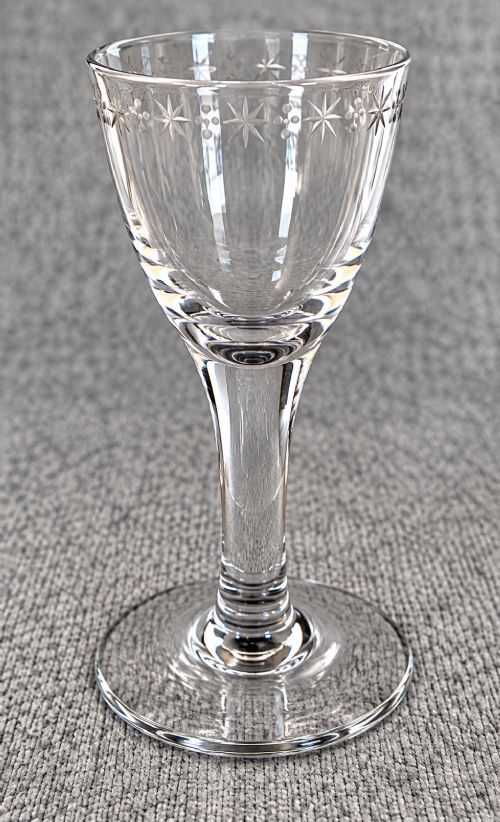
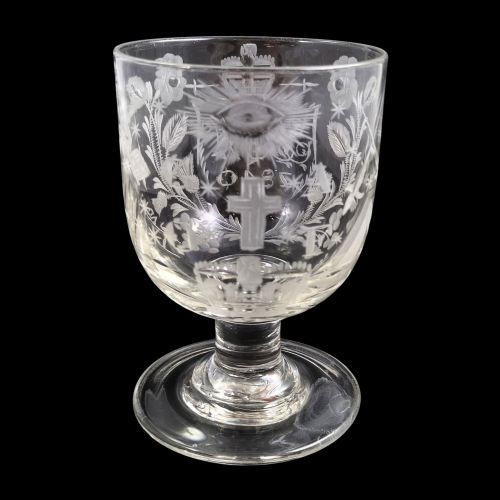
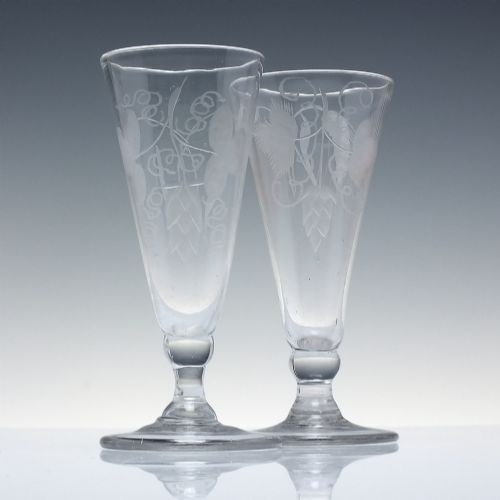
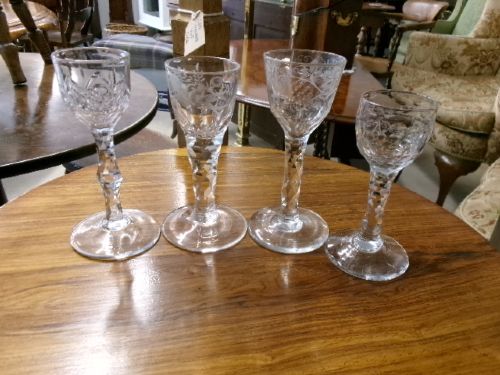
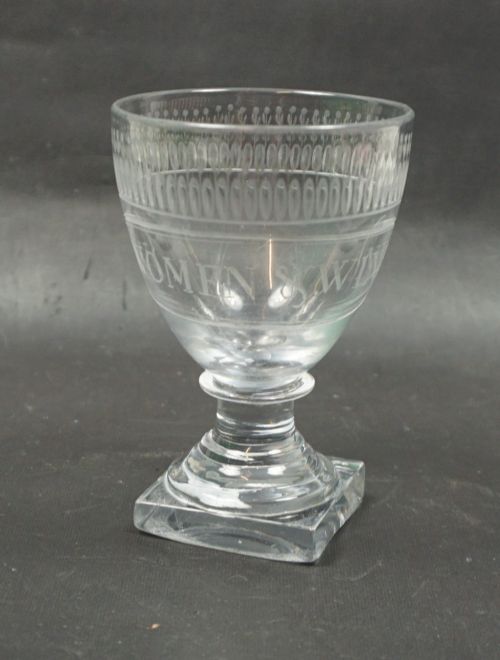
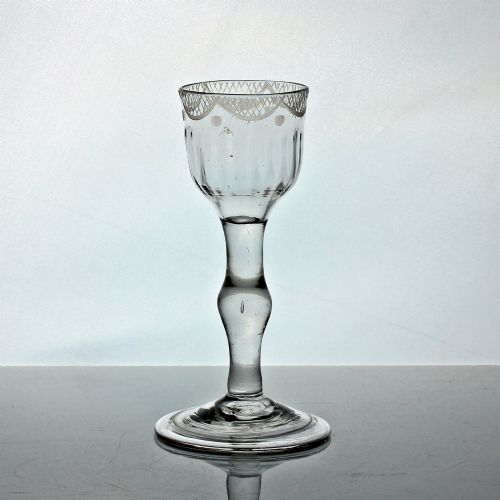
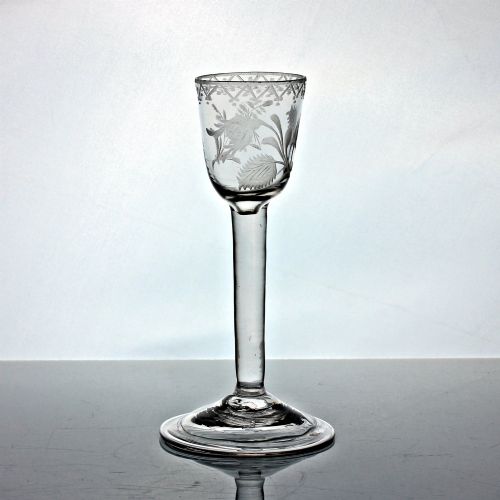
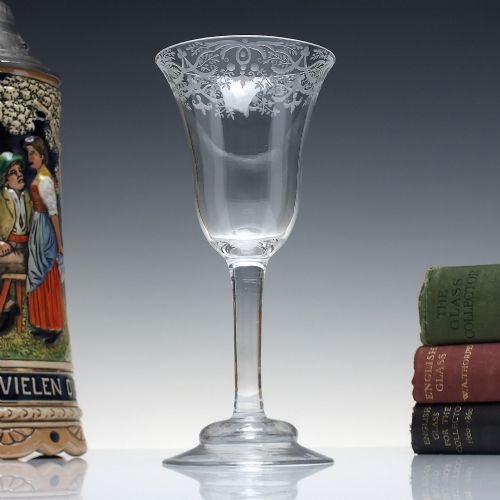
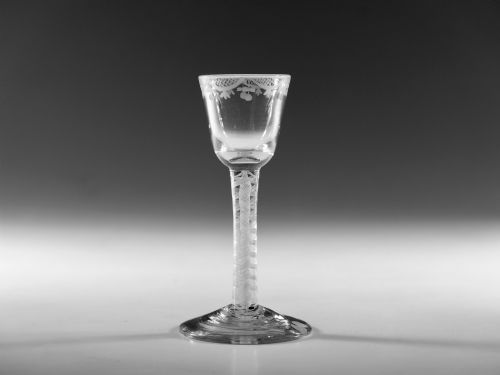
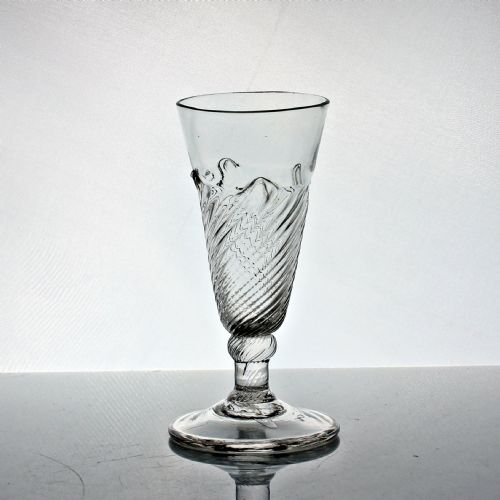


Engraved Lead Glass Stemware
Engraved lead glass stemware comprises drinking vessels shaped for wine, beer, spirits, and celebration, carrying surface wheel-engraving or diamond-point work from past centuries.
Engraved Lead Glass Stemware
Engraved lead glass stemware covers drinking vessels from the eighteenth century onward, encompassing wine glasses, rummers, ale flutes, and goblets.
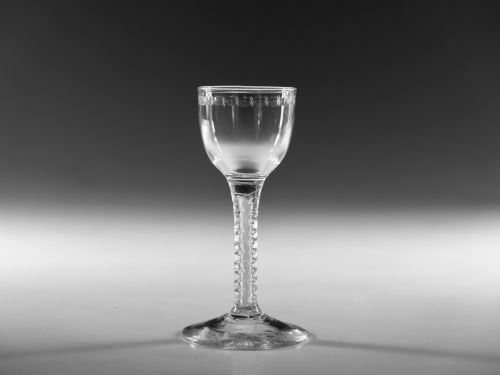
Buyers meet pieces originating primarily from the Georgian, Regency, Victorian, and Edwardian periods, manifesting in forms such as dram glasses, ratafia glasses, and champagne coupes.
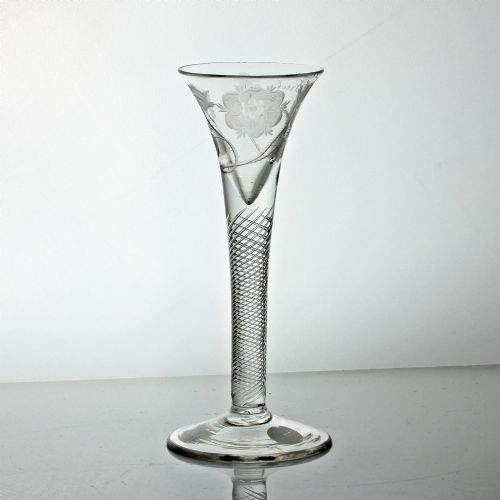
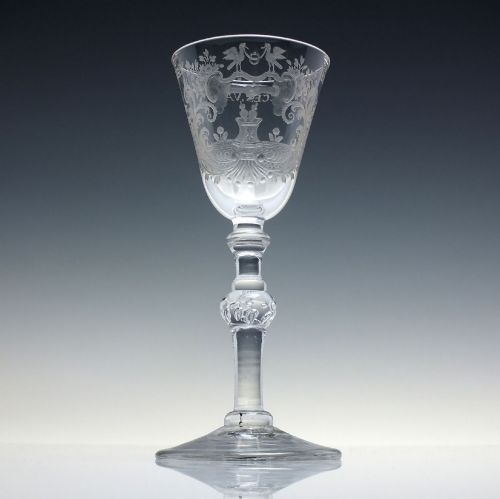
The objects frequently display decorative motifs including Jacobite symbols, hops and barley, armorial crests, and commemorative bridges.
Materials and production methods
Maker operations utilised lead glass, clear lead glass, and flint glass to achieve clarity and weight in the finished stems.
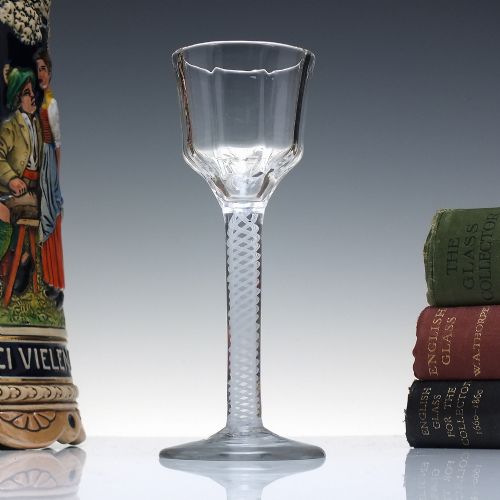
Vessels incorporated specialised stem formations such as balusters, balustroids, plain stems, multi-spiral air twists, single-series opaque twists, and facet cuts.
Decoration was applied through wheel engraving, intaglio cutting, etching, and opaque enamel work on bowls and feet.
The listings span the eighteenth century, Georgian era, Regency period, Victorian era, and Edwardian period in lead glass, flint glass, and clear lead glass.
Assessing quality in historical glassware
Quality rests upon the crispness and depth of the wheel engraving, alongside the symmetry of the drawn or joined stem and foot.
The clarity of the lead glass and the proportion between bowl, stem, and wide foot base determine the visual balance of the piece.
Historical significance, such as armorial commissions, dated inscriptions, or specific political associations, elevates certain examples above standard domestic tableware.
The Engraved Lead Glass Stemware Glossary
- Rummer
- A heavy drinking glass with a short stem, commonly used for ale, wine, or punch during the Georgian and Regency periods. These vessels frequently feature bucket bowls and engraved exterior decoration.
- Air twist
- A decorative stem formation containing spiral threads of trapped air inside the glass. The technique was achieved by drawing bubbles down the molten metal before twisting and sealing.
- Opaque twist
- A stem featuring white or coloured enamel threads enclosed within clear glass. Makers formed these by combining opaque rods with molten metal prior to drawing and twisting.
- Ratafia glass
- A narrow flute designed for serving sweet cordials and liqueurs. The slender bowl sits upon a tall stem and a wide foot base.
- Baluster stem
- A heavy, swelling stem shape reminiscent of architectural pillars found on eighteenth-century furniture. Variations include light balusters and balustroids.
Engraved Lead Glass Stemware: Frequently Asked Questions
How do I date these glasses?
Dating relies upon stylistic markers such as stem construction, foot folds, bowl shapes, and engraving styles specific to periods like the eighteenth century or the Regency era.
Changes in glass chemistry and cutting techniques across the Georgian and Victorian periods also help establish approximate decades of manufacture.
Were these pieces used daily?
Many examples served utilitarian functions for wine, ale, and spirits at tavern tables or domestic dining rooms. Sturdier forms like rummers endured heavy everyday handling.
Other fragile items, such as commemorative goblets or armorial pieces, likely served occasional celebratory purposes rather than routine meals.
What does Jacobite engraving mean?
Jacobite engraving refers to secret symbolic imagery supporting the exiled Stuart dynasty, commonly including roses, buds, and oak leaves. Collectors prize these surviving glasses for their historical subtext.
Sympathy glasses and specific toasts commemorated political allegiance during times of eighteenth-century unrest.
How should I clean antique glass?
Antique glass requires gentle hand washing in warm water using mild soap, avoiding abrasive sponges or harsh chemicals. Extreme temperature changes should be avoided to prevent thermal shock.
Natural drying on a soft cloth preserves the delicate surfaces of eighteenth-century and nineteenth-century lead glass.