



English Sporting Artwork
English sporting artwork captures the energy of the field, the racecourse, and the kennel through centuries of painting, watercolour, and print.
English Sporting Artwork
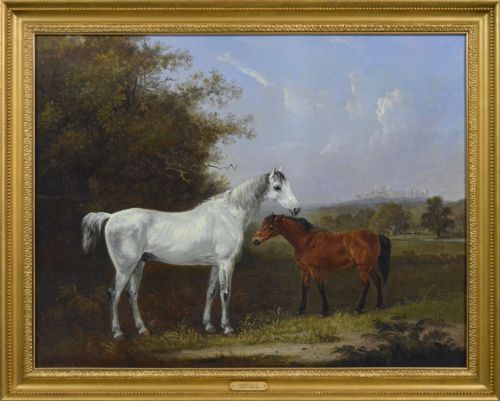
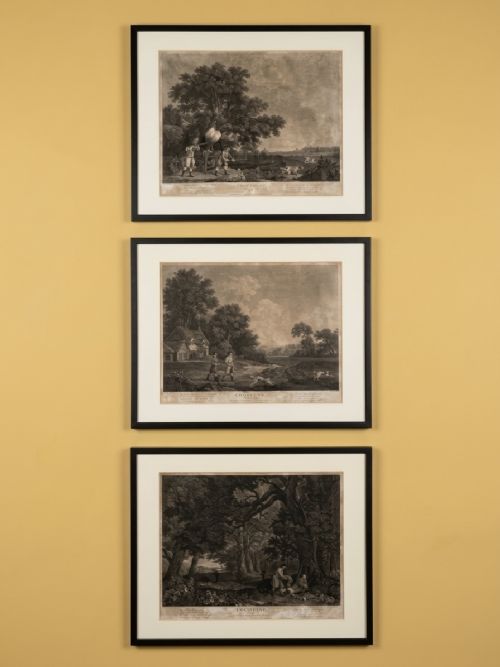
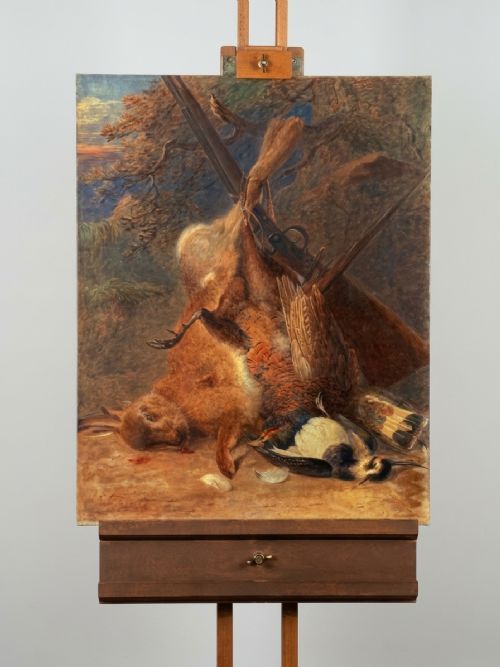
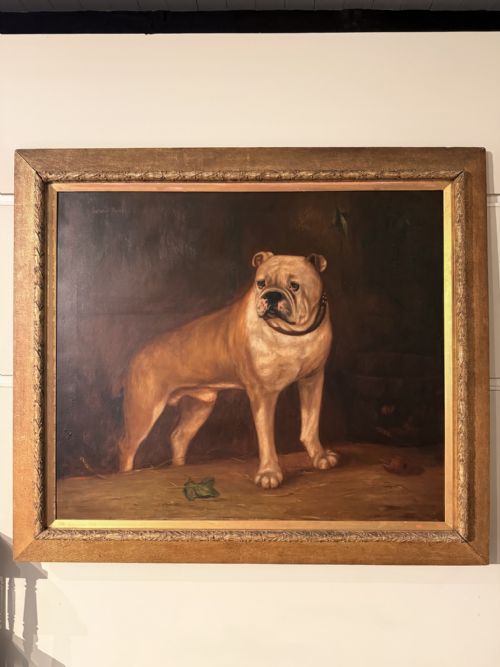
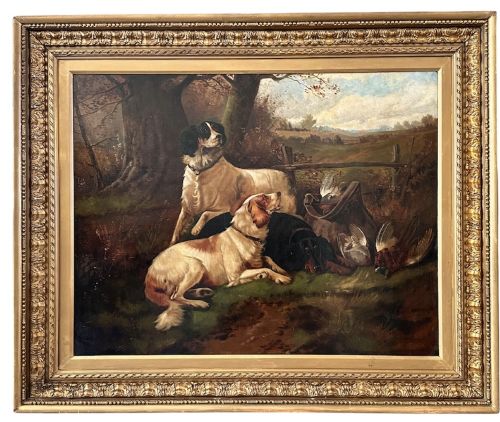
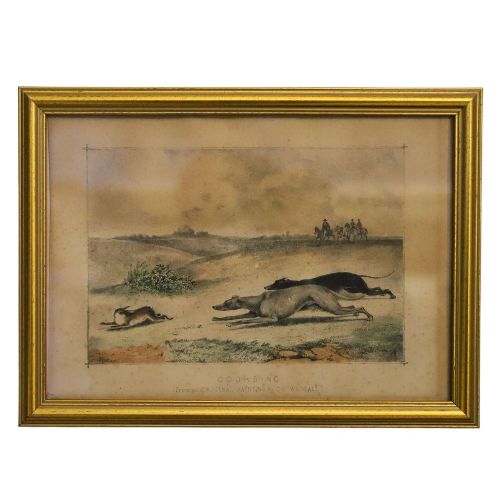
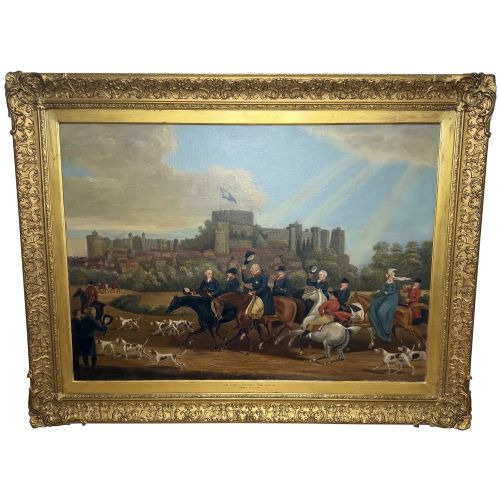
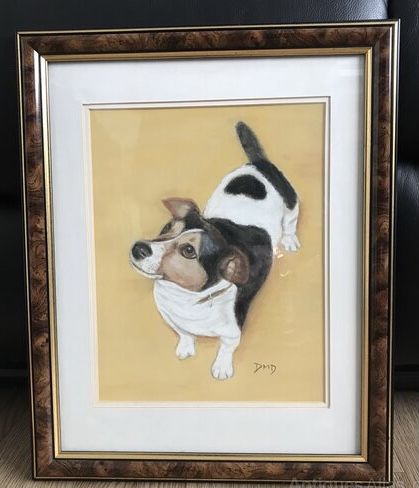
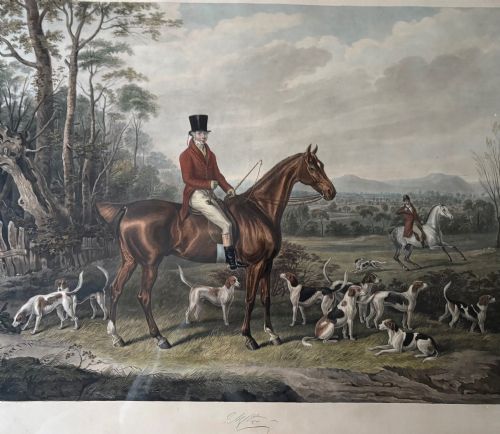
English sporting artwork encompasses depictions of hounds, horses, field sports, racing, and coaching scenes from the eighteenth, nineteenth, and mid-twentieth centuries. A buyer searching this phrase is looking at oil paintings, watercolours, etchings, lithographs, and hand-coloured engravings documenting British rural pursuits and animal portraits. The most common pieces on this page are nineteenth-century oil paintings on canvas and paper works showing hunting scenes, gun dogs, and horse portraits.
The selection extends from Georgian prints and Regency horse portraits through Victorian hunt meetings and Edwardian etchings to mid-twentieth-century paintings. Subjects range from individual prize greyhounds and terriers to vast panoramas of hounds in full cry, coaching coaches in snowstorms, and racehorse portraits. Each piece reflects the social history of rural Britain and the specific artistic traditions associated with field sports.
Materials and techniques
Painters used oil paint on canvas, oil on board, and watercolour with bodycolour on paper to capture the texture of animal coats and the light of rural landscapes. Lithographs, etchings, and engravings provided multiple impressions of popular sporting subjects, often with subsequent hand colouring applied to the printed lines. Frames incorporated gilt wood and glass protection, preserving delicate watercolours, pastels, and pencil drawings.
Artists worked within established traditions of animal anatomy and landscape composition, employing precise brushwork for horse conformation and hound markings. Mediums like chalk and pastel appeared alongside traditional oils, while paper works relied on stable mounting beneath glass to prevent environmental degradation.
Listings feature works spanning the nineteenth, twentieth, and early twenty-first centuries, executed in oil, watercolour, and print.
Quality variations
Quality rests upon the artist's anatomical accuracy in rendering horses and hounds, alongside the handling of light and landscape atmosphere. Master practitioners captured skeletal structure, muscle tension, and individual animal expression with convincing weight, whereas lesser works relied on stiff, formulaic animal postures and flat backgrounds.
The survival of original surface condition, legible signatures, and period framing distinguish superior examples. Works associated with documented painters or published printmakers command greater attention due to their compositional confidence and historical record.
John Sargent Noble·C. H. Weigall·Benjamin Blake·John Rattenbury Skeaping·Arthur Wardle·Samuel Raven·Michael Lyne·Colin Graeme Roe·Samuel Spode·Charles Faulkner·Clifton Tomson·John Frederick Herring Jnr.·Samuel Henry Alken·John Charles Tunnard·Charles Clifford Turner·Henri Schouten·John Atkinson·John Charles Maggs·John Emms·Tom Carr
The English Sporting Artwork Glossary
- Bodycolour
- Watercolour mixed with white pigment to create an opaque finish. This technique adds dense highlights to fur, feathers, and clouds in nineteenth-century works.
- Aquatint
- A printmaking method producing tonal areas resembling watercolour washes. It was frequently utilised for sporting prints depicting racing and hunting scenes.
- Etching
- A process where lines are bitten into a metal plate with acid before printing. Etchings allowed artists like James Dobie to capture fine detail in narrative sporting subjects.
- Lithograph
- A planographic printing technique using stone or metal plates. Lithographs reproduced original drawings and watercolours for nineteenth-century field sports publications.
- Signed
- Bearing the artist's handwritten name or monogram on the painted surface or margin. Signatures assist in attributing works to specific nineteenth and twentieth-century practitioners.
English Sporting Artwork: Frequently Asked Questions
How do I date a piece?
Dates rely upon artist lifespan records, clothing styles of human figures, framing materials, and printing techniques. Nineteenth-century works often bear signatures or period exhibition labels on the reverse.
Paper stock, plate marks, and publisher inscriptions help establish the production era for prints and engravings.
Were these works meant for display?
Sporting paintings and framed prints historically hung in country houses, estate offices, and gentleman's clubs to celebrate prized animals and successful hunts. Oil paintings on canvas provided durable decoration for principal rooms.
Watercolours and delicate drawings under glass required more sheltered placement away from direct sunlight.
How do I care for antique watercolours?
Works on paper demand protection from direct sunlight to prevent fading of watercolours and hand-coloured inks. Stable indoor humidity prevents foxing spots and paper distortion.
Glazed frames should remain sealed to block dust and atmospheric pollutants from reaching the fragile pigment surface.