



Georgian Folk Art Painting
When you handle georgian folk art painting pieces, you touch the unpretentious heart of domestic history through surviving canvas, wood, and oil.
Georgian Folk Art Painting
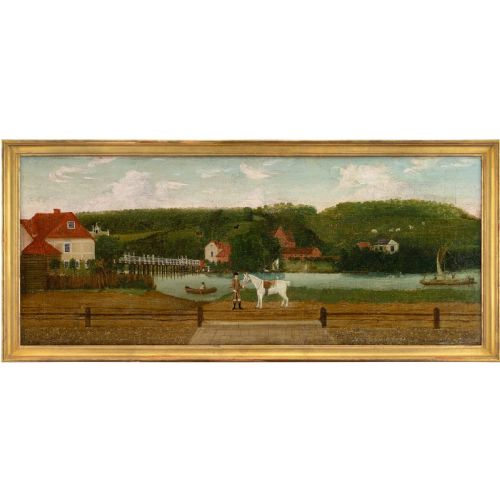
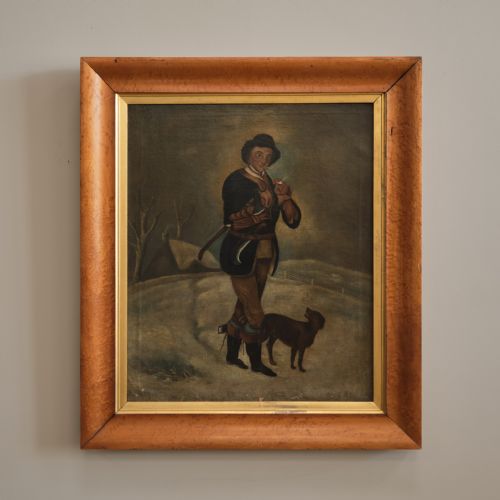
A georgian folk art painting brings together naive portraiture, topographical scenes, and regional vernacular expression from the eighteenth and nineteenth centuries. Buyers searching for this phrase seek out honest visual records created outside the formal academic traditions of the period.
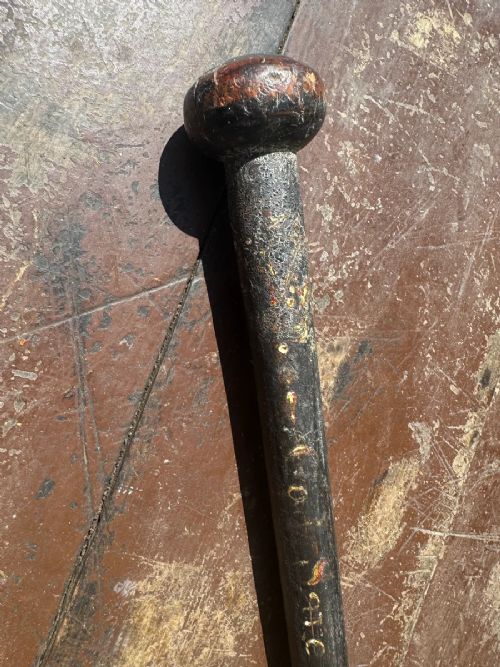
The objects appearing on this page span oil on canvas, oil on panel, and watercolour works alongside painted wooden items carrying native decorative schemes. Pieces range from early child and gentleman portraits to topographical landscapes and rural character studies.
Origins stretch across English, Welsh, and continental workshops, reflecting local tastes in domestic decoration and primitive artistry. The materials remain straightforward, relying on pine, canvas, and mixed pigments applied by untrained hands.
How they were made
Makers utilised basic pine and hardwood panels alongside canvas stretched over simple timber frames as the foundational support for their compositions. Pigments were mixed locally, often resulting in rich, textured surfaces that retain their original character through centuries of light and handling.
Dummy boards and wooden figures involved sawing shaped timber outlines before applying paint directly to the wood to create life-size illusions or decorative accents. Joinery on chests and cupboards remained functional, executed with hand tools to provide sturdy surfaces for subsequent painted ornamentation.
Listings span the eighteenth and nineteenth centuries, featuring oil paintings, painted pine chests, and carved wooden figures.
What varies in quality
The strength of a composition lies in the directness of the observation and the confidence of the brushwork rather than academic proportion. Pieces executed by makers with a distinct personal vision hold the eye more effectively than hesitant copies of formal academic art.
Survival of original surface paint determines the integrity of many items, with untouched colour schemes offering greater historical weight than later overpainting or heavy restoration. The balance between utilitarian function and decorative artistry marks the distinction within this category.
The Georgian Folk Art Painting Glossary
- Naive art
- Artwork characterised by a childlike simplicity in perspective and proportion, created by artists without formal academic training. This style forms the core visual language of provincial portraits and landscapes.
- Vernacular
- Objects built by local tradesmen using regional traditions and readily available materials rather than high-style architectural designs. Welsh and English country pieces demonstrate this practical local approach.
- Scumble
- A painting technique involving the application of a thin, translucent layer of colour over a different base coat to create mottled texture. It frequently appears on country pine furniture to simulate richer woods or aged surfaces.
- Topographical painting
- An accurate visual record of a specific real-world location, town, or estate. These works document landscapes and buildings before modern industrial development altered them.
Georgian Folk Art Painting: Frequently Asked Questions
What is a dummy board?
A dummy board is a life-size painted wooden figure fashioned to stand in a room as a decorative companion. Makers cut these figures from timber before applying oil paint to depict servants, soldiers, or animals.
These pieces were placed near fireplaces or doorways to startle visitors or simply to furnish empty corners. Surviving examples retain their original shaped boards and historic painted surfaces.
How do I identify naive art?
Naive art shows an absence of formal perspective, correct anatomical proportion, and classical training. The maker relies on personal observation and straightforward mark-making to capture figures and spaces.
This approach yields honest portraits and landscapes with immense character and direct emotional presence. The charm rests in the maker's unvarnished interpretation of their subject.
What woods were used?
Pine serves as the primary wood for many painted chests, cupboards, and boxes listed here. Hardwoods also appear in structural elements and smaller carved decorative items.
Local craftsmen selected these timber types for their availability and ease of working. Painted finishes were then applied directly over the prepared wooden surfaces.
How should I care for painted wood?
Painted wooden objects require stable indoor humidity away from direct sunlight and heat sources. Harsh chemical cleaners must be avoided to protect the historic pigment layers.
Dusting gently with a dry, soft cloth preserves the fragile surface integrity. Respecting the original patina ensures these pieces survive for future generations.