


Folk Art Landscape
A folk art landscape brings the unstudied charm of provincial brushwork and regional topography directly into a room.
Folk Art Landscape
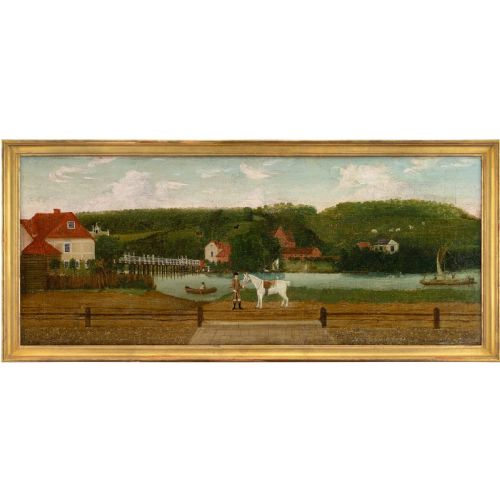
A folk art landscape captures rural scenes, estates, and topographical views through untutored eyes, recording local topography without academic perspective. These works often show provincial life, country houses, and coastal views from the eighteenth century onwards.
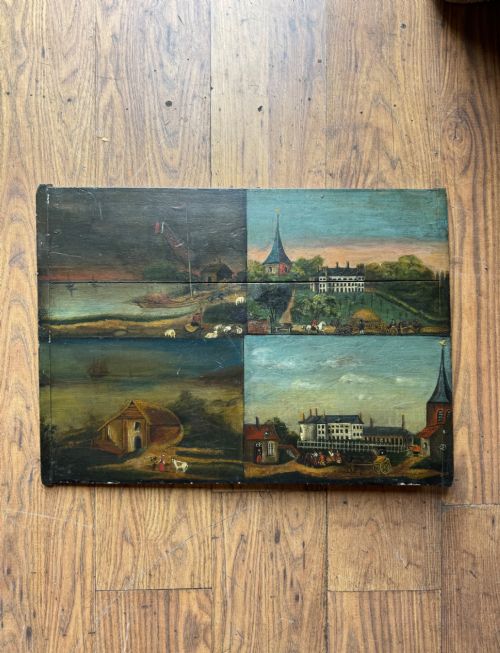
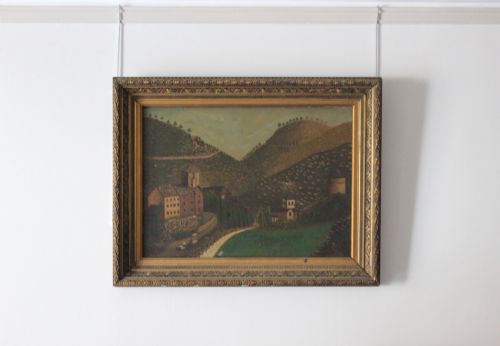
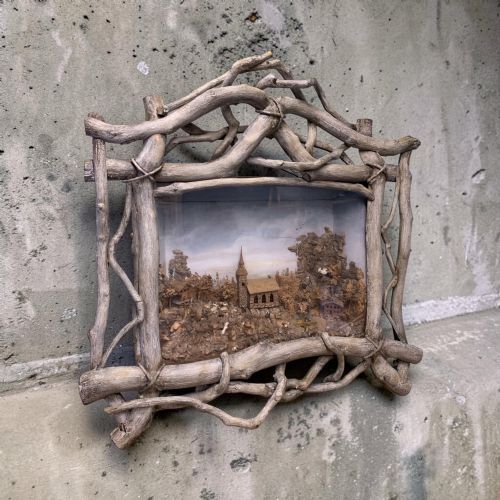
The most common examples on this page are oil paintings on canvas or board, alongside dimensional dioramas and shadow boxes. These pieces range from early nineteenth-century English school oils to mid-twentieth-century naive board paintings.
Collectors encounter provincial street scenes, architectural settings, and pastoral vistas that reflect the distinct hand of regional makers rather than academy training. Each work provides a direct view into historical vernacular visual culture.
How they were made
Makers utilised oil paint applied to canvas, wood panels, and boards, often working with straightforward pigments and basic brushes. These materials created durable surfaces that retained their unpretentious character over generations.
Dimensional pieces incorporated organic and local materials such as cork, twigs, shells, and Welsh slate to build up textured dioramas and wall plaques. Framing was frequently integrated directly into the construction using rustic wood or gilt surrounds.
Folk Art Landscape Retail Price Guide 2026
Typical asking prices for folk art landscape among the pieces listed under this phrase on Sellingantiques today, from the lower quarter to the upper quarter. They describe what is for sale here now, not the wider market.
A border collie commands attention from one canvas, while a mule shares a quiet moment with a girl and a squirrel nearby.
What varies in quality
The strength of a folk art landscape lies in its compositional directness and the confidence of the maker's brush. Stronger examples maintain a compelling rhythm across the surface, whereas weaker pieces suffer from static placement and hesitant lines.
Condition and originality dictate the standing of a piece within this category. Intact original frames, stable paint layers, and undisturbed dioramas separate well-preserved survivals from heavily restored or altered works.
Thomas James Lloyd·Irene Lagut·William Shayer·James G. Faulds
The Folk Art Landscape Glossary
- Naïve art
- Work created by an artist without formal academic training, often characterised by a lack of linear perspective and a direct approach to form and colour.
- Topographical painting
- An artwork depicting a specific identifiable place, building, or landscape rather than an imaginary scene.
- Diorama
- A three-dimensional scene built inside a box or frame, frequently incorporating materials such as cork, shells, and painted backgrounds.
- Oil on board
- A painting executed on a rigid wooden or composition board rather than stretched canvas.
- Primitive
- A descriptive term for early or unrefined artistic styles that predate or bypass academic conventions.
Folk Art Landscape: Frequently Asked Questions
What defines a folk art landscape?
These works are defined by their untutored approach to perspective and subject matter, executed by regional painters and makers rather than academic artists. They record everyday rural life, specific estates, and local topography through direct observation.
The materials typically include oil paint on canvas or board, alongside sculptural wall pieces made from wood, slate, and cork. Their appeal rests on this unpolished authenticity and regional character.
How old are these paintings?
The pieces span from the mid-eighteenth century through the nineteenth century and into the mid-twentieth century. Georgian and Victorian examples sit alongside later vintage works from the nineteen-fifties.
Dating relies on stylistic clues, framing methods, and the materials used in the support, such as early wood panels or nineteenth-century stretchers.
How do I care for an antique naive oil painting?
Protect the surface by keeping the work away from direct sunlight and maintaining stable indoor humidity. Avoid harsh chemical cleaners when dusting the canvas or original frame.
Consult a professional restorer if the oil paint shows signs of cracking or lifting from its original board or canvas support.
Can I identify the exact location in a topographical landscape?
Many topographical works depict specific regional landmarks, such as Welsh castles, Sussex towns, or riverside estates. Inscriptions on the reverse or within the composition often name the exact site.
Some landscapes remain harder to pinpoint if the maker recorded a generalized rural street scene or an anonymous domestic property.