





English Silver Plate Tray
An English silver plate tray brings solid weight and bright polish to a room, serving as a functional centrepiece for drinks or afternoon tea.
English Silver Plate Tray
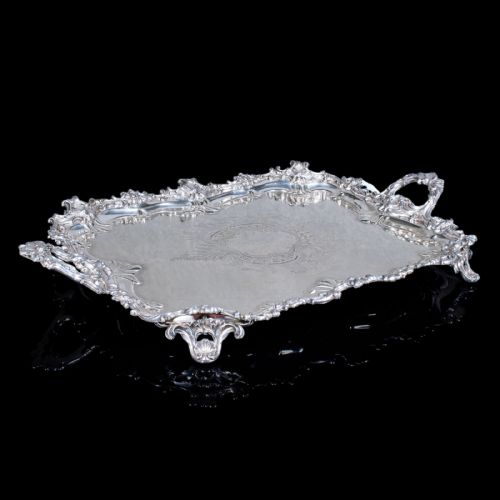
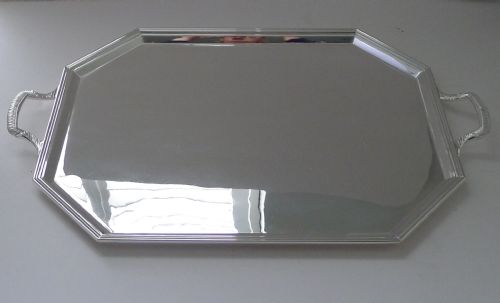
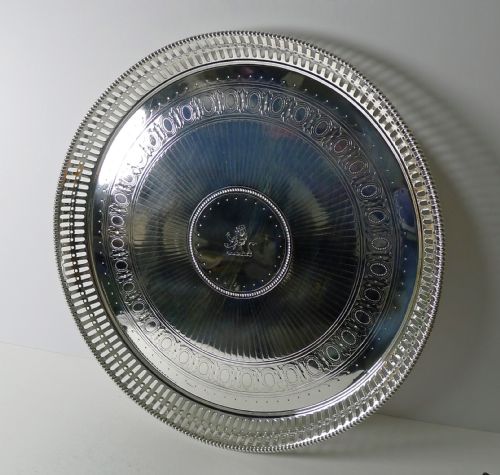
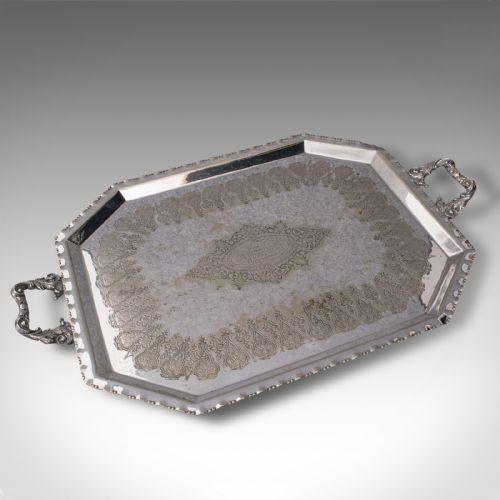
An English silver plate tray appears in forms ranging from grand Victorian presentation platters to clean-lined Art Deco cocktail trays and Edwardian oak gallery pieces. Buyers seeking an English silver plate tray typically encounter large oval serving surfaces, circular salvers, and specialised desk or bar accessories made across the nineteenth and twentieth centuries.
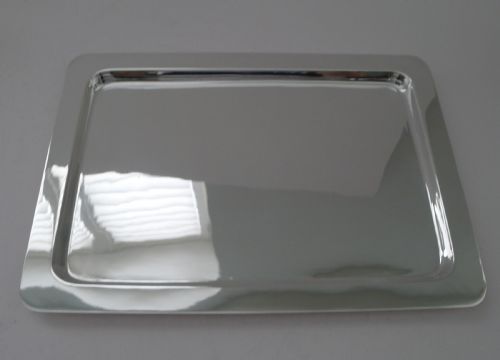
The selection shifts from ornate nineteenth-century reticulated borders and neo-classical engraving to the geometric simplicity of mid-century modern and modernist designs. Oak and silver plate combinations frequently appear in gallery trays designed for cocktails, while silver-plated brass or nickel provides the foundation for traditional afternoon tea service.
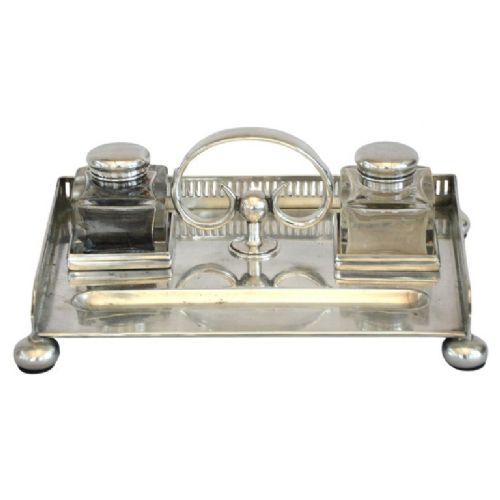
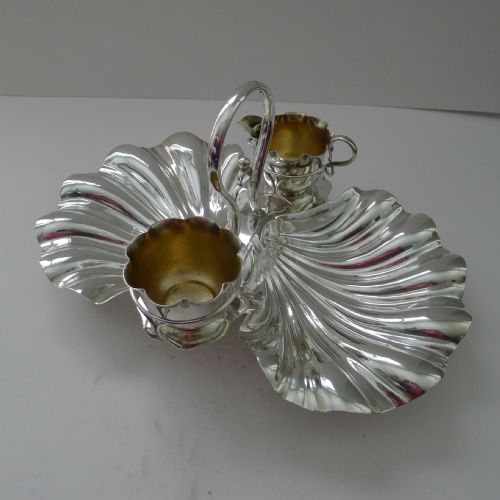
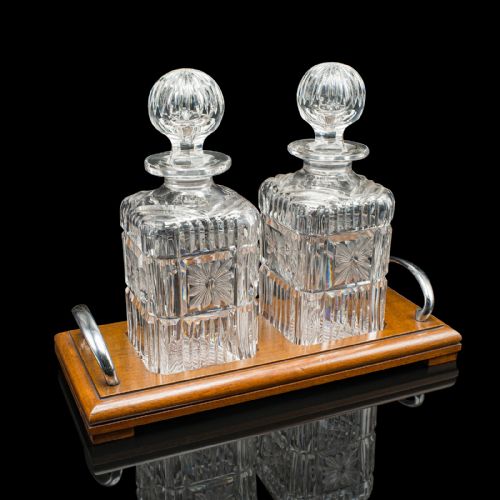
Makers utilised various functional formats, including inkstands, decanter sets, and lazy susan serving dishes alongside standard platters. Victorian and Edwardian examples dominate the available selection, often bearing maker marks from prominent Sheffield and Birmingham silversmiths.
Materials and construction
Makers built these pieces using a base metal such as nickel silver, copper, or English oak, subsequently applying a silver coating through electroplating or the older Sheffield plate fusion method. Electroplated nickel silver, commonly abbreviated as EPNS, provides the durable core for the vast majority of Victorian and Edwardian items.
Combinations of silver plate with cut glass, crystal, and solid oak form distinctive pieces like gallery trays and decanter sets. Detail work involves pierced or reticulated borders, applied cast handles, and engraved presentation inscriptions executed by skilled artisans.
Materials paired with silver plate in these trays include English oak, crystal glass, and cut glass.
Judging the standard
Quality rests upon the gauge of the base metal, the thickness of the silver deposition, and the crispness of chased or pierced decoration. Thicker plating resists wear through decades of polishing, preserving the warm glow of the underlying metal rather than revealing a brassy base.
Design integrity and maker reputation separate standard production items from exceptional workshop output. Pieces bearing clear maker marks from established firms display superior balance, heavier timber mounts in oak gallery trays, and finer hand-finished detailing.
Walker And Hall·Daniel Arter·Mappin And Webb·James Dixon And Sons·John Collyer And Co·Asprey London·Elkington·Atkin Brothers·Roberts And Belk·Lee And Wigfull·J H Potter·C W Fletcher·John Grinsell·George Richmond Collis·James Deakin·Barker Brothers·S Duncomb
The English Silver Plate Tray Glossary
- Sheffield Plate
- An early method of fusing a thin sheet of silver to a thicker copper core by heat and pressure. This technique predates electroplating and appears on older eighteenth and early nineteenth-century items.
- EPNS
- Electroplated Nickel Silver, a durable base metal alloy coated with a layer of pure silver through an electrolytic process. It forms the standard substrate for Victorian and twentieth-century tableware.
- Gallery Tray
- A tray featuring an upright pierced or solid gallery border around the perimeter, frequently constructed with an oak base. These pieces were primarily utilised for serving drinks and decanters.
- Reticulated
- Pierced or openwork metal decoration formed in decorative lattice patterns along the rim of a tray. This technique lightened the visual weight of large silver-plated serving platters.
- Salver
- A flat serving tray, usually circular and supported on small feet, traditionally used for presenting letters, calling cards, or drinks. Victorian examples often feature heavily engraved surfaces.
English Silver Plate Tray: Frequently Asked Questions
What is an English silver plate tray?
An English silver plate tray is a serving platter, salver, or cocktail tray produced in Britain using a base metal coated in a layer of silver. These pieces served practical domestic functions for tea, dining, and entertaining.
They reflect changing design movements from Victorian revivalism through Art Deco and mid-century modernism, utilising materials like nickel silver, oak, and crystal glass.
How do I date a silver plate tray?
Dating relies on stylistic clues, manufacturing techniques, and maker marks stamped into the metal. Victorian pieces often display heavy ornamentation and neo-classical motifs, while 1930s examples favor geometric lines.
Older pieces from the early nineteenth century utilise Sheffield plate fusion methods, whereas later Victorian items standardise electroplating.
How were gallery trays used?
Gallery trays with raised wooden or metal borders were designed specifically to keep decanters, glasses, and cocktail shakers secure during transit. The raised rim prevented glassware from sliding off the surface.
Many examples combine English oak bases with pierced silver-plated galleries to create durable barware for household entertaining.
How should I clean silver plate?
Cleaning requires a specialised silver polish and a soft cloth to remove tarnish without wearing away the thin silver layer. Gentle circular motions preserve the underlying engraving and finish.
Harsh chemical dips and abrasive pads should be avoided because they strip the electroplated surface and expose the base metal beneath.