




1920s Silver Plated Tray
A 1920s silver plated tray brings genuine period elegance to a gathering, offering a practical surface with striking geometric or decorative character.
1920s Silver Plated Tray
When you search for a 1920s silver plated tray, you encounter serving pieces designed for entertaining, drinks, and cocktails during the George V and Art Deco eras. These items range from simple geometric shapes to elaborate cocktail sets complete with glass inserts.
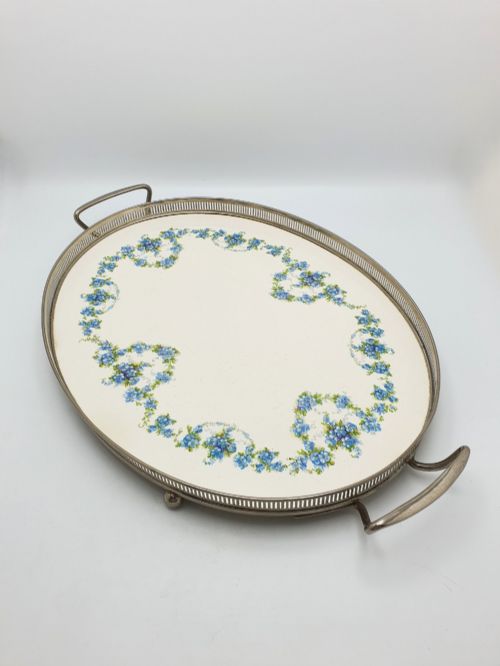
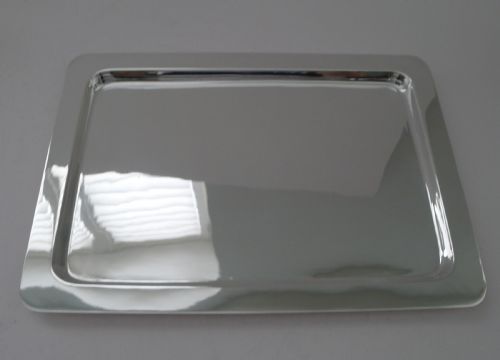
You are most likely to meet rectangular, round, or diamond-shaped cocktail trays featuring distinct borders, handles, or contrasting materials like mahogany and glass. Continental and English examples dominate the selection, often pairing silver plate with ceramic or blue mirror glass centres.
Beyond standard serving trays, the category includes wine coasters, hexagonal dishes, and full demitasse or liqueur services. Each piece reflects the social habits of the period, built specifically for serving drinks and refreshments in style.
Materials and construction
The foundation of these items typically involves a base metal coated in a layer of silver plate, providing the appearance of solid silver with greater durability for daily use. Makers integrated secondary materials such as cut glass, porcelain, mahogany, and felt to add texture and protect furniture.
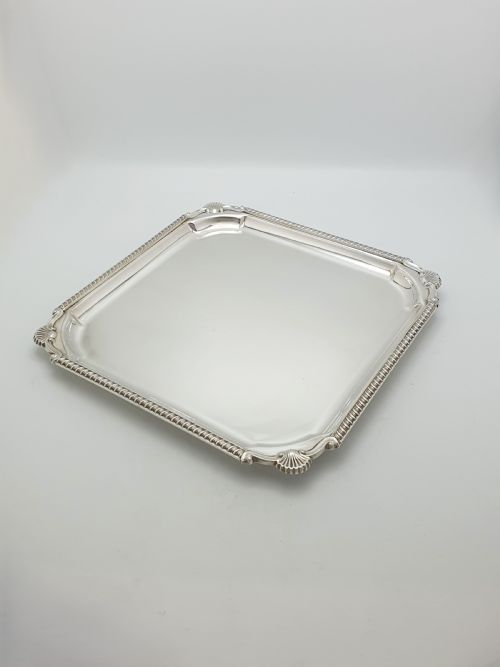
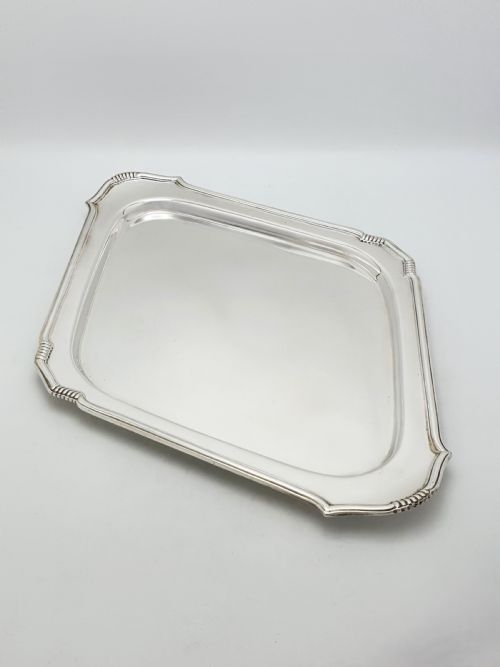
Art Deco pieces rely on crisp geometric forms like hexagons and diamonds, while other designs incorporate shell borders or floral ceramic centres. Metalworking techniques of the period ensured secure joints for handles and raised galleries designed to keep glassware steady.
Listings feature items from the 1920s incorporating silver plate, mahogany, ceramic, felt, and cut glass.
Evaluating quality and craftsmanship
The distinction between standard items and superior examples lies in the crispness of the stamping, the weight of the metal base, and the integrity of the silver plating. Finer pieces retain their original mirror finish and show minimal wear to the underlying metal.
The quality of incorporated materials also sets pieces apart, such as heavy starburst cut glass, unblemished cobalt blue mirror glass, or well-figured mahogany bases. Maker marks from established firms indicate higher standards of workshop production.
Elkington·Walker & Hall·John Collyer & Co·Roberts & Belk·Atkin Brothers
The 1920s Silver Plated Tray Glossary
- Silver Plate
- A base metal coated with a thin layer of silver through electroplating. This technique became widespread in the nineteenth and twentieth centuries to produce affordable tableware.
- Art Deco
- A design style characterised by sleek geometric shapes, stylised motifs, and streamlined forms. It dominated decorative arts throughout the 1920s and 1930s.
- Wine Coaster
- A small, flat-bottomed tray or dish designed to hold a wine bottle and protect the dining table. They frequently combine turned wood bases with silver-plated galleries.
- Demitasse
- A small cup used for serving Turkish coffee or espresso, often found accompanying specialised liqueur and coffee services from this period.
1920s Silver Plated Tray: Frequently Asked Questions
Can I use these trays for serving drinks?
Yes, these items were originally manufactured for serving cocktails, liqueurs, and wine to guests. Their raised borders and sturdy handles make them practical for carrying glassware.
Take care to wipe up any liquid spills promptly to protect older glass inserts, felt bases, and the underlying silver plate.
How can I tell Art Deco trays apart?
Look for distinct geometric silhouettes such as hexagons, diamonds, and sharp angular handles. These differ from earlier Edwardian or Victorian designs which favoured organic curves and heavy floral embossing.
Stylised motifs and stepped borders further identify pieces belonging to the Art Deco movement of the 1920s.
What does a blue mirror glass tray look like?
These pieces feature a striking tinted glass panel set directly into the silver-plated frame. The reflective blue surface creates a dramatic visual contrast with the polished metal border.
They were particularly popular during the 1920s for serving cocktails and add a distinct splash of colour to a drinks cabinet.