


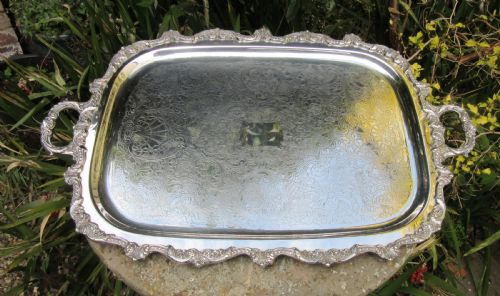
Electroplate Serving Platter
An electroplate serving platter brings the brilliance of silver to the table without the weight or cost of solid metal, offering a durable surface for grand meals and evening drinks.
Electroplate Serving Platter
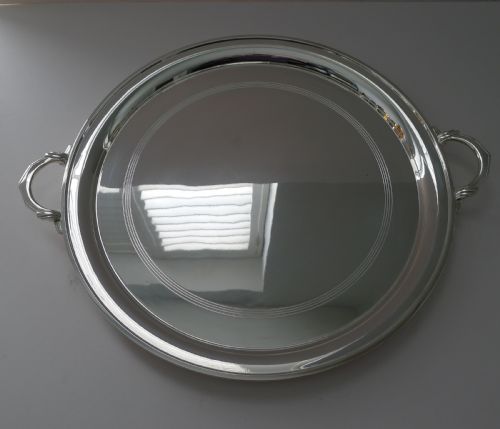
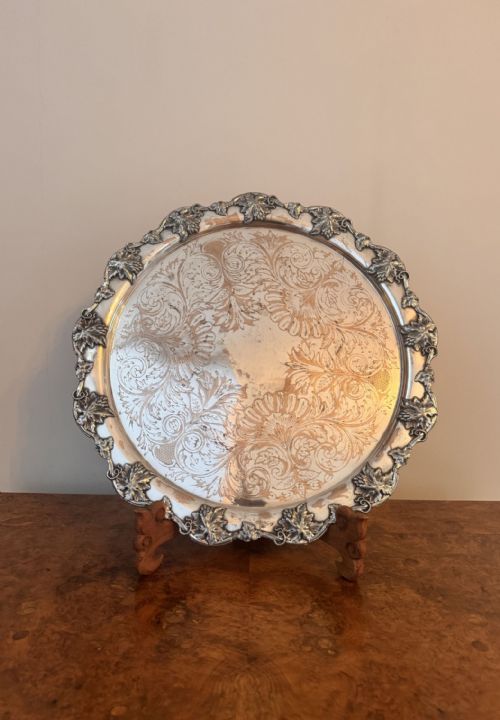
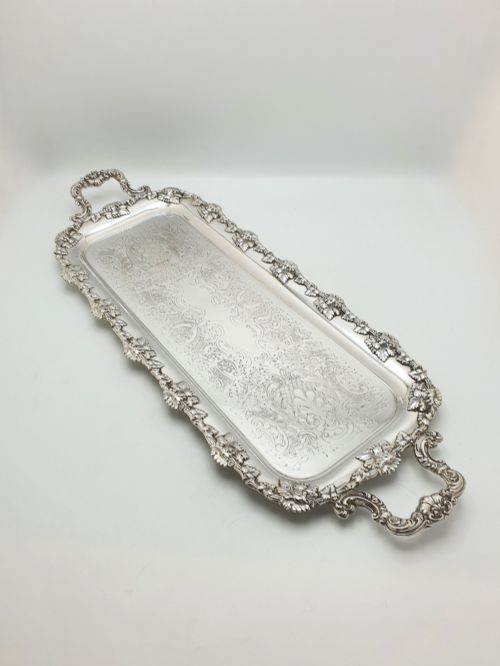
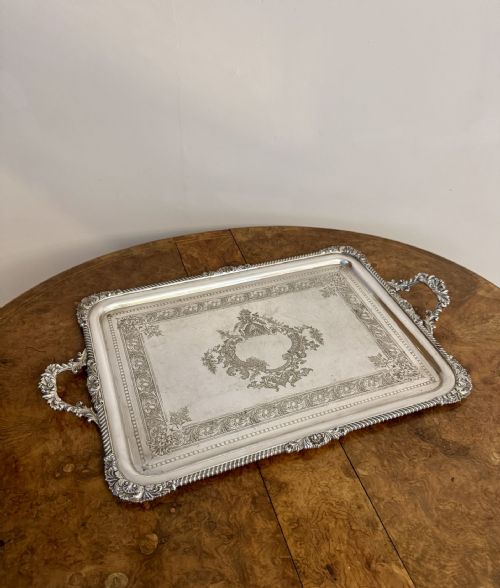
An electroplate serving platter is a metal tray or dish designed for presenting food or drinks at the table, spanning the Victorian, Edwardian, and Art Deco periods. These pieces range from large circular trays and generous tea platters to specialised serving dishes and engraved chargers.
Buyers will encounter various forms across this selection, including floral engraved Victorian trays, Edwardian tea platters with grapevine borders, and geometric Art Deco cocktail trays from the nineteen-thirties. The assortment covers serving trays, chargers, and asparagus dishes shaped from durable nickel-based metal.
Originating predominantly from the nineteenth and early twentieth centuries, these serving pieces reflect the shifting aesthetic tastes of British dining rooms and parlours. From ornate Victorian borders to streamlined modernist cocktail trays, each object demonstrates the practical evolution of domestic hospitality.
Materials and construction
These items are constructed using base metals and nickel silver, providing a sturdy and rigid foundation for daily service. The underlying metal is then coated in silver plate or EPNS, creating a bright reflective finish that mimics solid silver.
Decoration is applied through detailed chasing, floral engraving, and cast applied borders such as grapevines. Makers utilised specialised plating vats to bond the silver layer securely to the nickel silver or base metal substrate.
Asparagus dishes complete with fitted drainer inserts show just how wonderfully specific Victorian dining habits could get.
Assessing quality and craftsmanship
Quality in these items is determined by the crispness of the chased or engraved detailing and the weight of the underlying metal. Superior examples retain thick silver plating that resists wearing through to the base metal over decades of cleaning.
The design of the border and handles indicates the level of ambition in the workshop, with hand-applied cast rims marking out finer production. Proportion and balance also distinguish standard production from exceptional pieces commissioned for formal dining.
Keith Murray For Mappin & Webb·Walker & Hall·James Dixon & Sons·Atkin Brothers
The Electroplate Serving Platter Glossary
- Electroplate
- The process of applying a thin layer of silver to a base metal using an electrical current. This method allowed nineteenth-century manufacturers to produce domestic metalware on a commercial scale.
- EPNS
- Electroplated Nickel Silver. A durable alloy of copper, nickel, and zinc coated with pure silver, widely used for British tableware.
- Charger
- A large decorative plate or platter placed underneath other courses during formal dining. These items often feature heavy engraving or raised borders.
- Chasing
- A metalsmithing technique where a design is hammered into the front surface of the metal rather than cut away. This raises the relief without removing material.
- Salver
- A flat serving tray, typically with a raised rim and supported on small feet. They were traditionally used for serving drinks or presenting letters.
Electroplate Serving Platter: Frequently Asked Questions
How do I clean an electroplate serving platter?
Clean these items using a mild silver polish and a soft cloth to protect the plated surface from excessive abrasion. Avoid harsh chemical dips that can strip the silver layer from the base metal.
Wash the platter in warm soapy water immediately after use and dry it thoroughly with a lint-free cloth. Proper storage in a dry environment helps prevent tarnishing between uses.
Can I use these platters for serving food?
These platters are fully suitable for serving dry foods, cheeses, cakes, and prepared dishes directly at the table. Ensure that acidic foods are not left in contact with the surface for extended periods.
While robustly constructed, they function best as serving pieces rather than preparation boards. Hand washing preserves the plating against the rigours of modern dishwashers.
How do I date an antique tray?
Dating relies on stylistic clues such as the heavy floral motifs typical of the Victorian era or the clean geometric lines of the Art Deco period. Maker marks stamped on the underside also provide clues to the production era.
Construction details, including the thickness of the base metal and the style of the engraved decoration, help narrow down the decade of manufacture. Comparing these elements with documented factory patterns confirms the historical context.
What is the difference between nickel silver and standard metal?
Nickel silver is a strong copper alloy containing nickel and zinc, which shares no actual silver content despite its name. It provides a stable, corrosion-resistant base that takes silver plating exceptionally well.
Standard base metals found in older wares might consist of brass or Britannia metal beneath the plating. Nickel silver offers superior durability for items handled frequently during formal service.