




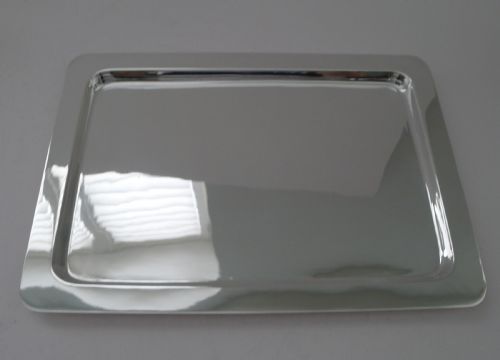


Rectangular Silver Drinks Tray
These rectangular silver drinks tray pieces offer practical elegance for serving, spanning the Edwardian, Art Deco, and Mid-Century Modern periods.
Rectangular Silver Drinks Tray
A rectangular silver drinks tray serves as a functional centrepiece for hospitality, designed to hold glassware and decanters securely during gatherings. When you search for a rectangular silver drinks tray, you encounter pieces intended for both formal entertaining and daily domestic use across multiple decades.
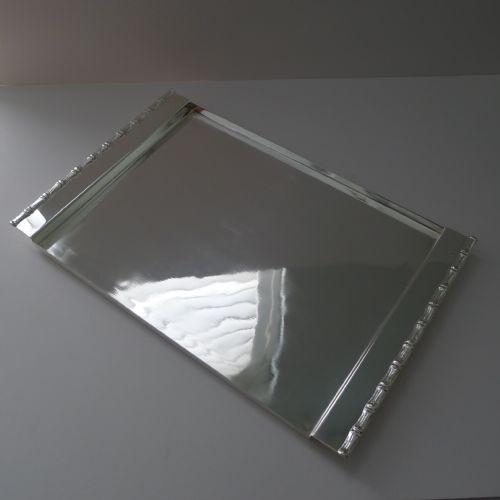
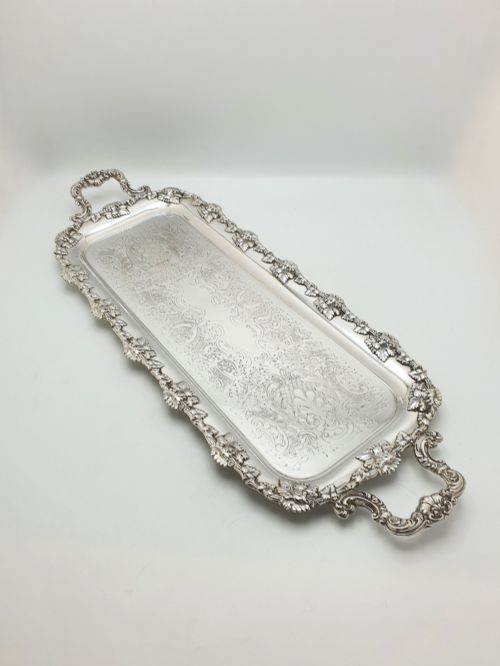
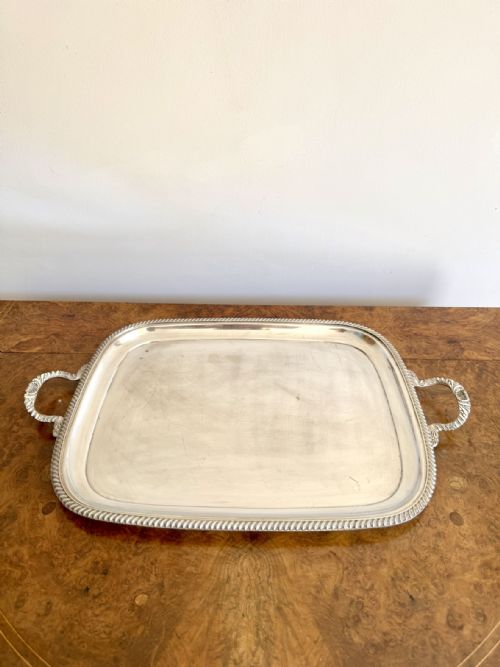
The versions most commonly met on this page date from the late nineteenth century through to the mid-twentieth century, showing distinct shifts in design preferences. Edwardian and Late Victorian examples often feature decorative borders and gallery edges, while later Art Deco and Mid-Century Modern pieces favour cleaner, streamlined silhouettes.
Originating predominantly from British and international workshops, these trays utilise robust base metals coated in precious finishes. Their rectangular form maximises surface area, making them particularly practical for placing on sideboards, coffee tables, or home bars.
What varies in quality
The primary distinction across the range lies in the weight of the base metal and the thickness of the silver plating applied during manufacture. Heavier trays utilise substantial nickel silver or metal foundations that resist bending and provide a reassuring heft when lifted with glasses.
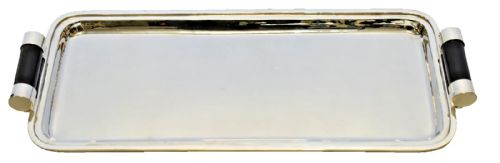
Execution of decorative details separates standard production items from finer workshop pieces. Crisp casting on grapevine borders, tightly joined gallery railings, and the secure integration of ebonised wood components indicate superior craftsmanship and careful assembly.
Materials recorded across the inventory include silver plate, EPNS, nickel silver, ebonised wood, and general metal.
Hukin & Heath·John Collyer & Co.·Frank Cobb & Co.·Atkin Brothers
The Rectangular Silver Drinks Tray Glossary
- Silver Plate
- A base metal coated with a thin layer of genuine silver. This technique provided an affordable alternative to solid silver while maintaining a bright metallic appearance.
- EPNS
- Electroplated Nickel Silver. A common base alloy of copper, nickel, and zinc coated with silver through an electrolytic process.
- Gallery Tray
- A serving tray featuring an upright pierced or solid metal railing around its perimeter. This raised border prevented glasses and decanters from sliding off during transport.
- Ebonised Wood
- Timber treated with a dark stain or finish to imitate ebony. It provided a stark, elegant contrast against polished silver surfaces.
- Art Deco
- A design style popular in the 1920s and 1930s characterised by geometric shapes, stylised motifs, and streamlined forms. Pieces from this period often dispense with Victorian ornamentation in favour of sleek modernity.
Rectangular Silver Drinks Tray: Frequently Asked Questions
How do I clean a silver plated drinks tray?
Clean your tray using a soft cloth and a dedicated silver polish formulated for plated items, rubbing gently in straight lines to avoid scratching the surface.
Avoid harsh abrasive cleaners or soaking the tray in water, particularly if it incorporates ebonised wood components that can warp or discolour with moisture.
Can I use these trays for daily serving?
These trays were originally constructed for domestic hospitality and remain fully functional for carrying glassware, bottles, and cocktail accessories.
Take care to lift larger pieces with both hands and protect the surface from prolonged contact with acidic liquids like citrus juice.
What is the difference between EPNS and silver plate?
EPNS specifically denotes electroplated nickel silver, which uses a specific alloy base beneath the silver coating. General silver plate may use other base metals such as standard brass or white metal beneath the exterior silver layer.
How do I identify the period of a tray?
Examine the overall decorative style, handle design, and edge detailing to determine the likely era of manufacture. Edwardian and late Victorian pieces tend towards ornate borders and galleries, whereas 1920s and 1930s examples display cleaner lines, and 1960s items embrace modernist elements like bamboo motifs.