

English Porcelain Urn
An English porcelain urn is a decorative ceramic vessel created for display during the Georgian, Regency, and Victorian periods.
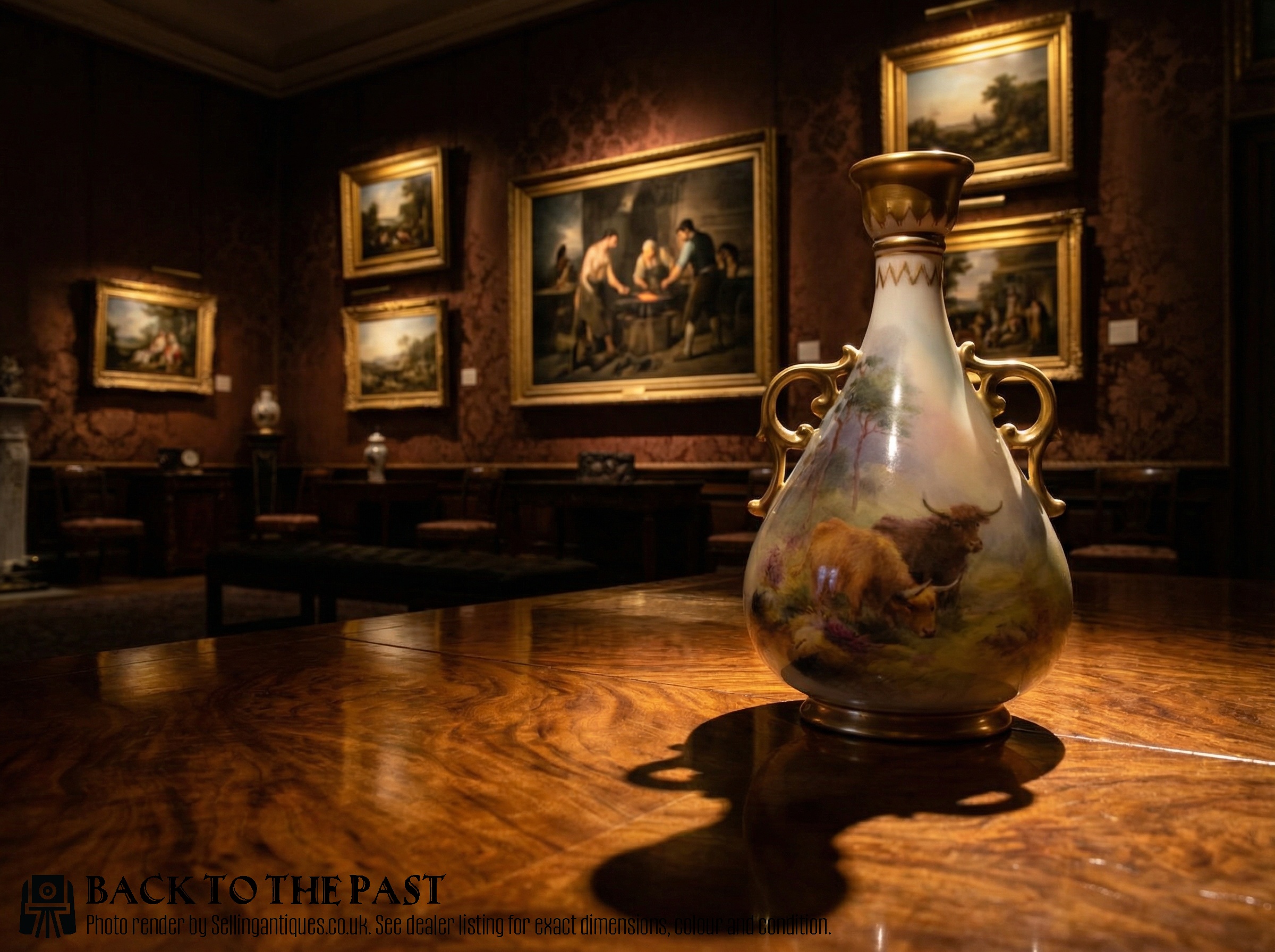
English Porcelain Urn
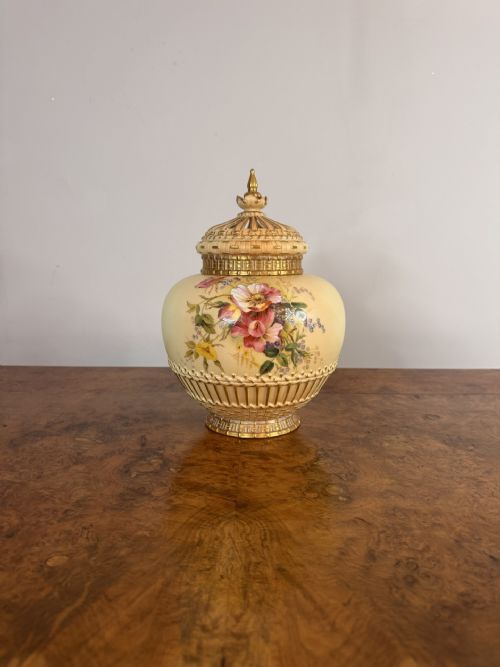
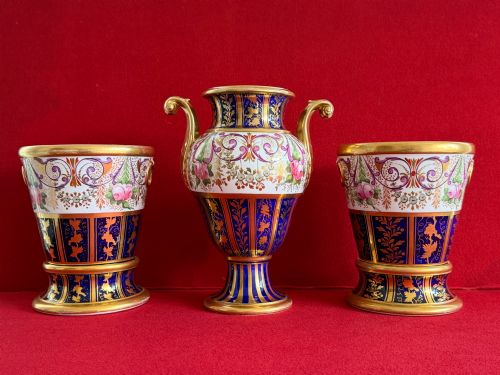
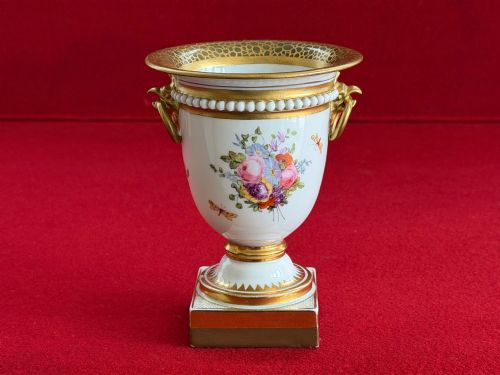
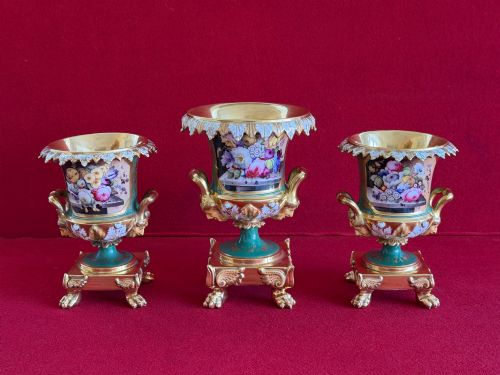
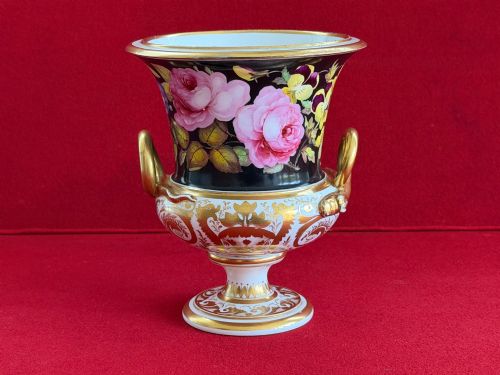
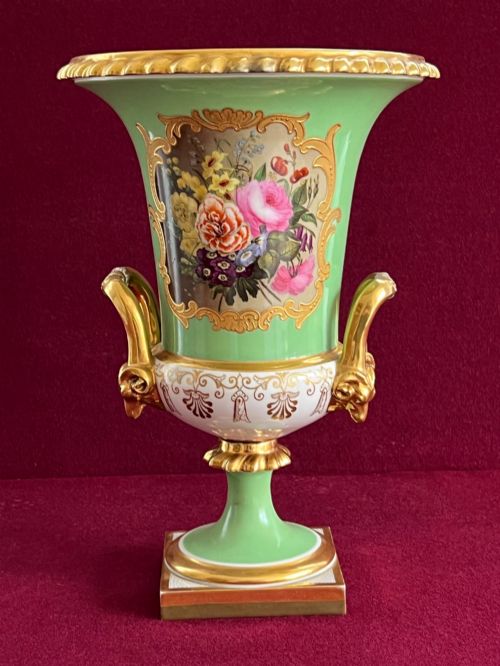
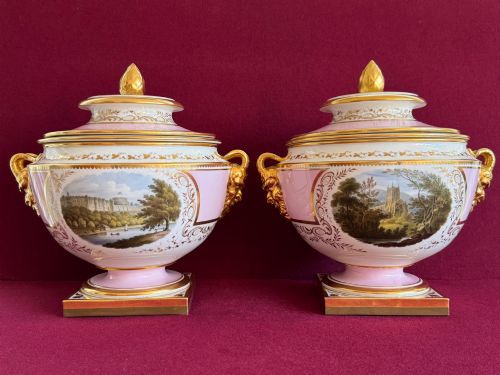
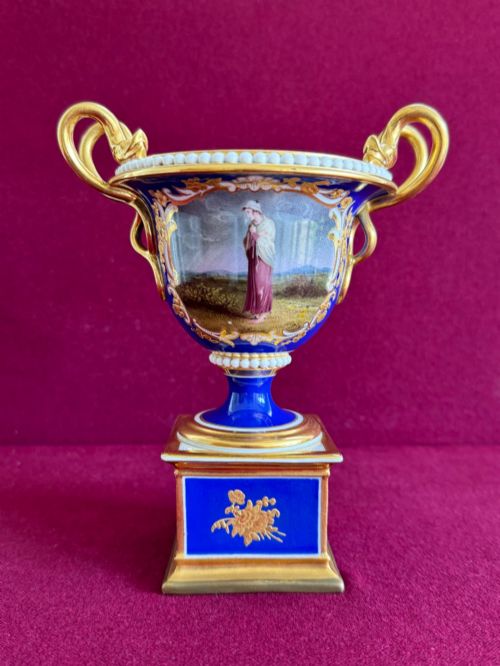
When you search for an English porcelain urn, you encounter formal decorative vessels, campana shapes, and lidded jars designed for display on mantelpieces and side tables. The pieces on this page span the eighteenth, nineteenth, and early twentieth centuries, originating from notable factories such as Worcester, Derby, and Spode.
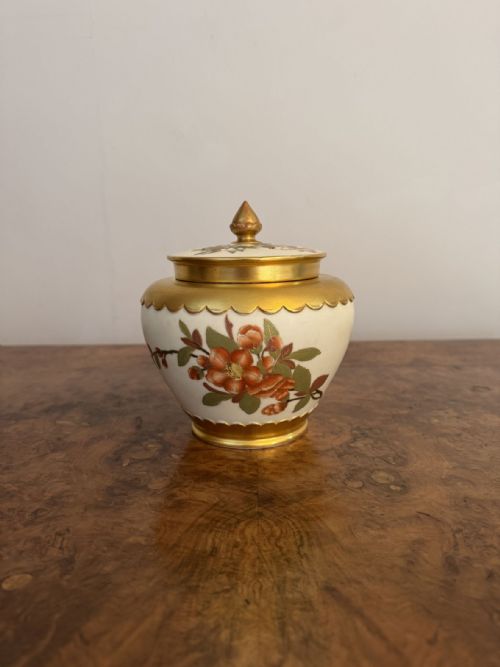
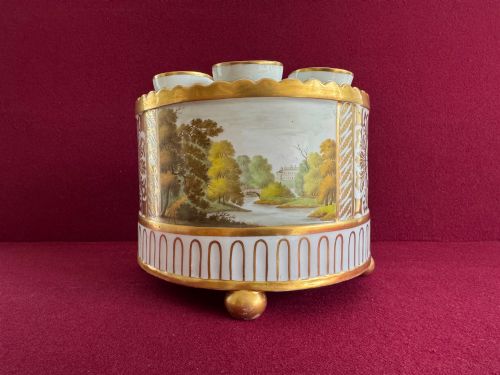
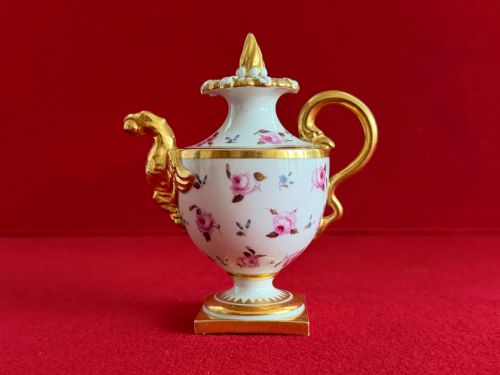
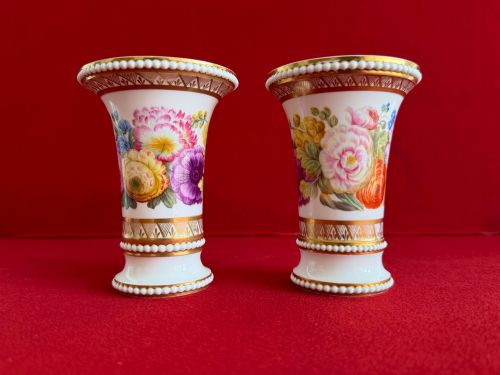
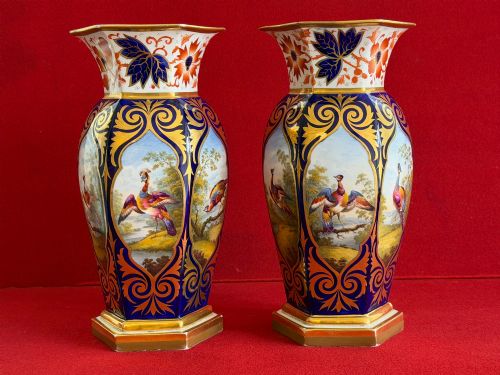
You are most likely to meet nineteenth-century examples featuring white and gilt finishes, transfer printing, or hand-painted botanical and avian scenes. Forms range from twin-handled garden vases and ice pails to potpourri pots and miniature cabinet pieces.
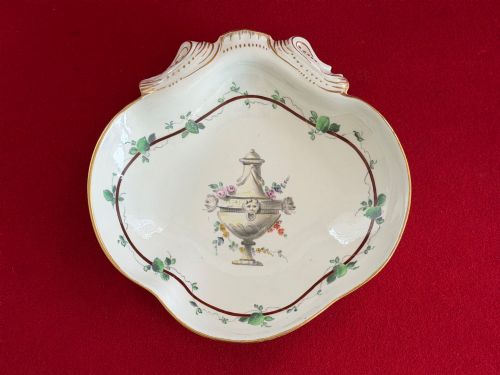
The selection includes neoclassical shapes derived from ancient pottery forms, alongside later Edwardian and Art Deco interpretations in bone china and ironstone. These items reflect changing domestic interiors, moving from formal Georgian drawing-room ornaments to elaborate Victorian cabinet displays.
How They Were Made
Potters utilised fine soft-paste or hard-paste porcelain and ironstone, shaping vessels on wheels or casting them in moulds before applying rich cobalt blue grounds, enamel colours, and gold leaf. Gilding was hand-applied and often burnished to contrast against painted reserves or plain white glazes.
Decoration relied on skilled hand-painting for floral sprays, birds, and figures, alongside transfer printing techniques introduced to replicate complex patterns efficiently. Pieces were fired multiple times in kilns to fix the body, underglaze colours, enamel details, and final gilding layers.
English Porcelain Urn Retail Price Guide 2026
Typical asking prices for english porcelain urn among the pieces listed under this phrase on Sellingantiques today, from the lower quarter to the upper quarter. They describe what is for sale here now, not the wider market.
Listings feature porcelain urns spanning from the eighteenth century to the mid-twentieth century, utilising gold leaf, enamel, and glaze.
What Varies in Quality
Quality depends upon the precision of the modelling and the artistic execution of the hand-painted details. Finer examples display crisp moulding on handles and feet, delicate brushwork in polychrome enamels, and heavy, well-burnished gilding.
Royal Crown Derby·Flight, Barr and Barr·Flight and Barr·Royal Worcester·Wedgwood·Spode·Chamberlain Worcester·Barr, Flight and Barr·Mason's·H and R Daniel·Coalport·Derby
The English Porcelain Urn Glossary
- Campana
- A bell-shaped urn with an everted rim and a pedestal foot, commonly produced in porcelain during the Regency and Victorian periods.
- Gilding
- The application of gold leaf or gold powder to ceramic surfaces for decorative enrichment. It is frequently found highlighting handles, rims, and pastoral scenes.
- Ironstone
- A dense, durable type of earthenware developed in the nineteenth century as a robust alternative to porcelain. Factories like Mason's utilised it extensively for large decorative vases.
- Imari
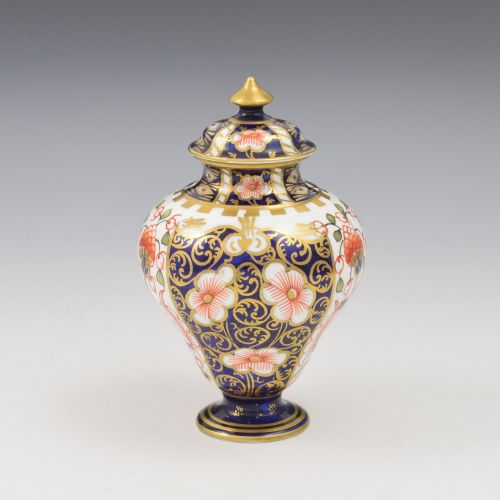
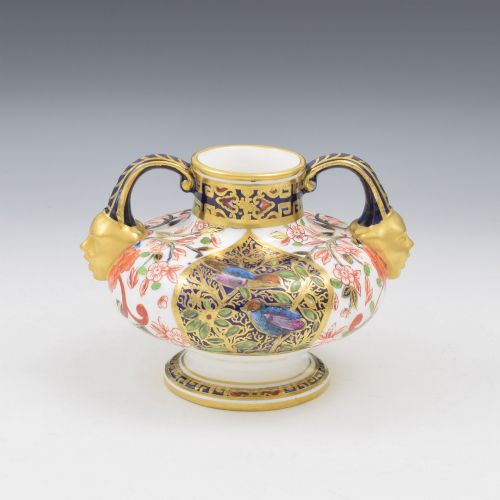
- A decorative style inspired by Japanese export wares, featuring a distinct palette of cobalt blue, iron red, and gilt. English potteries adopted this scheme widely throughout the nineteenth century.
- Potpourri
- A lidded vessel perforated to allow the release of dried flower scents from within. These often feature elaborate pierced covers and painted panels.
English Porcelain Urn: Frequently Asked Questions
How were porcelain urns used?
These vessels served primarily as decorative ornaments on mantelpieces, sideboards, and pier tables within formal rooms. Lidded versions occasionally held potpourri to fragrance domestic interiors.
Larger forms, such as ice pails and campana vases, doubled as display pieces that demonstrated the wealth and taste of the household through their artistic manufacture.
How do I care for antique porcelain?
Keep porcelain urns out of direct sunlight to prevent the fading of hand-painted enamel colours and delicate gilding. Dust them gently with a dry, soft brush rather than using wet cloths.
Avoid placing them near heat sources or in areas subject to temperature fluctuations, which can stress the historic ceramic body and old glazes.
How can I tell the period?
Examine the factory marks, style of decoration, and composition of the ceramic body to determine the era of production. Georgian and Regency pieces often feature neoclassical motifs and hand-painted botanical studies, while Victorian examples lean towards heavier gilding and blush ivory grounds.
Underglaze printed ciphers and painted pattern numbers provide direct reference points when cross-referenced with factory archives.
What is ironstone?
Ironstone is a heavy, durable ceramic material patented in the nineteenth century to combine the strength of earthenware with the refined appearance of porcelain. It provided a sturdy body capable of supporting large decorative vases and transfer-printed patterns.
Factories utilised this dense composition extensively for robust display items intended for everyday household adornment.