




Vintage Royal Worcester Urn
These vintage royal worcester urn and vase forms unite meticulous hand-painted detail with fine porcelain bodies.
Vintage Royal Worcester Urn
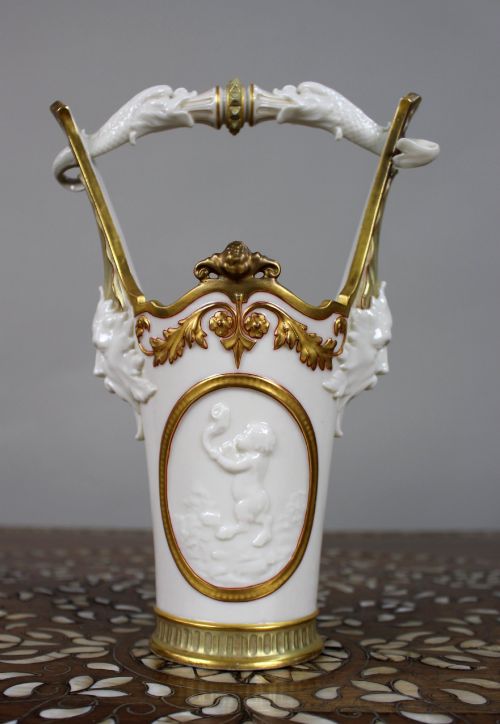
When you search for a vintage royal worcester urn, you are looking at fine porcelain decorative vessels originating from Worcester, England. The selection encompasses varied forms such as ginger jars, pot pourri vases, table lamps, and traditional handled urns.
The pieces span from the nineteenth century through the Edwardian era and into the mid-twentieth century, including items dated from nineteen hundred to nineteen sixty. You will frequently encounter pot pourri vases and painted fruit vases among these listings.
Makers and decorators recorded in the evidence include Walter Powell, Ayrton, William Ricketts, Freeman, John Smith, James Stinton, Davis, Kitty Blake, and Richard Seabright, alongside retailers such as A.B. Daniell & Son.
Materials and construction
The foundation of each piece is fine bone china or porcelain, shaped into ovoid vessels, jars, and urns. Artisans applied delicate painted surfaces featuring birds, storks, pheasants, fruit, and floral motifs.
Decoration often incorporates gold leaf, gilt, and gilding to accentuate handles, rims, and covers. Brass and wood components also appear, particularly in the construction of table lamps.
Recorded forms include ginger jars, spill vases, table lamps, and lidded pot pourri vessels decorated by notable factory artists.
Factors of quality
Quality rests significantly upon the identity and skill of the painter whose signature appears on the porcelain. Signed works by established artists like James Stinton or William Ricketts demonstrate superior brushwork and artistic execution.
The complexity of the form and the presence of supplementary elements such as pierced covers, brass fittings, or intricate gilding separate standard production pieces from finer exhibition items.
Royal Worcester·Walter Powell·William Ricketts·James Stinton·Kitty Blake·Richard Seabright
The Vintage Royal Worcester Urn Glossary
- Pot Pourri Vase
- A decorative vessel featuring a pierced or perforated cover designed to diffuse scent from dried botanicals placed inside. These containers often include inner lids to secure the contents.
- Ginger Jar
- A high-shouldered ceramic storage vessel with a domed cover, adapted in later periods primarily for ornamental display.
- Blush Ivory
- A distinctive soft, matte cream-coloured porcelain body developed by the factory, frequently serving as a background for floral or landscape painting.
- Gilding
- The application of gold leaf or gold paint to ceramic surfaces, highlighting handles, collars, and borders.
- Fine Bone China
- A type of porcelain composed of bone ash, feldspathic material, and kaolin, known for high strength and translucency.
Vintage Royal Worcester Urn: Frequently Asked Questions
What are pot pourri vases?
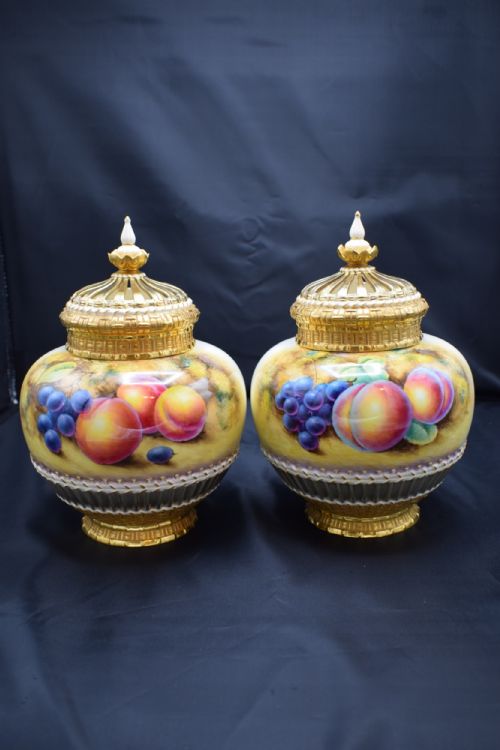
Pot pourri vases are lidded porcelain vessels designed to hold scented dried plant material. Their pierced covers allow fragrance to disperse into a room while concealing the contents.
In these listings, they appear alongside ginger jars, table lamps, and standard decorative vases.
How do I identify a painted fruit piece?
Painted fruit pieces display detailed watercolours of apples, berries, and grapes against naturalistic backgrounds. They frequently bear the signatures of artists such as Freeman or Ricketts.
These designs highlight the detailed botanical artistry characteristic of the mid-twentieth-century output.
What is blush ivory porcelain?
Blush ivory is a signature matte cream ceramic body used as a canvas for hand-painted floral motifs and gilding. It provides a warm, understated backdrop that distinguishes nineteenth and early twentieth-century pieces.
Examples in the evidence include large pot pourri jars finished in this distinctive tone.
How were table lamps made?
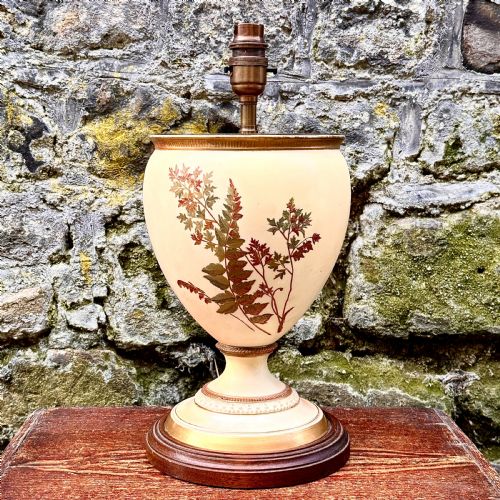
Table lamps adapt traditional porcelain vase forms by incorporating electrical fittings alongside brass and wooden elements. They retain the painted ceramic body as the central decorative column.
Early twentieth-century examples integrate these functional additions while preserving hand-finished artistry.
Who signed these pieces?
Items frequently carry the signatures of factory artists who specialised in specific subjects like birds, landscapes, or still-life fruit. Names such as James Stinton and Kitty Blake appear directly on the painted surface.
Retailers like A.B. Daniell and Son also marked specific exhibition pieces commissioned from the factory.