
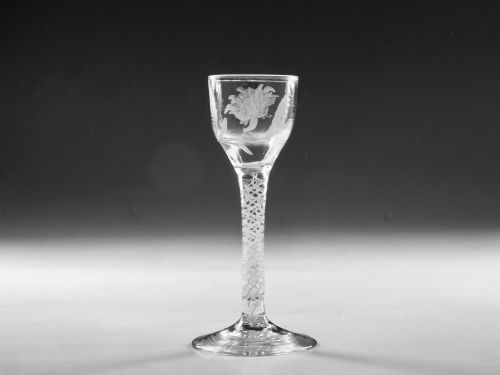
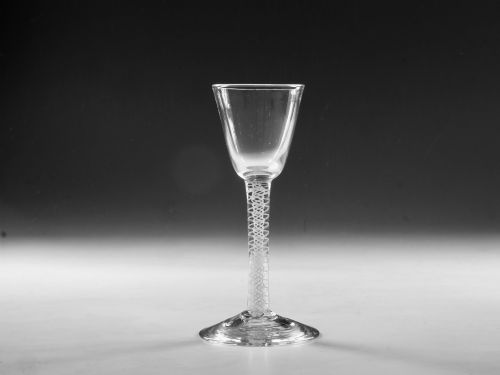
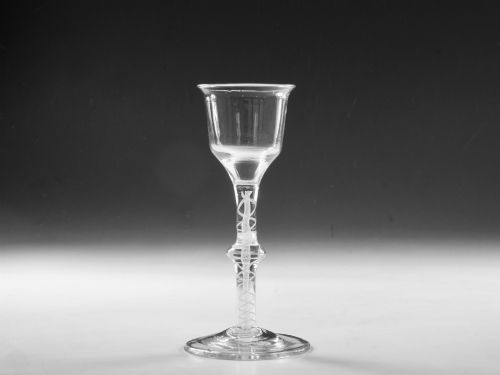
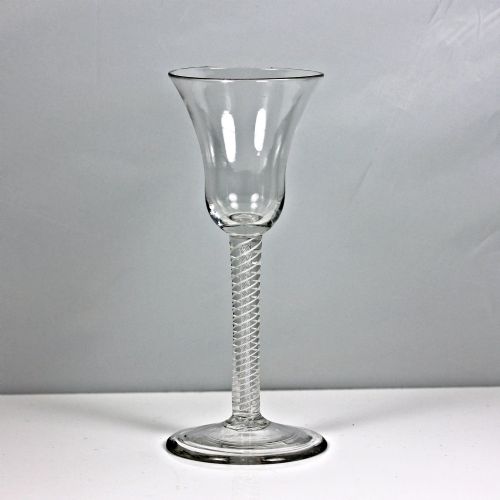
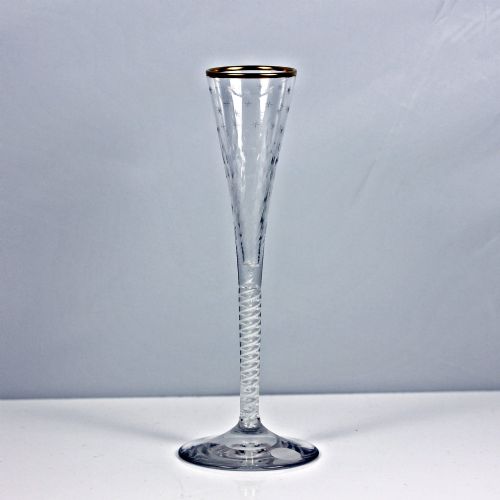
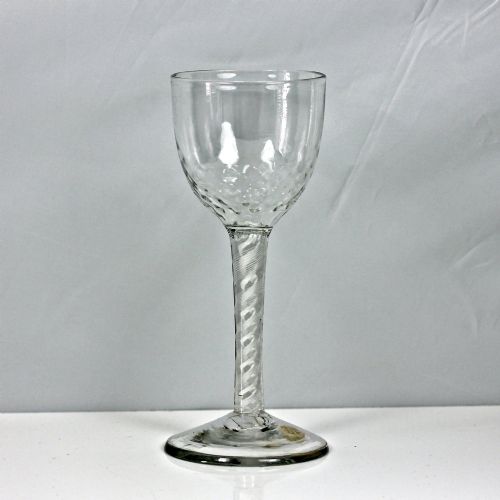
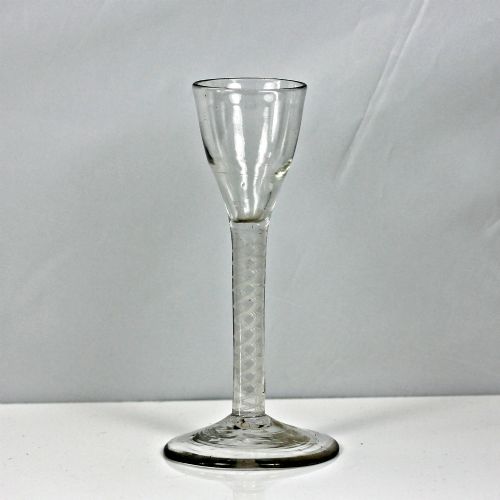
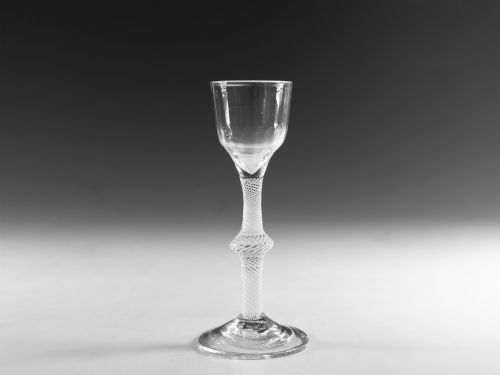


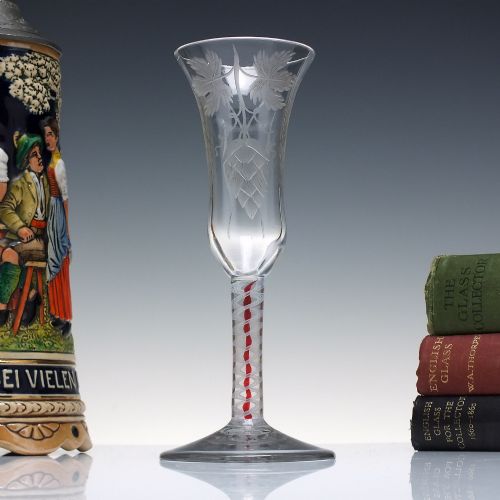
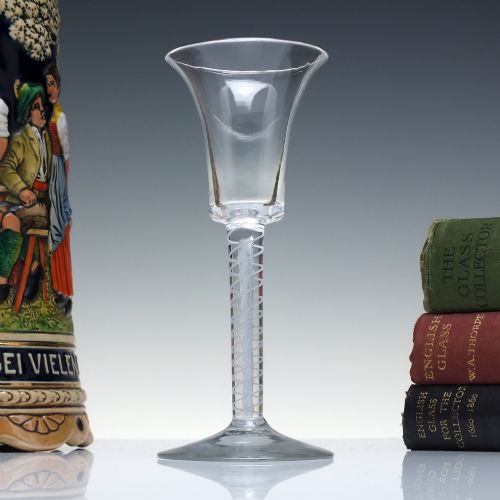
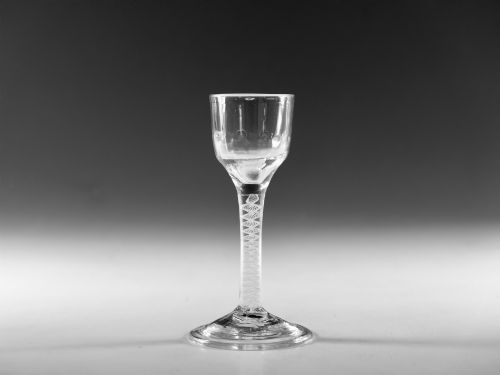
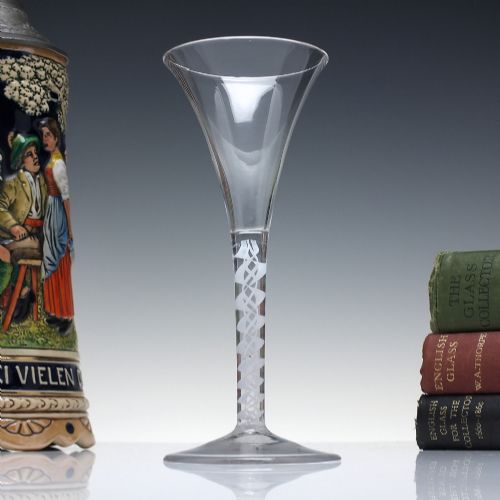
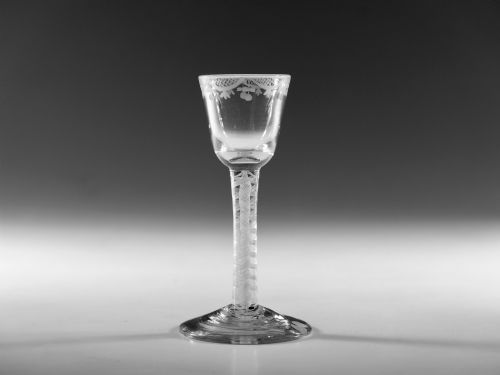

English Opaque Twist Goblet
An English opaque twist goblet brings the tactile weight of the eighteenth century to the hand, offering brilliant lead glass stems spun with milky threads.
English Opaque Twist Goblet
When someone searches for an English opaque twist goblet, they are looking at drinking vessels formed during the Georgian period, specifically around the mid to late eighteenth century. These drinking glasses combine clear lead glass bowls with stems featuring opaque white enamel glass twists.
The versions most commonly met on this page are wine glasses and goblets from the seventeen-fifties and seventeen-sixties. They arrive in various bowl forms such as ogee, trumpet, and flared bucket shapes, often supported by single series, double series, or mixed twist stems.
Materials and construction methods
These vessels rely on lead glass and lead crystal for the clear bowl and foot, giving the material a distinct clarity and heft. The stems incorporate white enamel glass, drawn into fine threads and twisted within the molten core.
Glassmakers formed single or double series twists by enclosing enamel threads inside the glass before drawing and twisting the stem. Additional elements like knops, collars, or flute-moulded bowls were shaped by hand while the metal remained hot.
Some glasses include a hidden corkscrew twist inside the stem, ready to assist an eighteenth-century host in spirit.
Factors of distinction
The refinement of the internal white enamel threads dictates much of the visual appeal, where tighter and more regular twists demonstrate superior glasshouse control. The complexity of the stem construction, such as incorporating multiple knops or mixed twist configurations alongside air or colour elements, elevates the piece.
Proportion between the bowl, stem, and foot plays a major role in the overall balance of the object. Cleanly finished pontil scars and well-balanced metal free from excessive cloudiness or heavy inclusions mark the upper tier of surviving examples.
The English Opaque Twist Goblet Glossary
- Opaque twist
- A stem decoration formed of white enamel glass threads twisted within a clear lead glass rod. These threads create intricate internal patterns that define the style.
- Single series
- A stem formation containing only one set of twisted enamel threads, often paired with an outside air thread or standing alone. It represents an earlier method of twist manufacture.
- Double series
- A stem featuring two distinct sets of opaque white twists, usually an outer pair enclosing a complex inner core. This configuration produces a denser and more intricate visual effect.
- Knop
- A swelling or bulbous projection formed on the stem of the glass. Knops provide both a decorative accent and a secure grip for the hand.
- Ogee
- A bell-shaped bowl with an 'S' curve profile that flares outward at the rim. This form was widely utilised for eighteenth-century drinking vessels.
English Opaque Twist Goblet: Frequently Asked Questions
How do I date an opaque twist?
Most pieces originate from the Georgian era, specifically between seventeen-fifty and seventeen-seventy. Stem formations and bowl shapes help narrow down the decade of production.
Earlier examples tend to feature simpler single series twists, while more complex double and mixed twists appear towards the seventeen-sixties and seventeen-seventies.
Were these used for wine?
These vessels served primarily for consuming wine, ale, and champagne during Georgian social gatherings. Their robust lead glass construction suited frequent toasts.
Different bowl depths and shapes accommodated various drinks, from small wine servings to larger ale capacities and flute-served beverages.
How should I display them?
Display these items in a well-lit cabinet where light can pass through the clear lead glass and illuminate the white enamel twists. Stable shelving away from heavy foot traffic ensures their safety.
Positioning them at eye level allows viewers to appreciate the fine details of the stem work and the hand-formed bowl contours.
What is a mixed twist?
A mixed twist combines opaque white enamel threads with clear air twists within the same stem. This variation creates a textured optical effect.
Glassmakers achieved this by trapping both air bubbles and enamel rods before pulling and twisting the molten glass rod.