
English Oak Writing Desk
When you search for an english oak writing desk, you examine pieces spanning three centuries of domestic and institutional use.
English Oak Writing Desk
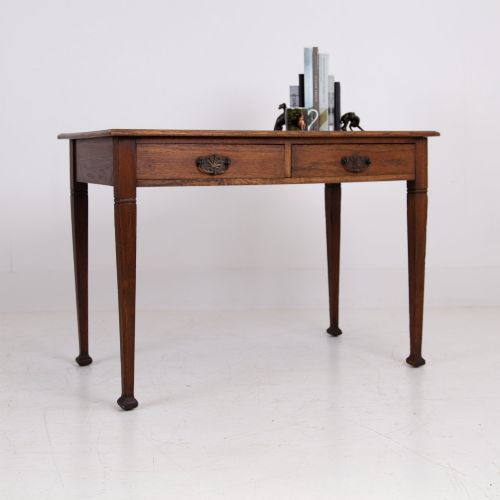
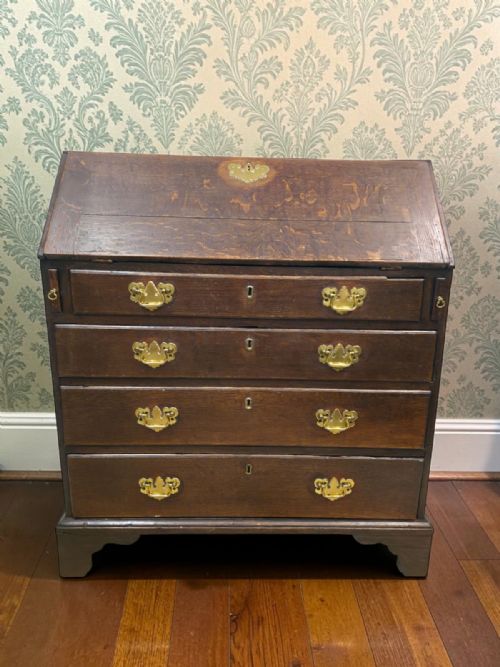
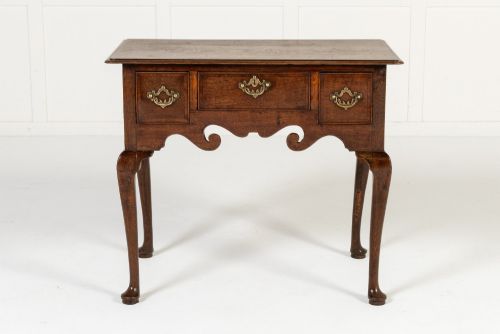
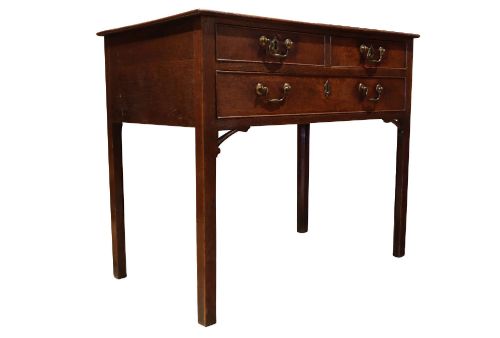
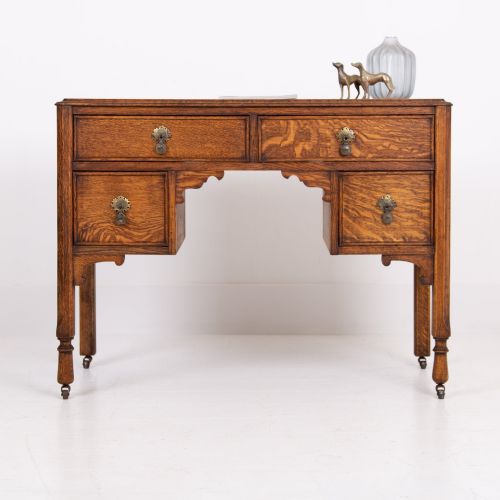
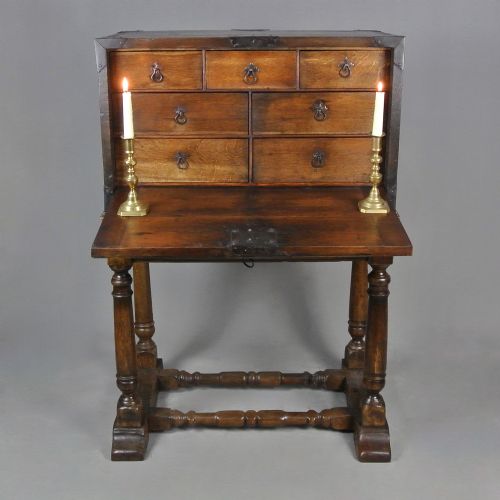
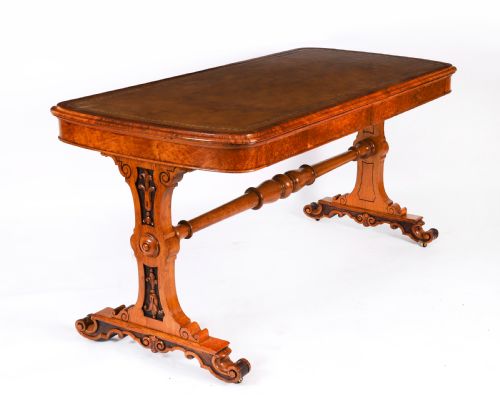
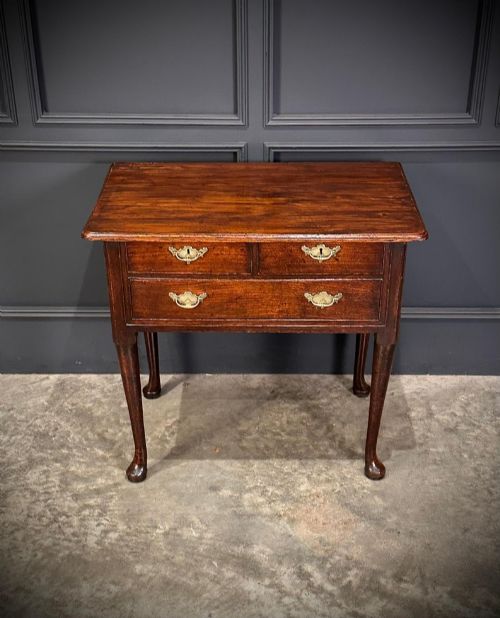
The english oak writing desk encompasses diverse formats ranging from early portable document boxes and lowboys to later pedestal desks and fall-front bureaux.
Makers from the seventeenth century onward utilised durable domestic timbers for furniture designed to hold writing materials, ledgers and correspondence.
Examples on this page span the seventeenth, eighteenth, nineteenth and early twentieth centuries, reflecting changing domestic habits and office requirements.
Materials and Construction
Cabinet makers relied primarily on solid oak, occasionally incorporating pollard oak, burr oak and walnut veneers to provide figured surfaces on drawer fronts and desk tops.
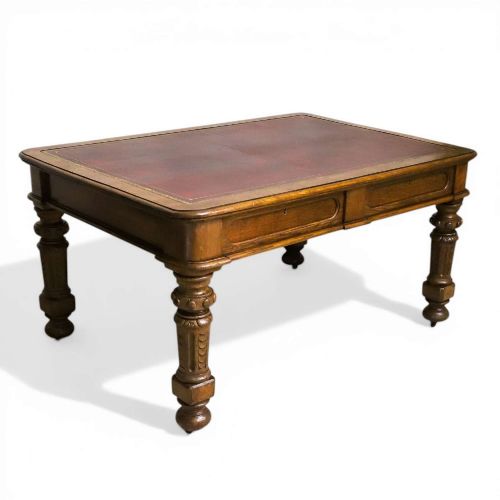
Fittings included brass handles, iron locks and leather writing surfaces inset into wood frames to create durable working areas.
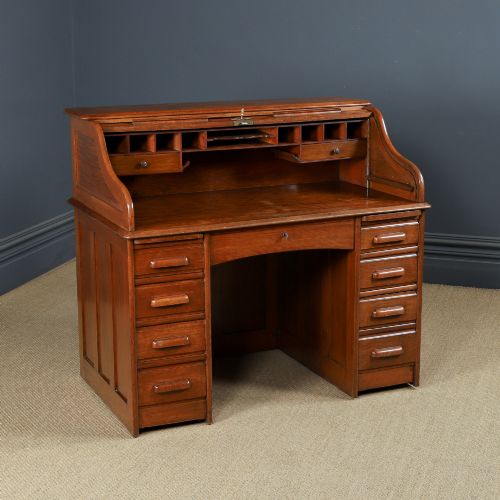
Joinery methods varied from early pegged frames and carved panels to later mechanical tambour shutters and pedestal drawer configurations.
Listings feature oak alongside brass, iron, leather and pollard oak across Georgian, Victorian, Edwardian and Arts & Crafts styles.
Build and Proportion
Superior examples demonstrate careful timber selection with well-matched grain patterns, clean interior drawer construction and original hardware.
The integrity of the piece depends upon the survival of original writing surfaces, fall-front supports and structural framing without excessive timber replacement.
James Winter and Sons·Merryweather and Son·Waring and Gillow·Robert Mouseman Thompson·Stanley Webb Davies·Hubert Simpson of Kendal·Shoolbred
The English Oak Writing Desk Glossary
- Bureau
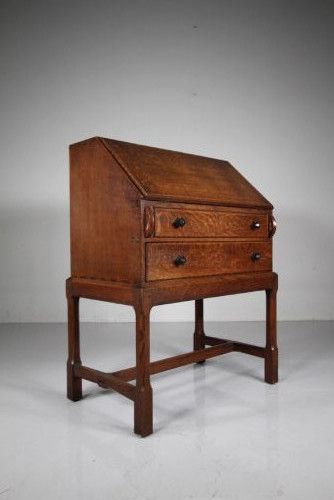
- A writing cabinet featuring a sloping fall-front that opens to reveal internal compartments and pigeon holes.
- Lowboy
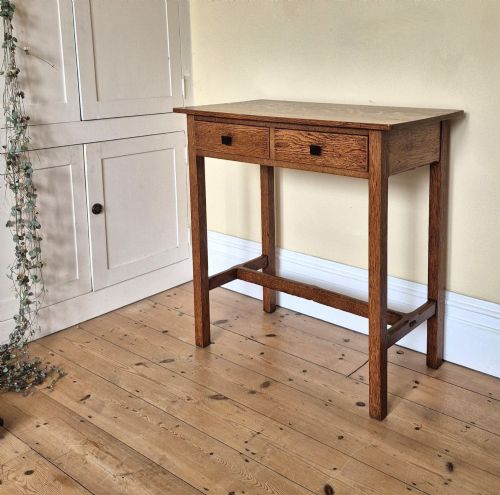
- A small table with one or more drawers, frequently used as a dressing table or writing surface during the seventeenth and eighteenth centuries.
- Roll top desk
- A pedestal desk fitted with a slatted tambour shutter that slides down to enclose the upper writing area.
- Partners desk
- A large double-sided desk designed for two people to work opposite one another, featuring drawers on both faces.
- Bible box
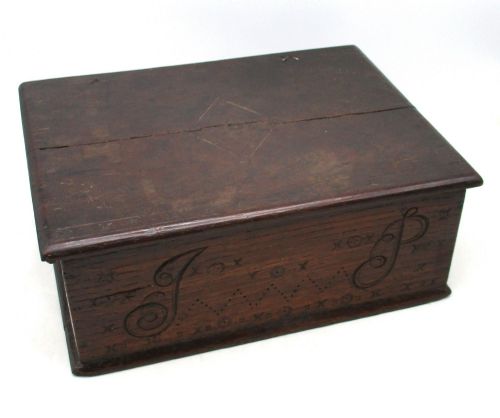
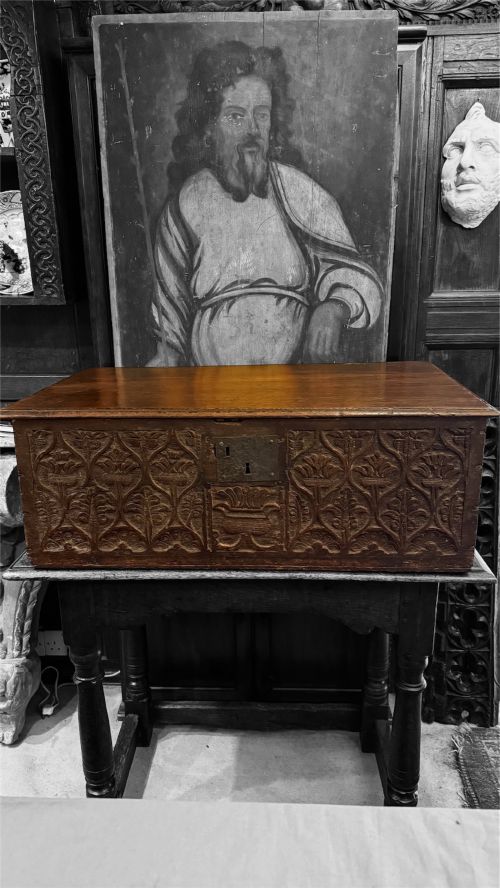
- A small wooden box with a sloped or flat lid, originally built to hold religious texts and later utilised for stationery.
English Oak Writing Desk: Frequently Asked Questions
What is an english oak writing desk?
An english oak writing desk is a piece of furniture built primarily from native oak for reading, writing and storing documents. These items range from compact seventeenth-century portable boxes to large Edwardian pedestal office desks.
Over the centuries, cabinet makers adapted these forms to suit changing domestic and commercial needs, creating surfaces intended for daily correspondence and business.
How do I date an oak writing desk?
Dating relies on construction methods, hardware types, timber preparation and overall style. Early pieces from the seventeenth century often show pegged mortise and tenon joints with hand-carved decoration, while nineteenth-century examples feature mechanical roll tops and inset leather panels.
Comparing the secondary timbers inside drawers and the style of brass handles helps establish the period of manufacture.
Where were these desks used?
These desks served in private libraries, studies, merchants' offices and country houses. Smaller box formats sat on tables for portable writing tasks, while large pedestal and partners desks anchored corporate offices and grand home studies.
Their placement depended on natural light sources near windows and the need for secure document storage.
How do I maintain an oak writing desk?
Maintenance involves keeping the timber away from direct heat sources and extreme humidity fluctuations to prevent wood movement and splitting. Regular dusting and occasional application of traditional wax help preserve the finish of the oak.
Leather writing surfaces benefit from careful cleaning without harsh chemical solvents.