
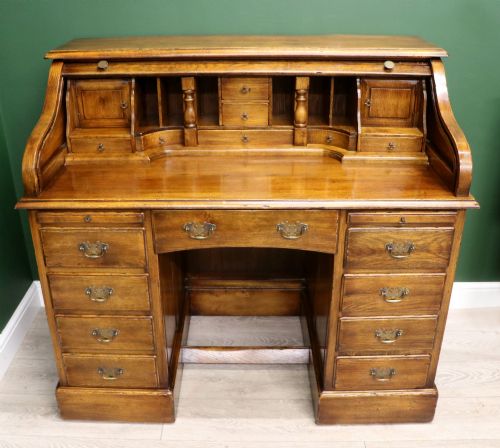
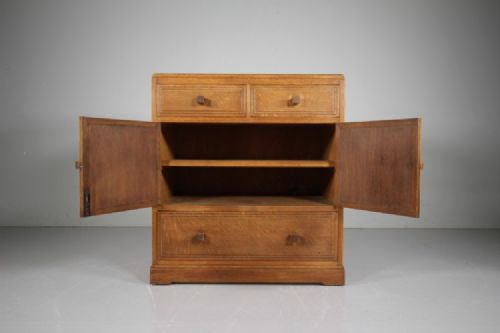


Solid Oak Writing Bureau
A solid oak writing bureau brings sturdy practicality and warm grain to a room, offering a private drop-down desk space that hides paperwork when the day is done.
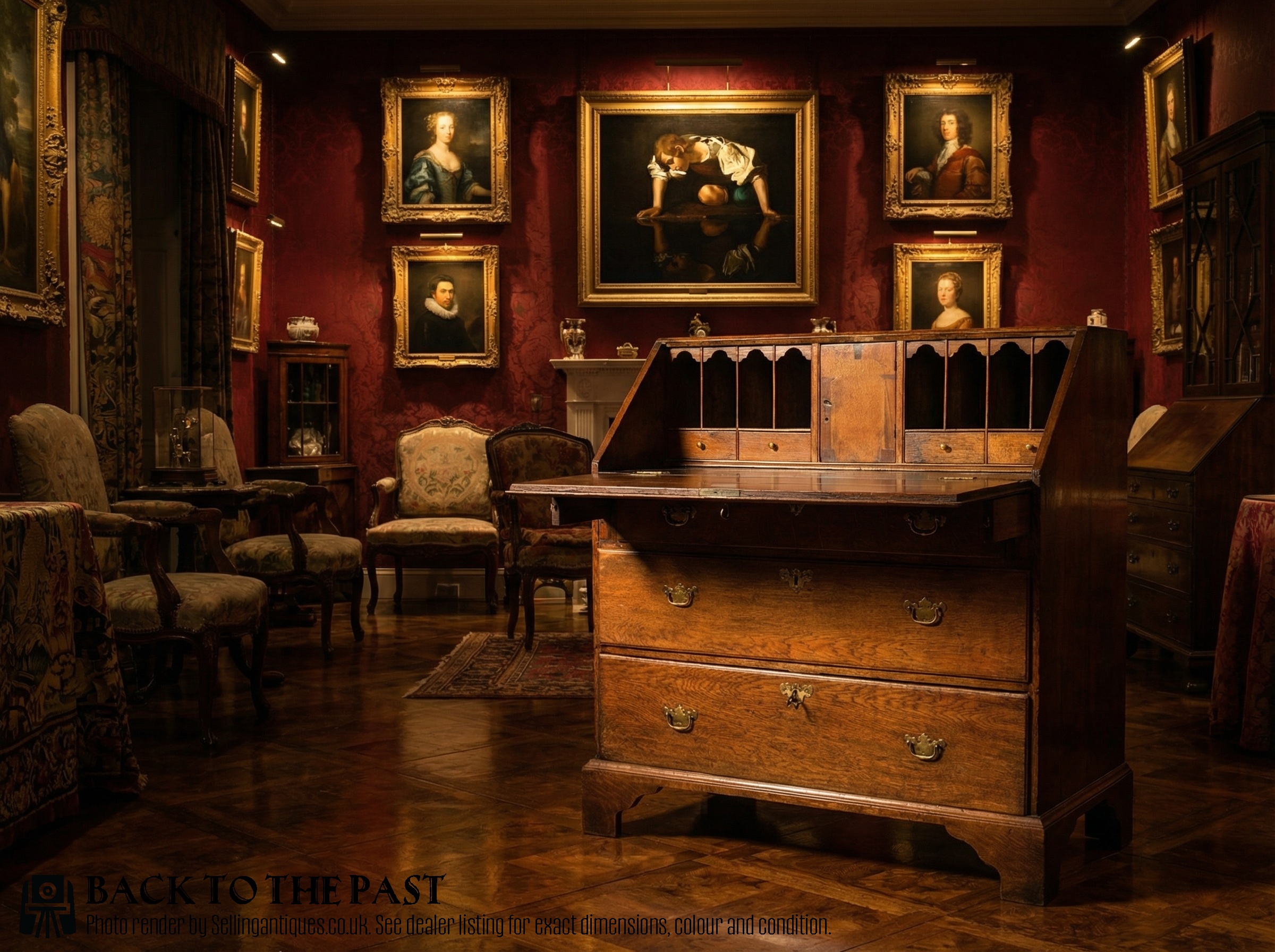
Solid Oak Writing Bureau
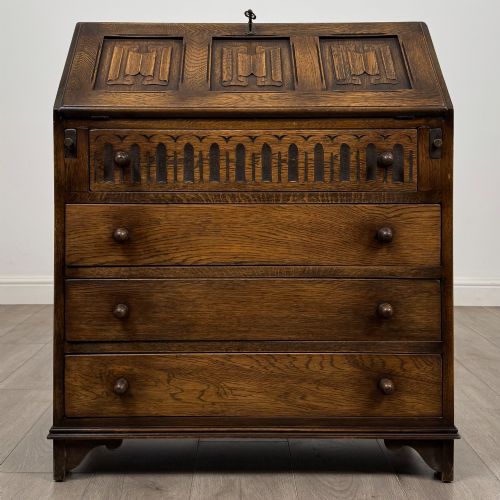
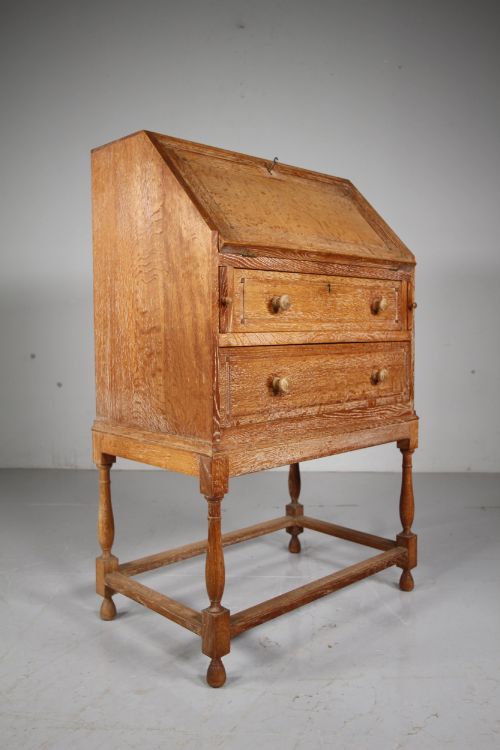
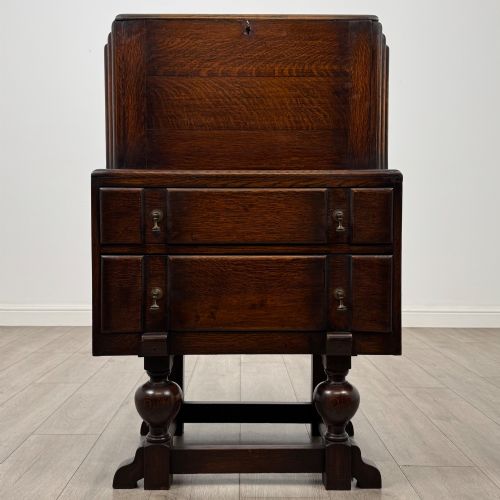
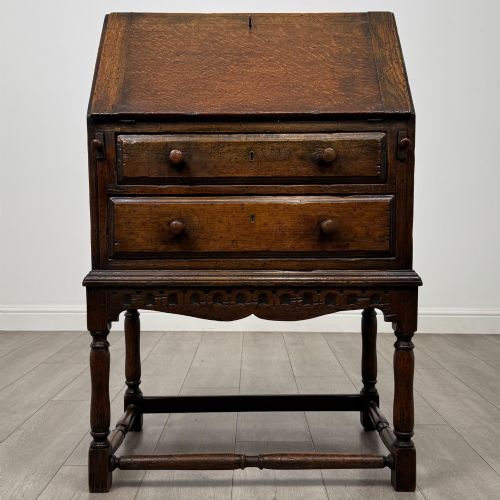
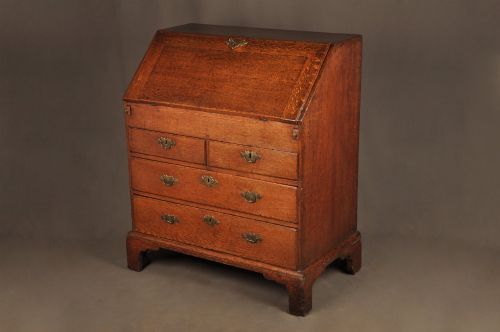
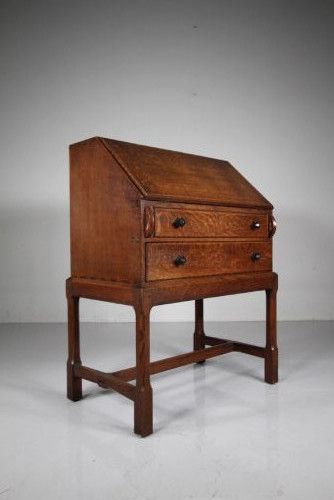
A solid oak writing bureau combines a sloping fall-front writing surface with drawers or pigeonholes inside, appearing most frequently from the Edwardian era through the nineteen-thirties.
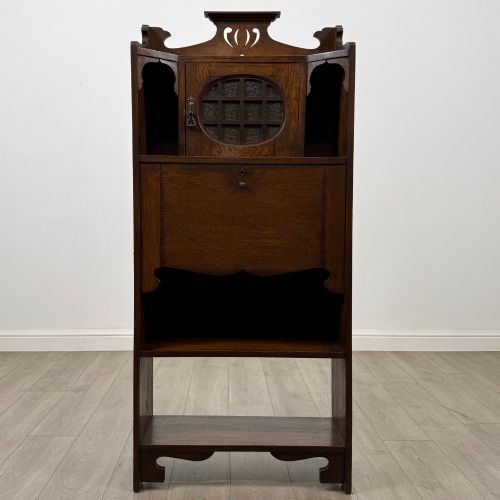
The selections span from simple early eighteenth-century examples to decorative Arts and Crafts pieces and heavy roll-top desks.
Buyers encounter regional workshop pieces alongside commercial Edwardian items designed for middle-class homes.
Materials and construction
Makers relied on English oak, sometimes specified as Welsh oak, complemented by brass handles, iron fittings, and occasional leaded glass doors on bookcase variants.
Joinery methods range from hand-planed panels on earlier pieces to machine-cut framing on later twentieth-century desks.
Carving, linenfold panels, and tambour fronts appear across specific styles like Jacobean Revival and Arts and Crafts.
Listings feature oak combined with brass, glass, lead, and wrought iron across Edwardian, Arts and Crafts, and early Georgian periods.
Assessing quality and build
Quality rests on timber selection, where dense grain and thoughtful board matching elevate a piece far above utilitarian workshop output.
Interior fittings reveal the maker's care, distinguishing simple dividers from complex stationery arrangements with secret compartments and small drawers.
Hardware integrity and smooth drawer runners separate superior examples from standard production items.
Heals of London·Stanley Webb Davies·Bryn Mawr·Robert Mouseman Thompson·Liberty and Co·James Shoolbred and Co
The Solid Oak Writing Bureau Glossary
- Fall-front
- The hinged sloping panel that drops down to form a writing surface. It conceals the fitted interior when closed.
- Tambour
- A flexible sliding shutter formed of narrow strips of wood glued to canvas. It operates on roll-top desks.
- Bureau bookcase
- A tall form combining a writing bureau base with an upper shelving section enclosed by doors. Glass panels often feature in the upper doors.
- Pedestal desk
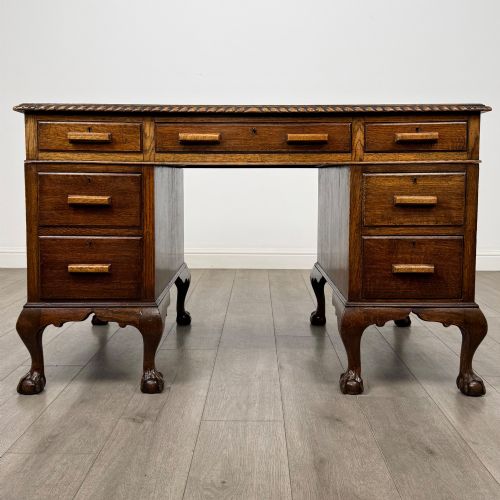
- A heavy office form with two banks of drawers supporting the writing surface. It differs from the traditional bureau slant-front.
Solid Oak Writing Bureau: Frequently Asked Questions
How do I date an oak bureau?
Examine the construction methods of the drawers, the style of the brass handles, and the cut of the timber. Hand-cut dovetails and pegged joints usually point to earlier periods, whereas machine production marks the twentieth-century pieces.
Design motifs also offer clues. Arts and Crafts pieces often show simpler geometric lines, while revival pieces borrow heavily from seventeenth-century Jacobean details.
Can I use a writing bureau as a laptop desk?
Most fall-front writing surfaces suit modern laptops, provided you check the internal depth and the weight limits of the supporting hinges or lopers. Many Edwardian and later versions offer sufficient space for daily writing tasks.
Measure the height of the pull-down flap against your chair to ensure comfortable seating posture during extended use.
How should I care for solid oak furniture?
Keep solid oak away from direct heat sources and strong sunlight to prevent the timber from drying out and splitting. Apply a suitable beeswax periodically to nourish the grain and maintain the surface sheen.
Avoid silicone-based sprays, which build up over time and dull the natural warmth of the wood.