
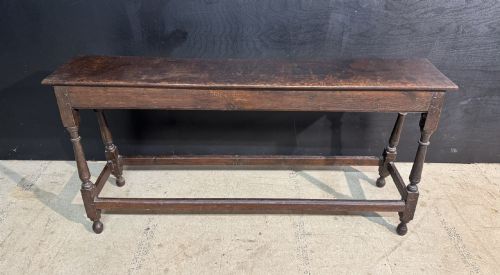
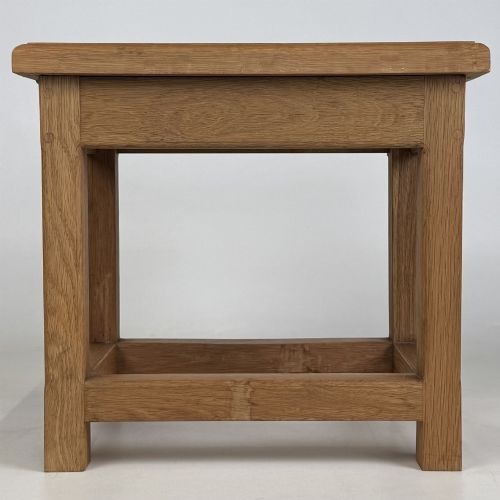
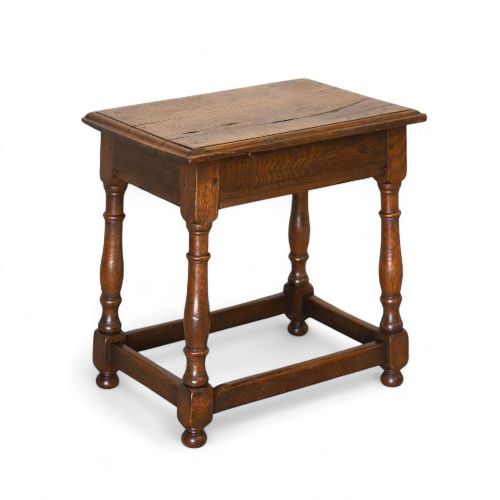
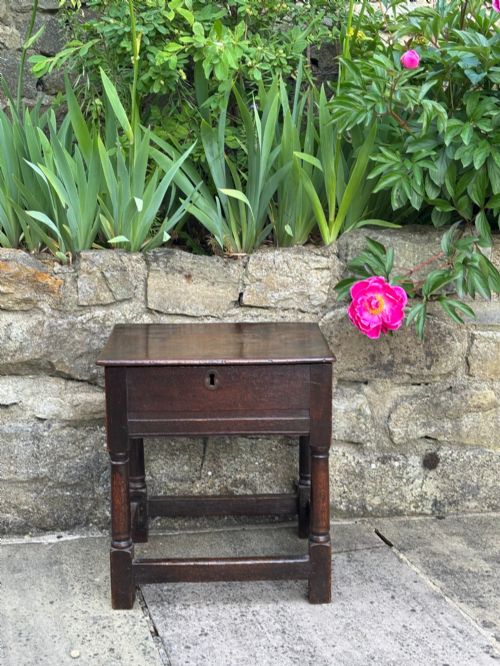
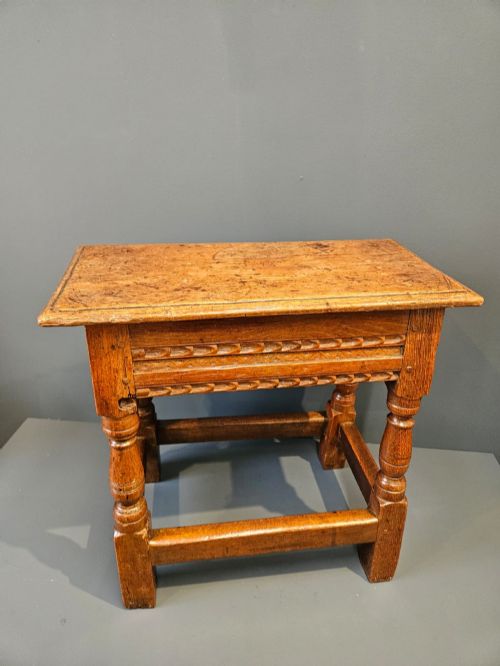

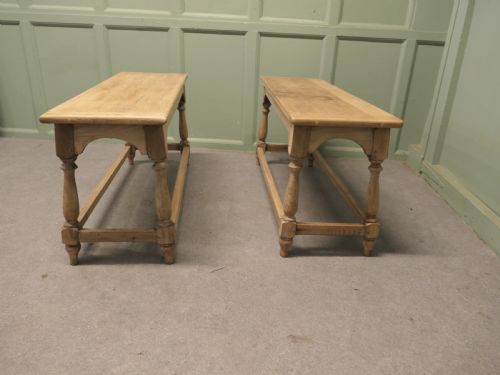


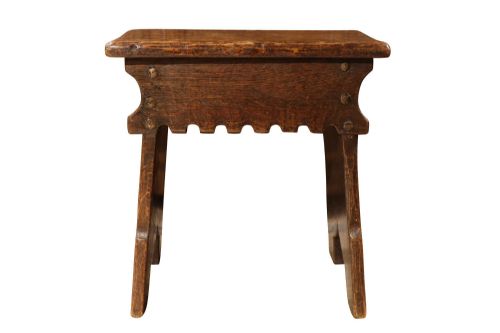


English Oak Joint Stool
An English oak joint stool brings sturdy seventeenth-century craft into a modern interior, offering a versatile surface or seat built from solid timber.
Identifying an English oak joint stool
An English oak joint stool is a rigid wooden seat constructed using pegged mortise and tenon joinery rather than traditional nailing or gluing. These pieces originate primarily from the seventeenth century, though revival pieces from the nineteenth and early twentieth centuries also appear frequently.
Jacobean and rustic styles dominate the surviving examples, reflecting the heavy, utilitarian domestic architecture of early modern Britain. Buyers often utilise them as bedside tables, lamp stands, or compact hallway seats.
Materials and construction methods
Makers built these pieces predominantly using native English oak, selected for its density, durability, and straight grain. Secondary woods like fruitwood occasionally appear in structural elements or decorative panels on specific box variants.
Carpenters formed the frame using traditional joinery, securing joints with wooden dowels or pegs rather than metal fasteners. Turned legs were shaped on a pole lathe, while tops were hand-planed from single or dual boards of solid timber.
Retail Price Guide 2026
Typical UK retail prices for english oak joint stool, calculated from the Sellingantiques database of over a million retail prices indexed since 2003. This retail price guide relies exclusively on Sellingantiques data; no external sources or auction records are used, so the figures do not describe the wider market.
Distinguishing quality across periods
The integrity of the original timber frame and the retention of early surface patination separate period examples from later revivals. Surviving seventeenth-century pieces display genuine tool marks and oxidisation that modern reproductions cannot replicate.
Proportion and the complexity of the leg turnings dictate the refinement of the piece. Crisp detailing in the edge mouldings and sturdy, unaltered stretcher rails indicate superior workshop origin.
The English Oak Joint Stool Glossary
- Joint stool
- A wooden seat constructed from jointed timber parts held together with pegged mortise and tenon connections. The name derives from the carpenter's practice of joining wood.
- Stretcher
- A horizontal wooden rail connecting the lower legs of a stool to provide structural rigidity. These rails also served as footrests to keep feet off cold stone floors.
- Jacobean
- The style of British design associated with the reign of King James I, characterised by solid construction and geometric carved decoration. It heavily influenced later revival furniture.
- Patina
- The surface sheen and colour developed by aged oak through decades of handling, polishing, and exposure to light. It acts as a primary indicator of historical authenticity.
- Mortise and tenon
- A joint formed by inserting a shaped projection into a corresponding cavity, secured with a wooden peg. This method provides immense strength without metal nails.
Frequently Asked Questions
How were joint stools used historically?
These pieces served primarily as sturdy seating at the dining table for members of the household of higher status, while servants stood. They also functioned as portable platforms for lighting or temporary storage.
In modern rooms, their compact footprint makes them ideal as side tables or occasional seats.
Are all these stools from the seventeenth century?
Many examples date from the seventeenth century, but a significant portion of available pieces stem from later revival periods between the Victorian era and the nineteen-twenties. Cabinetmakers in those later decades closely copied earlier Jacobean forms using genuine old oak.
Examining the construction wear and timber colour helps distinguish original period work from nineteenth-century interpretations.
Can I use an antique stool as a regular seat?
Solid oak construction makes these stools exceptionally strong and fully capable of supporting daily weight. The pegged joinery is designed to withstand heavy physical loads without loosening.
Placing them in dry interior environments prevents the historic timber from splitting or warping over time.
What is a box stool?
A box stool incorporates a hollow compartment beneath a lifting top lid, combining a seat with concealed storage. These variants often appear in seventeenth-century and revival formats for holding household goods.
The added functionality makes them practical for stabling small items in living spaces.