

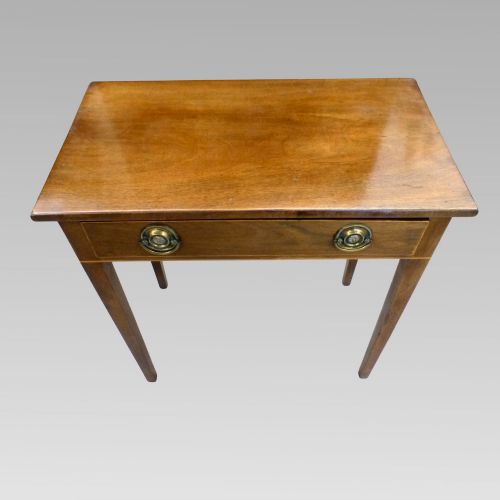


English Mahogany Writing Table
An english mahogany writing table brings functional elegance into a room through dense timber and considered joinery.

English Mahogany Writing Table
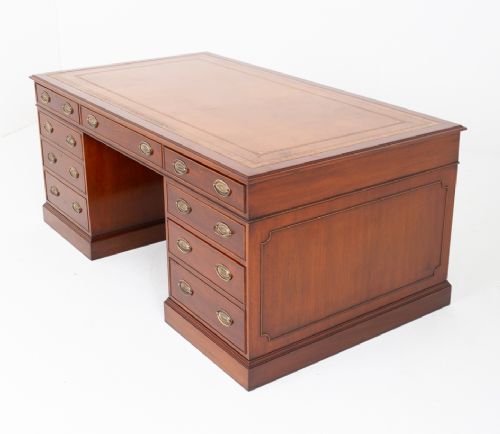
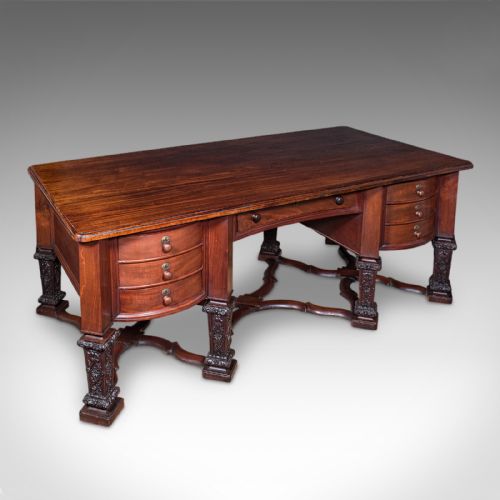
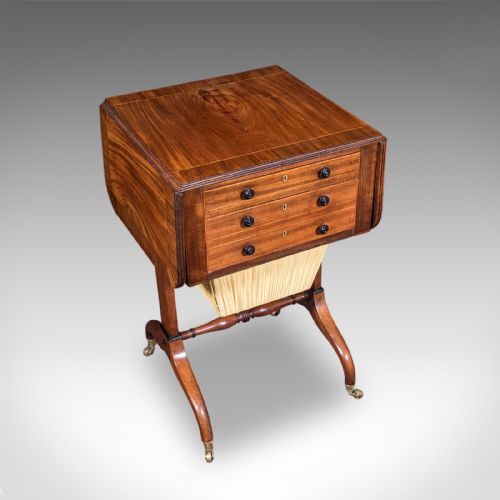
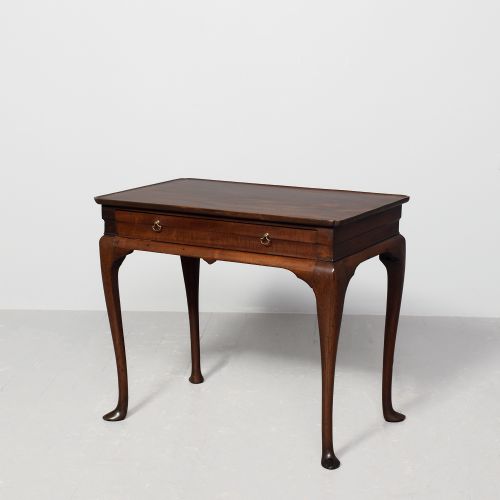
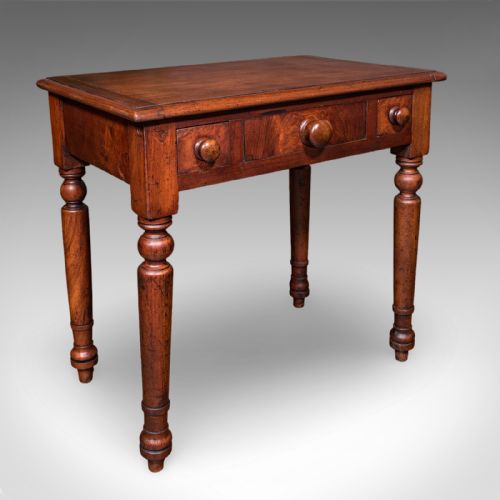
An english mahogany writing table serves as a dedicated workspace or occasional surface, drawing from Georgian, Regency, and Victorian periods.
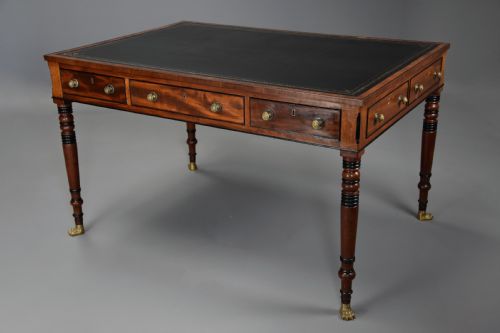
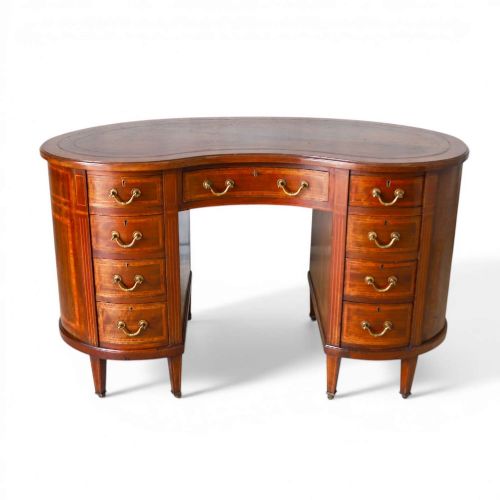
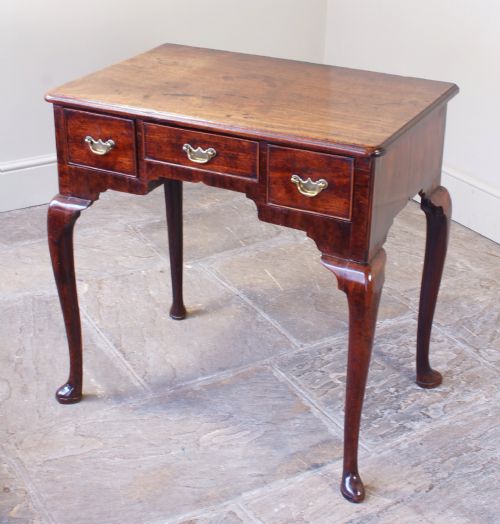
Buyers encounter pedestal forms, compact lowboys, and library variants equipped with drawers or leather-lined surfaces.
Origins trace across eighteenth and nineteenth-century workshops, ranging from modest provincial pieces to exhibition items.
How They Were Made
Cabinetmakers utilised solid mahogany and flame veneers over secondary timbers, often framing surfaces with boxwood inlay and satinwood borders.
Writing surfaces incorporated tooled leather or fabric inserts, while structural mounts relied on brass handles, castors, and inlaid stringing.
Listings span Georgian, Regency, and Victorian periods, incorporating materials like mahogany, brass, leather, and satinwood.
What Varies in Quality
The degree of refinement depends on timber selection, such as figured flame mahogany, alongside crispness in hand-cut dovetails and string inlay.
Signatures, maker stamps, or documented attribution to prominent workshops elevate historical standing and structural integrity.
John MaClean·George Faulkner Armitage·Gillows·John Gregory·Spillman And Co
The English Mahogany Writing Table Glossary
- Lowboy
- A small dressing or writing table featuring a low drawer arrangement and slender legs.
- Partners Desk
- A large double-sided desk designed for two people to work opposite one another.
- Satinwood
- A pale, dense timber utilised for contrasting stringing and decorative inlay work.
- Pedestal Desk
- A form comprising two banks of drawers supporting a single desktop slab.
- Stringing
- Thin inlaid lines of contrasting wood used to outline drawers and borders.
English Mahogany Writing Table: Frequently Asked Questions
How do I identify a Regency writing table?
Regency examples typically exhibit classical proportions, brass inlay, and sabre legs reflecting early nineteenth-century design.
Look for refined brass mounts and lighter mahogany tones characteristic of the period between eighteen hundred and eighteen thirty.
What is the difference between a lowboy and a writing table?
A lowboy functions as a compact side table with shallow drawers, originating mainly in the eighteenth century.
Writing tables generally provide greater surface area and knee clearance for seated administrative tasks.
Where should I place a partners desk?
Partners desks require central placement within a room because drawers and kneeholes exist on both opposing sides.
Sufficient perimeter space allows access to the dual working faces without obstructing doorways or circulation.
How do I care for a leather writing surface?
Original leather inserts benefit from gentle dusting and specialised conservation leather balms to prevent dry cracking.
Avoid excessive moisture and direct sunlight to preserve the gilded tooling and dyed surface colour over time.