
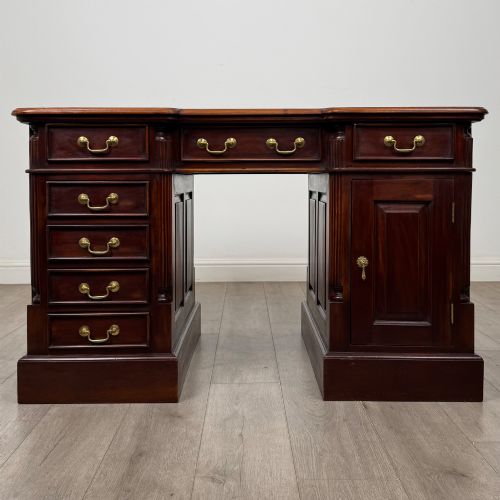
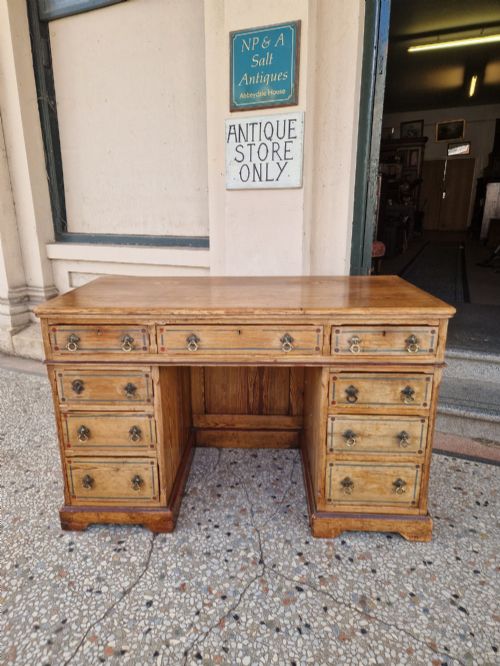
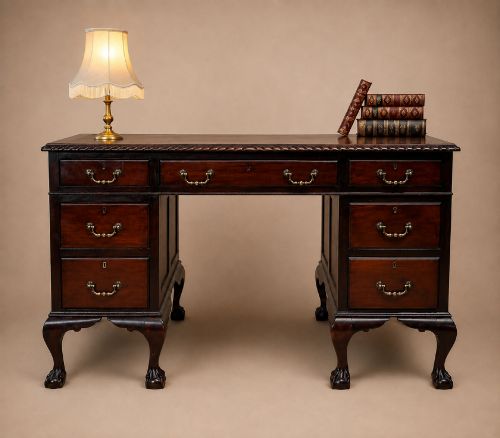
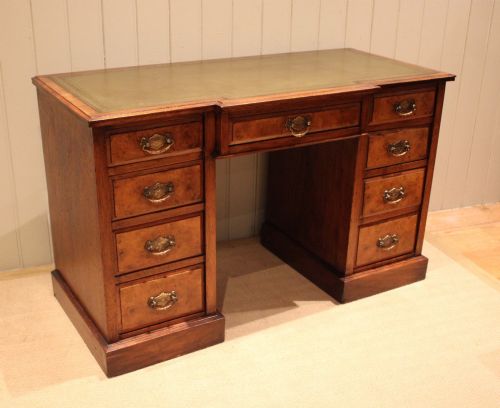

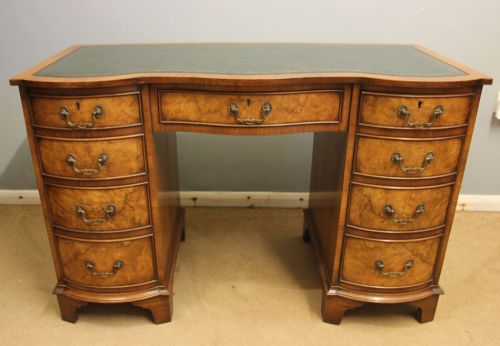
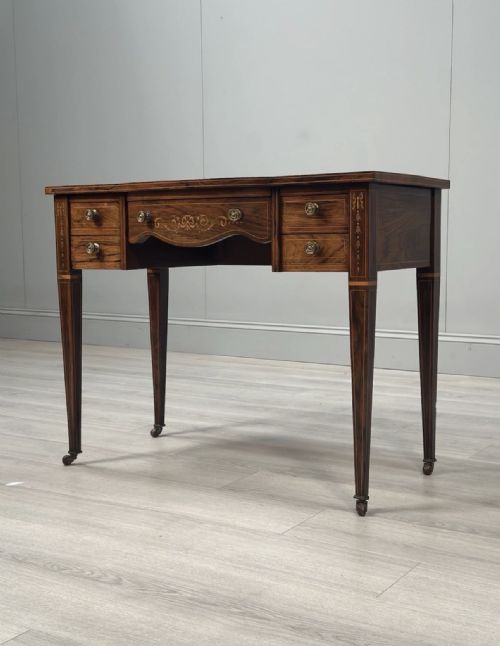
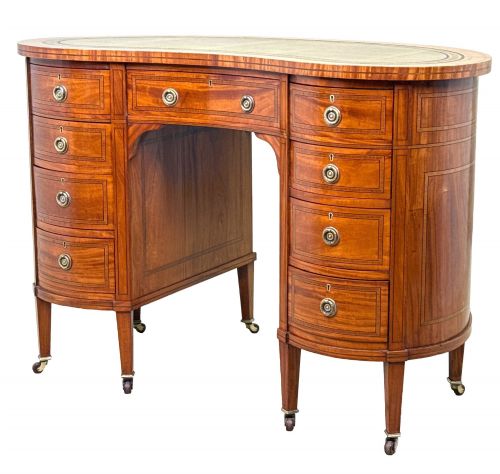
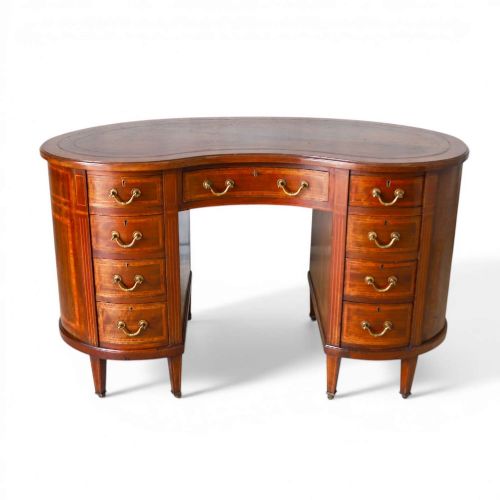


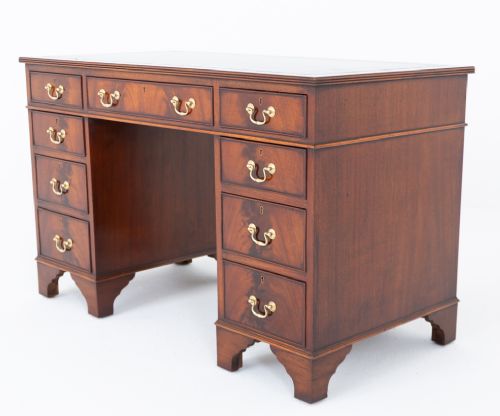
Edwardian Style Pedestal Desk
An edwardian style pedestal desk offers structured workspace with multiple drawers and a writing surface, bringing period character to a study.

Edwardian Style Pedestal Desk
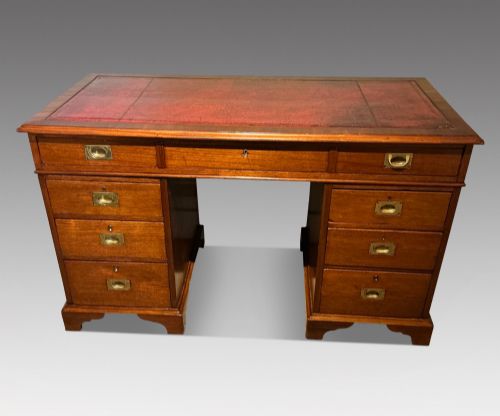
When you search for an edwardian style pedestal desk, you encounter substantial writing furniture built around twin banks of drawers supporting a central top. The version you meet most frequently on this page relies on mahogany, often enhanced by satinwood, walnut, or burr walnut veneers.
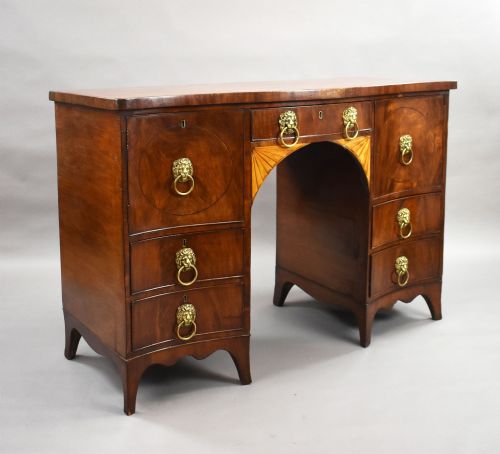
Many examples draw on earlier design vocabularies, showing Sheraton Revival, Chippendale Revival, and Georgian Revival influences through banded inlays and classical proportions. Alongside standard double-pedestal configurations, related forms include kneehole writing desks, partners desks, and Carlton House variants.
The periods span from Victorian precursors through the Edwardian era into the early twentieth century, incorporating items dated around 1900, 1910, 1920, and 1930. These pieces served as administrative hubs in period homes, designed to stand proudly in the centre of a room or against a wall.
Materials and construction methods
Cabinetmakers constructed these desks primarily using solid mahogany and oak frameworks faced with figured mahogany, curl mahogany, burr walnut, or satinwood veneers. Artisans applied intricate contrasting stringing and crossbanding to drawer fronts and top surfaces, reflecting revivalist tastes of the period.
Writing surfaces typically feature inset leather panels, often tooled with gilt decoration, bordered by polished timber surrounds. Brass handles, key escutcheons, and occasional Corinthian column details complete the hardware, while structural elements frequently employ secondary softwoods within the drawer carcasses.
The inventory spans pieces dated from the Victorian era through the Edwardian period up to the 1930s.
Assessing quality in pedestal desks
The distinction between tiers of quality rests on the selection of timber figures, such as curl mahogany or burr walnut, and the precision of the cabinetwork. Superior examples display seamless veneer matching across drawer fronts and harmonious grain continuation over the pedestal modules.
Hardware integrity and internal drawer construction also separate standard production from superior workshops. Finely made pieces incorporate solid drawer linings with dovetail joints and retain original brass furniture that operates smoothly within well-fitted housings.
Gill & Reigate·Maple & Co.
The Edwardian Style Pedestal Desk Glossary
- Pedestal desk
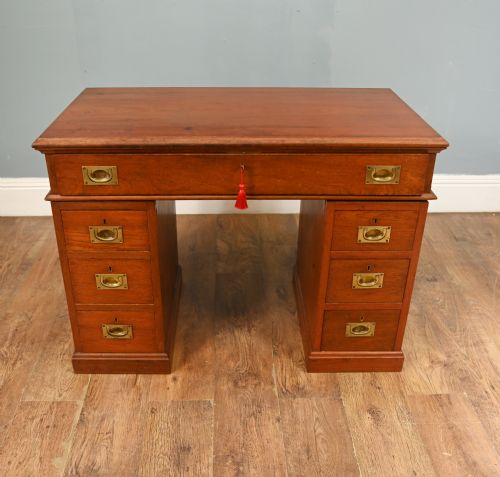
- A heavy writing desk supported by two independent pedestals or banks of drawers. These modules carry the main top surface and create a central kneehole space.
- Partners desk
- A large double-sided desk designed for two people to work opposite one another. These layouts duplicate drawer and cupboard arrangements on both faces.
- Carlton House desk
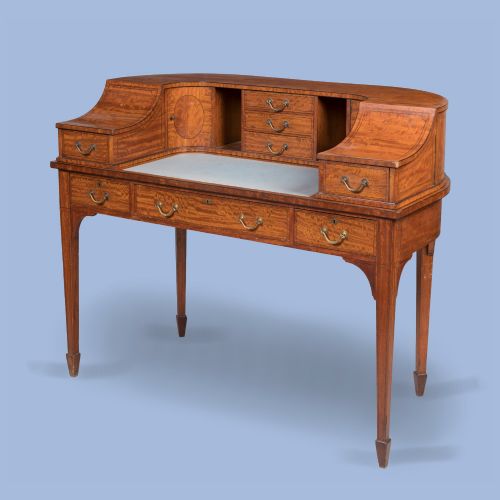
- A distinctive writing table featuring a curved superstructure of small drawers and compartments around the back and sides. This form originated in the late eighteenth century and saw revival production later.
- Crossbanding
- A decorative border of veneer laid so that the grain runs at right angles to the surrounding wood. This technique frames table tops and drawer faces with contrasting tones.
- Kneehole desk
- A compact writing desk featuring a central recessed space for the user's legs, flanked by single or multiple vertical tiers of drawers.
Edwardian Style Pedestal Desk: Frequently Asked Questions
What is a pedestal desk?
A pedestal desk is a large freestanding writing table supported by two separate columns of drawers. The central opening provides legroom while the twin pedestals house storage compartments.
These desks were designed for heavy daily administration in period libraries and studies. Their substantial footprint makes them natural centrepieces for traditional interiors.
How do I use a partners desk?
A partners desk provides workspace on both sides simultaneously, featuring duplicate drawer banks facing each other. This layout allows two people to share the same piece of furniture while retaining independent storage.
Positioning a partners desk in the middle of a room lets you appreciate the dual-sided configuration fully. Ensure adequate clearance around the entire perimeter for comfortable access to all drawers.
What is a Carlton House desk?
A Carlton House desk incorporates a curved concave superstructure lined with small drawers, pigeonholes, and cupboards above the writing surface. This elevated arrangement keeps stationery organised within arm's reach.
The layout evolved from late eighteenth-century designs and reappeared in revival pieces from the Edwardian period. The enclosed upper tier gives these desks a distinctive architectural silhouette.
How do I care for a leather top?
The leather writing surface benefits from occasional conditioning with specialist leather balms to maintain flexibility. Avoid using harsh chemical cleaners or excess moisture on the hide and the surrounding timber.
Keep the desk away from direct heat sources and strong sunlight to prevent the leather from drying out and cracking. Blot any liquid spills immediately with a soft cloth.
How do I distinguish revival styles?
Revival styles draw inspiration from earlier design periods, incorporating characteristic motifs like Chippendale frets or Sheraton satinwood inlay. Examining the timber preparation, secondary woods, and construction techniques helps identify the actual manufacturing era.
Many desks produced around 1900 reinterpreted Georgian and Regency aesthetics using contemporary machinery and finishing methods. Compare the decorative hardware and veneer patterns against documented period examples to confirm the design source.