
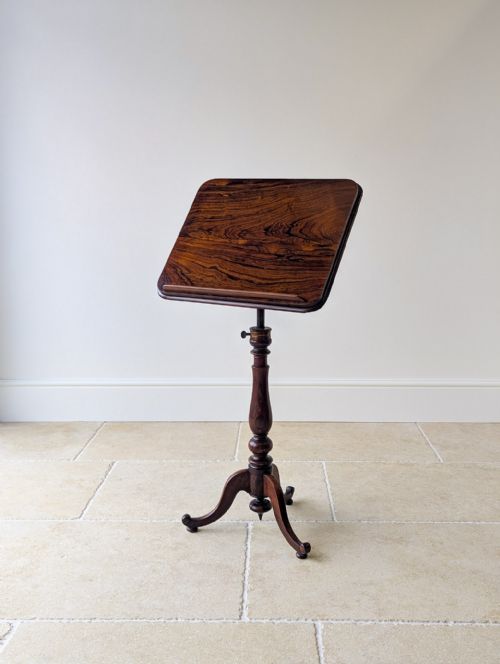
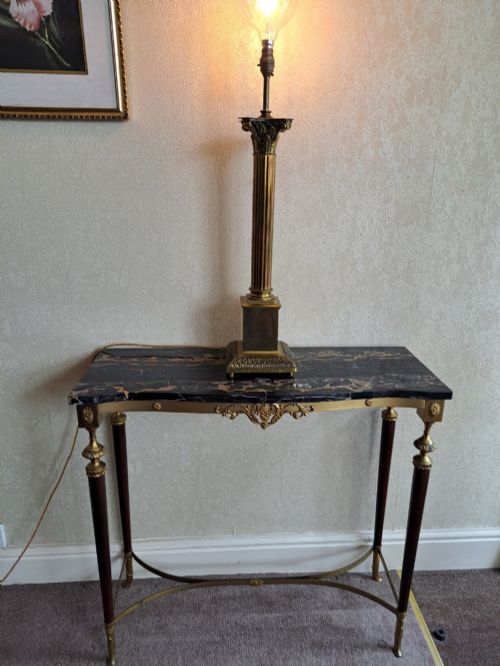
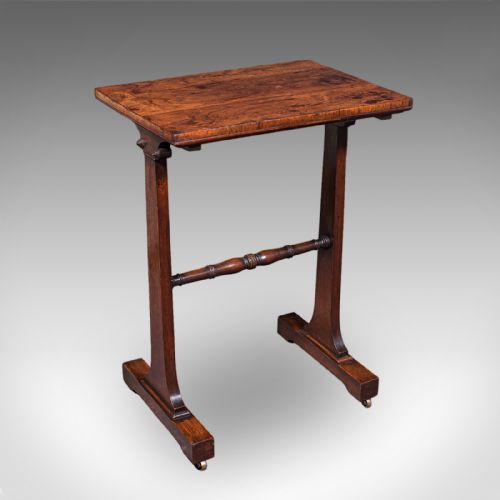
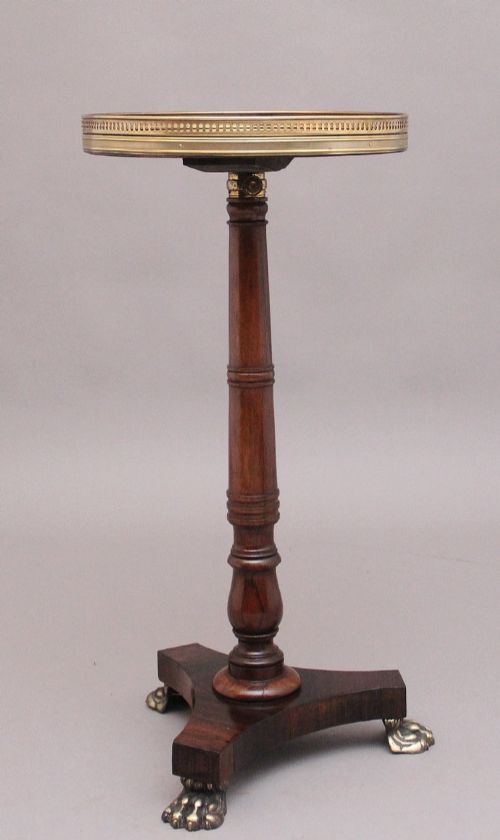




Regency Reading Table
A regency reading table brings adjustable surfaces and rich timbers together for practical daily study.
Regency Reading Table
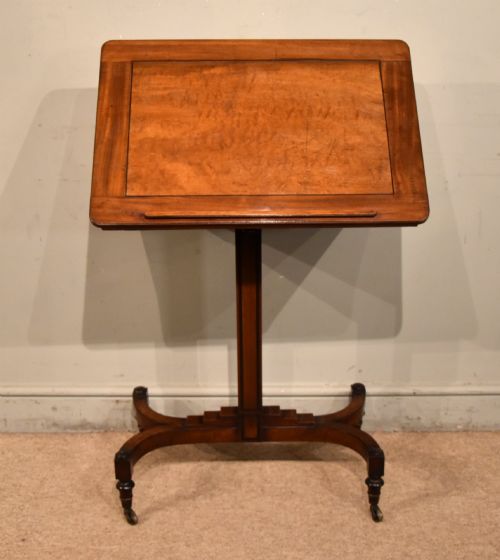
Many items combine multiple functions, appearing as music stands, work tables, or occasional desks alongside the primary reading surface. These forms frequently date from the Regency period, William IV era, and late Georgian years.
The profile typically includes sturdy column supports, brass inlays, or telescopic mechanisms that allow height adjustments for use beside a chair or in a library.
Materials and construction methods
Cabinetmakers utilised dense hardwoods such as mahogany and rosewood, often enhancing the surfaces with delicate brass inlay or ebony stringing. These timbers provided the structural integrity needed for moving mechanical parts like adjustable ratchets and folding ledges.
Metal components played a crucial role in functionality, with cast brass brackets, ormolu mounts, and bronze fittings securing the moving reading slopes and telescopic pedestals. Leather inserts frequently lined the writing and reading surfaces to create a smooth, durable workspace.
One enthusiastic horologist managed to house a bracket clock within the records, proving that reading tables sometimes shared space with very loud timepieces.
Distinguishing quality factors
The sophistication of the mechanical adjustment mechanism sets finer examples apart from simpler pieces, particularly when the ratchets, brass struts, and telescopic stems operate smoothly and securely. Cabinetwork refinement also dictates value, seen in the selection of figured rosewood veneers and precise brass stringing rather than plain secondary timbers.
Attribution to known workshops adds distinction, with specific pieces displaying the refined proportions and architectural details characteristic of makers like Gillows. The integration of secondary uses, such as built-in work bags, writing drawers, or dual-purpose music stands, reflects a higher tier of original commission.
Gillows of Lancaster·Marsh and Tatham·Seller of Reading
The Regency Reading Table Glossary
- Telescopic
- A vertical support column constructed in sections that slide within one another to alter the overall height of the table. This mechanism is frequently secured with a brass thumb screw.
- Ormolu
- Gilded bronze or brass applied as decorative mounts, feet, or gallery rails. It provides bright metallic contrast against dark rosewood and mahogany surfaces.
- Ratchet support
- A toothed metal arm underneath a reading stand that allows the user to lock the sloping surface at various graduated angles. It ensures the board remains stable during use.
- Stringing
- Fine inlay work of contrasting timber or brass set into channels cut into the wood surface. It outlines the borders of tabletops and drawer fronts on Regency furniture.
Regency Reading Table: Frequently Asked Questions
How do you adjust the reading slope?
Most pieces utilise a hinged wooden board connected to an internal or external metal ratchet arm. Lifting the board engages the teeth at different notches to hold the desired slant.
Lowering the slope requires lifting it slightly past the highest point to release the catch before guiding the board back to a flat position.
Were these tables only used for reading?
Makers designed these furnishings for multiple domestic tasks, including writing, drawing, and needlework. Many incorporate small drawers, inkwell compartments, or fabric work bags beneath the top.
Others double as music stands or occasional lamp tables, reflecting the versatile nature of nineteenth-century multifunctional furniture.
How do I care for the rosewood and mahogany?
Keep the timber surfaces away from direct sunlight and extreme temperature fluctuations to prevent the wood or veneer from drying out and splitting. Regular dusting with a soft, dry cloth maintains the finish.
Apply a traditional wax polish sparingly when the wood appears dry, buffing it gently to preserve the natural lustre of the grain.
How can I tell a Regency piece from later revivals?
Original nineteenth-century examples display period-appropriate construction methods, such as hand-cut dovetails in the drawer boxes and naturally aged patina on the brass and wood. The iron and brass hardware matches the manufacturing techniques of the 1800s.
Later neoclassical revival pieces from the Edwardian era or the 1920s often use standardised machine screws and lack the crispness of hand-carved mouldings found on genuine period items.