


Adjustable Writing Desk
An adjustable writing desk offers a practical working surface with a mechanism to alter height or slope, suiting both standing and seated tasks.
Adjustable Writing Desk
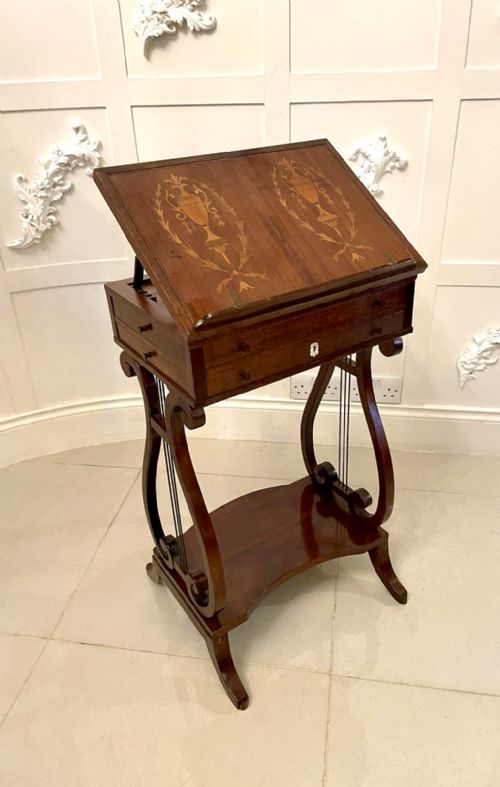
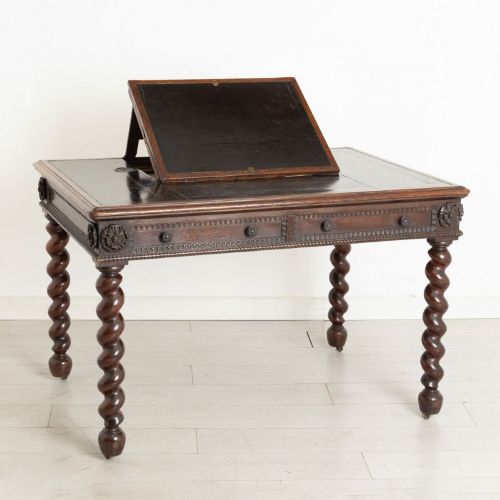
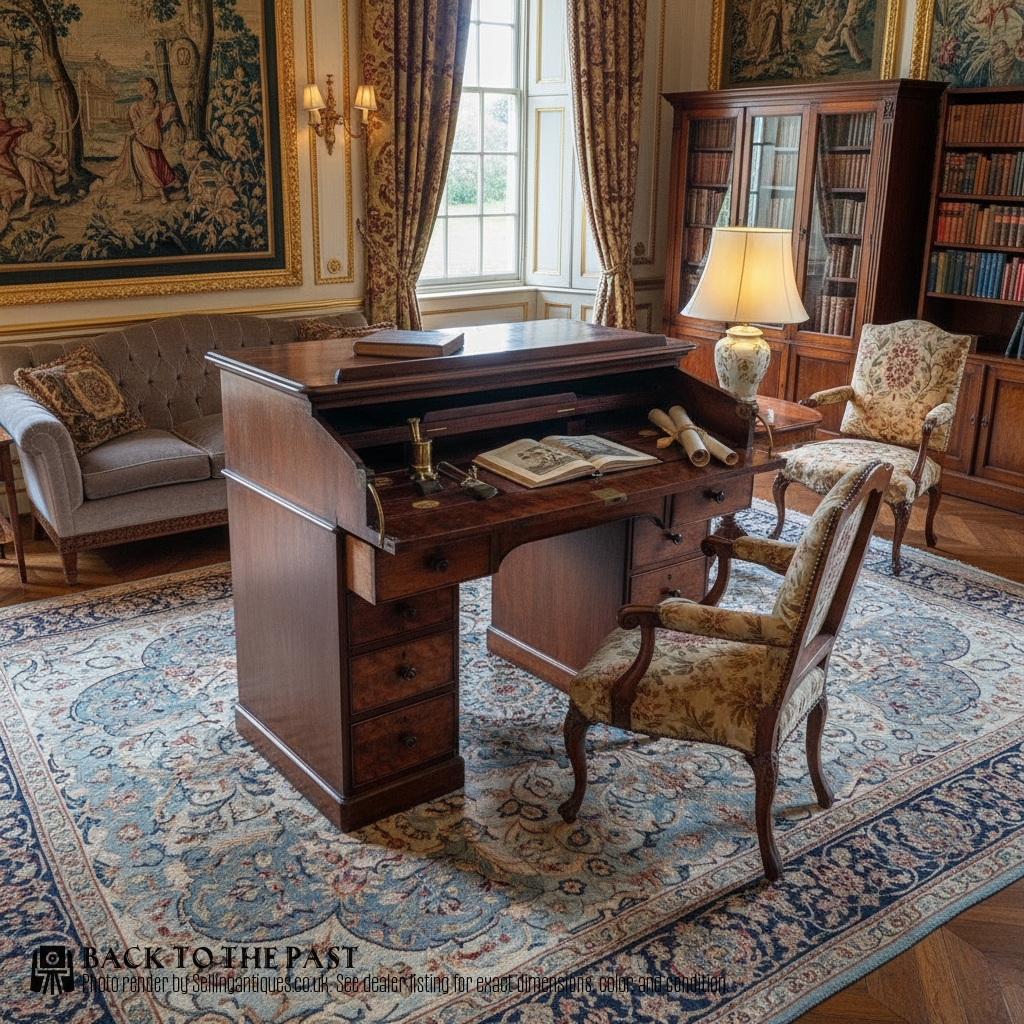
An adjustable writing desk brings together working surfaces and reading stands designed to alter in angle or height. Pieces meeting this description span the Georgian, Regency, Victorian and Edwardian periods, appearing in forms from compact reading tables to large architect's desks.
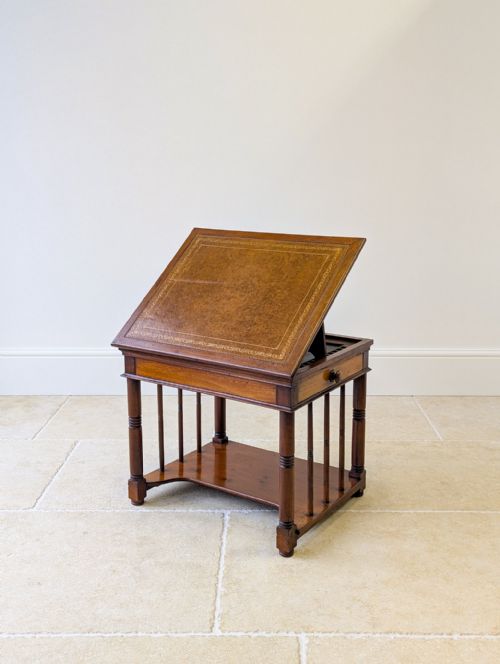
The version most commonly met on this page is the mahogany architect's table or reading stand, often fitted with a leather top and subsidiary brass or boxwood details. These variants originate from English workshops of the eighteenth and nineteenth centuries, alongside occasional French examples.
How they were made
Makers constructed the primary frames of these desks in dense timbers such as mahogany, rosewood, oak and satinwood. These woods provided the necessary structural stability for moving parts and ratchets.
Makers integrated brass mechanisms, hinges and handles to control the adjustable reading surfaces and folio stands. Leather inserts provided a durable writing surface, whilst boxwood and inlay supplied decorative contrast.
Several pieces combine writing, reading, and stationery storage in one compact frame, proving that nineteenth-century desk designers loved a multi-tasking piece of furniture just as much as we do.
What varies in quality
The refinement of the mechanical ratchets and brass adjustment fittings separates standard production from superior examples. Smooth, reliable movement in the raising and lowering of the top indicates careful original workmanship.
The choice of figured timber veneers and the crispness of inlaid boxwood or satinwood details mark out the finer pieces. Timber selection and timber preparation dictate the long-term stability of the moving parts.
Gillow of Lancaster
The Adjustable Writing Desk Glossary
- Architect's desk
- A specialised table featuring a rising or tilting surface designed for drawing, reading, and drafting plans. These pieces often incorporate pull-out ledges or compartmented drawers for instruments.
- Reading table
- A domestic table equipped with an adjustable rest or rising book support. They appear frequently in nineteenth-century libraries and sitting rooms.
- Campaign table
- A portable folding or knock-down piece of furniture designed for military officers on the move. They utilise robust brass mounts and screw-in legs for easy dismantling.
- Folio stand
- A vertical rack attached to a desk or table for holding large books, maps, or unbound sheets of paper. They are often hinged to fold flat when not in use.
- Ratchet support
- A mechanical toothed bar mechanism that holds a desk top or reading slope at various preset angles. This allows the user to alter the working pitch precisely.
Adjustable Writing Desk: Frequently Asked Questions
How do you adjust the top?
Most desks use an internal rack and ratchet mechanism operated by lifting the surface to the desired angle. The support arm engages with teeth to lock the board in place.
Some variants use wooden struts or brass stays which require manual placement into slots beneath the rising platform.
Were these desks used for writing?
They served multiple functions including drawing, drafting, reading, and general correspondence. The adjustable slope made them suitable for artists and architects who needed flat or angled surfaces.
Many examples include fitted interiors with compartments for inkwells, sanders, and writing paper.
How do I identify a Georgian desk?
Georgian pieces generally feature solid mahogany construction with square or turned legs, hand-cut dovetails in the drawers, and restrained classical proportions. The brasswork is often cast and hand-finished rather than machine-stamped.
They rely on simpler, robust mechanical supports compared to later Victorian metamorphic designs.
What is a campaign desk?
A campaign desk is built for disassembly, featuring recessed brass handles, protective brass corners, and removable legs to facilitate transport. These pieces prioritize durability and structural rigidity.
Woods such as mahogany and oak were chosen for their resistance to warping in transit.