


Georgian Drafting Table
A georgian drafting table is a sturdy timber workspace built for designers and mapmakers, prized for adjustable surfaces and fine proportions.
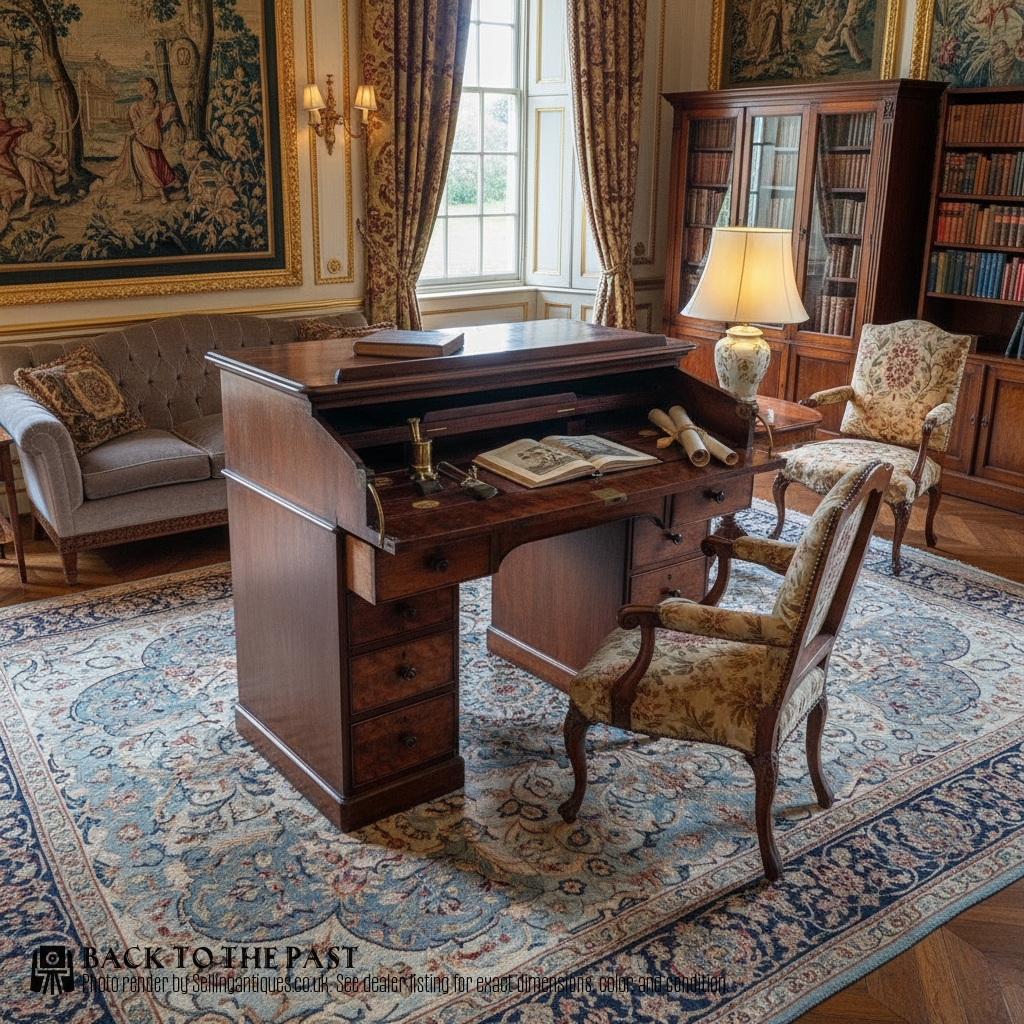
Georgian Drafting Table
A georgian drafting table typically takes the form of an architect's or cartographer's desk, built to accommodate large papers and drawings. These pieces serve as functional workstations with adjustable tops designed for drafting, reading, and writing.
The versions most commonly met on this page belong to the Georgian and Regency periods, spanning the eighteenth and nineteenth centuries. They appear as mahogany desks, writing tables, and reading tables with clever mechanical lifts and storage provisions.
Many examples double as folio tables or metamorphic risers, reflecting the varied practical needs of period draughtsmen and scholars. Solid timber construction and thoughtful engineering define this specific category of antique furniture.
How they were made
Makers relied primarily on mahogany for the structural frames and writing surfaces, often selecting figured timber for visual depth. Secondary details incorporate boxwood stringing and brass ratchets or hinges to manage the adjustable components.
Writing surfaces frequently integrate leather or baize insets to provide a smooth, durable plane for ink and parchment work. Mechanical ingenuity governs the construction, allowing desks to raise, tilt, and transform through clever internal linkages.
Current listings feature mahogany desks and reading tables spanning the Georgian, Regency, and late eighteenth-century periods.
What varies in quality
Quality rests heavily on the sophistication of the internal mechanisms and how smoothly the adjustable ratchets operate. Superior examples exhibit precise joinery, well-figured mahogany timber, and intact brass hardware that moves without binding.
Gillows
The Georgian Drafting Table Glossary
- Metamorphic
- Furniture designed to transform from one form or height into another through clever concealed mechanisms. These pieces appeal to collectors who appreciate period engineering.
- Ratchets
- Toothed metal bars used to prop up a desktop or reading slope at various angles. They allow the user to adjust the working surface precisely.
- Baize
- A coarse woolen material resembling felt, traditionally used to line writing surfaces and gaming tables. It provides a soft, non-slip plane for paper.
- Folio table
- A large surface or cabinet designed specifically to hold flat paper folios, maps, and unbound drawings. They suit rooms dedicated to study and design.
Georgian Drafting Table: Frequently Asked Questions
What is a georgian drafting table used for?
These tables served historical draughtsmen, architects, and cartographers as adjustable surfaces for drawing, drafting, and reading large maps or folios.
The tilting mechanisms allowed workers to stand or sit at comfortable angles while inking detailed plans.
How do I adjust the desk height?
Most examples utilise internal brass ratchets and wooden struts concealed beneath the rising top panel.
Lifting the surface engages these mechanical catches at various notches to hold the desired slant.
What woods are typical for these desks?
Mahogany serves as the primary timber across almost all surviving examples from this era, occasionally featuring figured grain.
Boxwood often appears as contrasting inlay work for decorative stringing along the edges.
How do I distinguish Georgian from Regency pieces?
Georgian pieces generally display heavier proportions and classic eighteenth-century cabinetmaking details like straightforward bracket feet.
Regency examples often incorporate bolder brass mounts, reeded legs, and more complex metamorphic engineering.