


Vintage Architects Desk
A vintage architects desk brings mechanical ingenuity and solid timber into a study, offering adjustable surfaces built for drafting and reading.
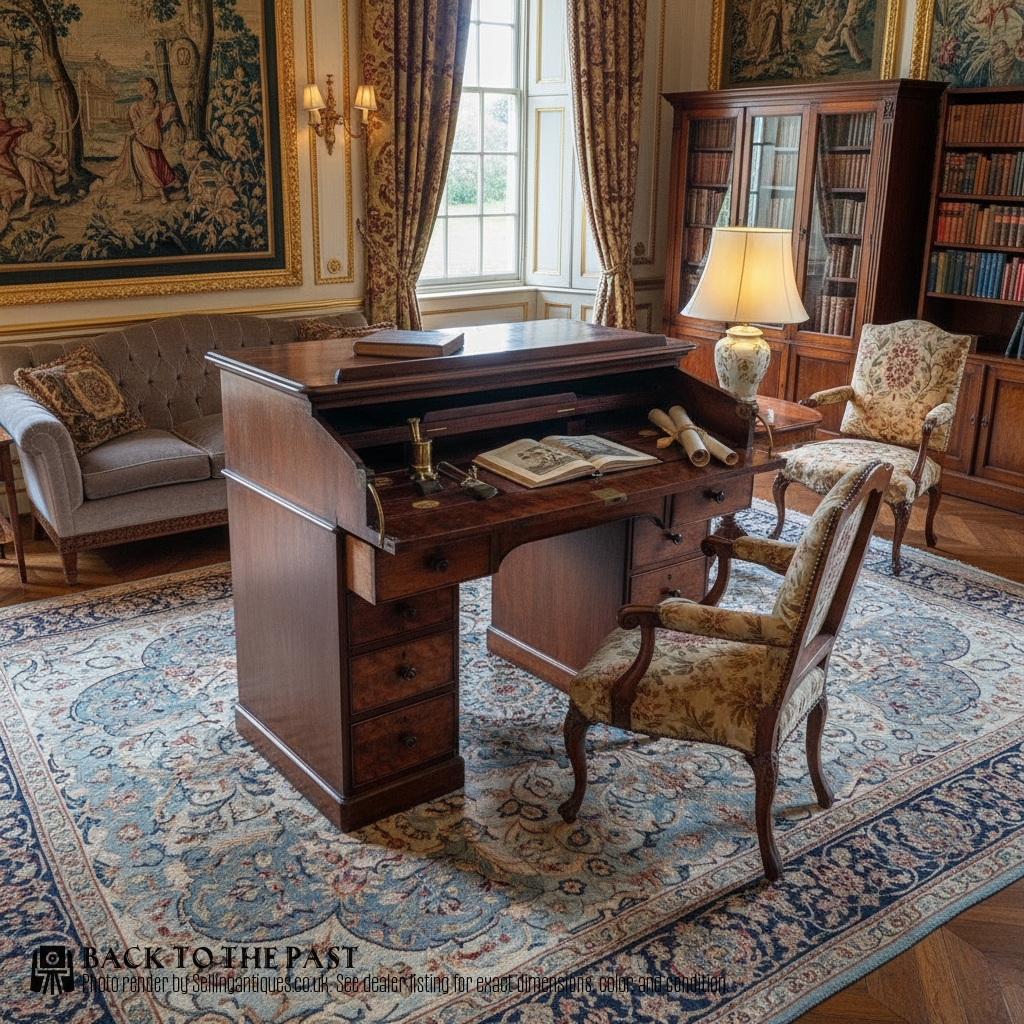
Vintage Architects Desk
The versions you are most likely to meet on this page include mahogany writing tables, reading tables and lift-over folio tables. Many incorporate clever metamorphic actions or rising centres designed to tilt at various angles for practical drawing work.
Originating primarily from English and French workshops, these items combine the robust practicality of naval and executive organisers with refined cabinet making. They range from grand library tables to compact desk tidies intended for professional use.
How they were made
Makers relied heavily on rich mahogany, selected for its stability and deep grain, often complemented by secondary timbers like boxwood. Surfaces were frequently inset with durable leather or baize to provide a smooth, non-slip plane for drawing and writing.
Functional hardware defined the construction, utilising solid brass for ratchets, hinges and handles that enabled mechanical adjustments. Joinery was executed to withstand the daily strain of rising desks and folding reading flaps.
Cartographers and sailors required specialised organising boxes, ensuring that even a small desk tidy is built with surprising mechanical precision.
What varies in quality
The sophistication of the mechanical action separates ordinary pieces from exceptional works of engineering. Smoothly operating ratchets, reliable riser mechanisms and well-fitted lift-over components indicate superior workshop execution.
Timber selection and secondary details also dictate worth, distinguishing plain utility items from pieces featuring figured mahogany veneers and precise boxwood stringing. The integrity of original leather and brass fittings preserves the historic character of the table.
Gillows
The Vintage Architects Desk Glossary
- Metamorphic
- Furniture designed to transform from one form or height into another through clever mechanical hinges and ratchets. These pieces change function while maintaining a unified exterior.
- Riser desk
- A writing or drawing table featuring an adjustable section that tilts upward to support plans, books or maps at a comfortable viewing angle. It relies on internal ratchets to hold the surface steady.
- Baize
- A coarse woollen material woven to resemble felt, traditionally used to line the writing surfaces of desks and gaming tables. It protects paper from sliding and dampens the sound of instruments.
- Stringing
- A narrow inlay of contrasting timber, such as boxwood, set flush into the surface or borders of furniture to create a delicate decorative frame.
Vintage Architects Desk: Frequently Asked Questions
What is an architects desk?
An architects desk is a specialised workspace featuring an adjustable sloping top or rising mechanism designed for drawing plans and reading large folios.
Unlike standard writing tables, these pieces incorporate mechanical elements that allow draughtsmen to work at various angles.
How do you use a rising desk?
You lift the central section of the tabletop and engage the internal wooden or brass ratchets to hold the surface at your preferred slant.
This creates an ergonomic easel effect for drafting, map reading or sketching without needing a separate stand.
How do I date a Georgian desk?
Georgian desks are typically identified by their use of dense mahogany, classical proportions and restrained decorative details like brass drop handles.
Examining the secondary timbers inside the drawers and the style of the joinery helps confirm the eighteenth-century origin.
What is a double sided table?
A double sided table is designed with drawers or compartments accessible from both front and rear, allowing two people to work opposite one another.
These pieces were traditionally placed in the centre of a library or study rather than pushed against a wall.