



Rich Mahogany Writing Desk
A rich mahogany writing desk brings warmth and architectural presence to a room, offering a dedicated surface for correspondence.
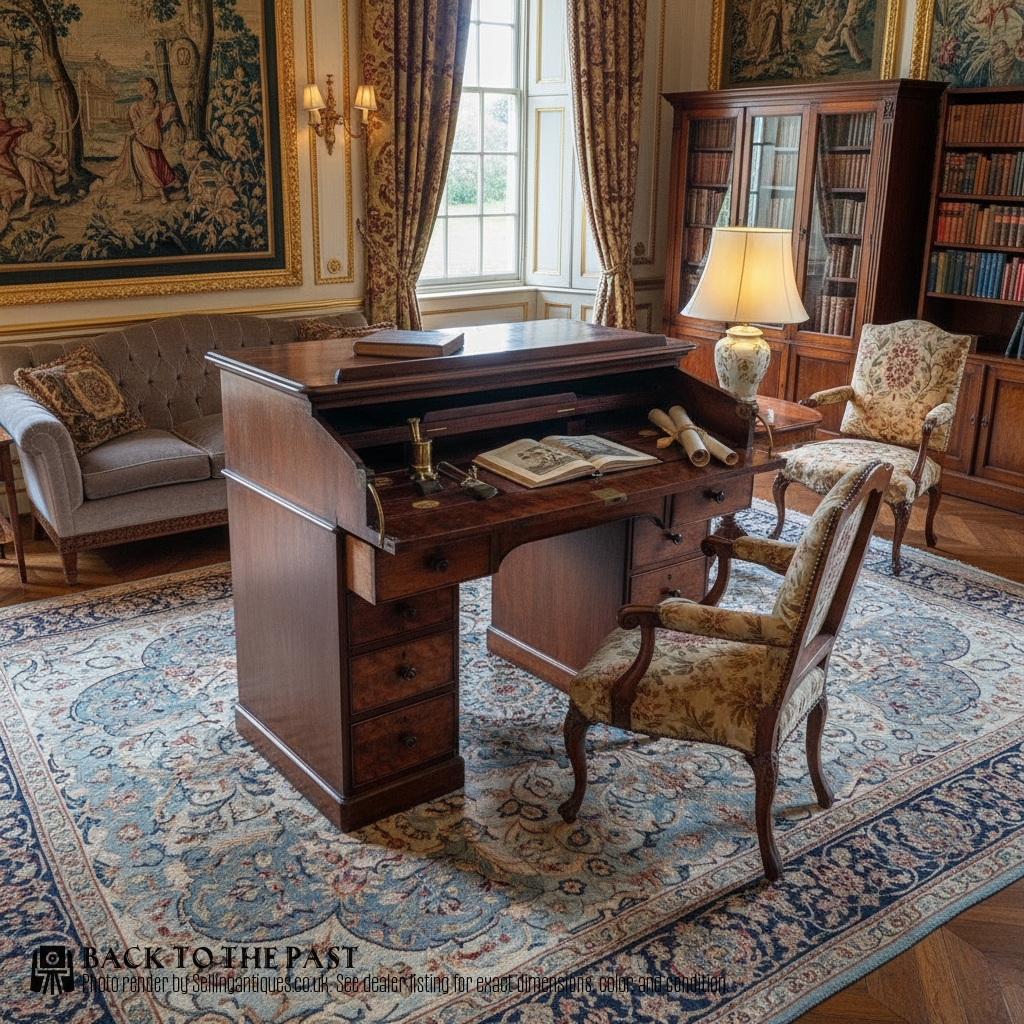
Rich Mahogany Writing Desk
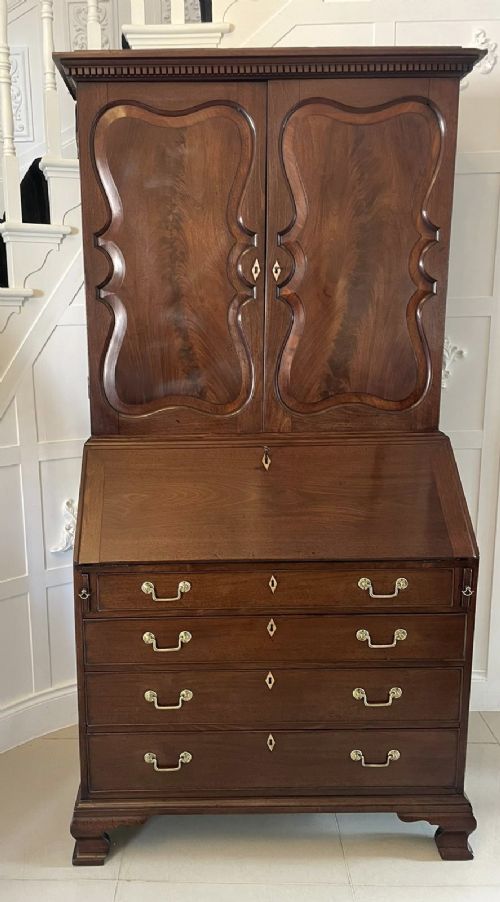
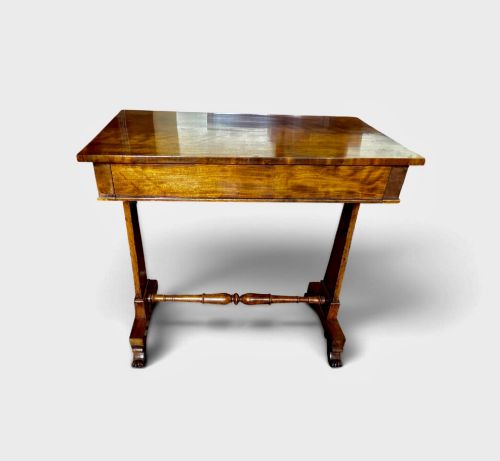
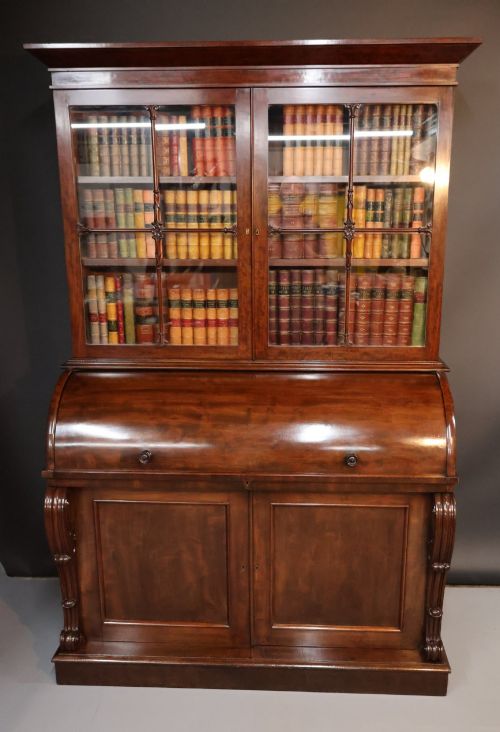
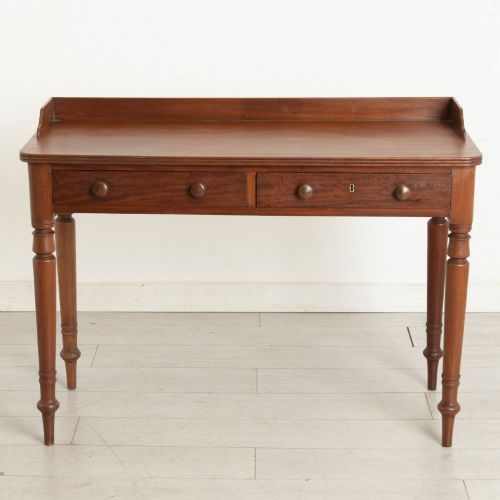
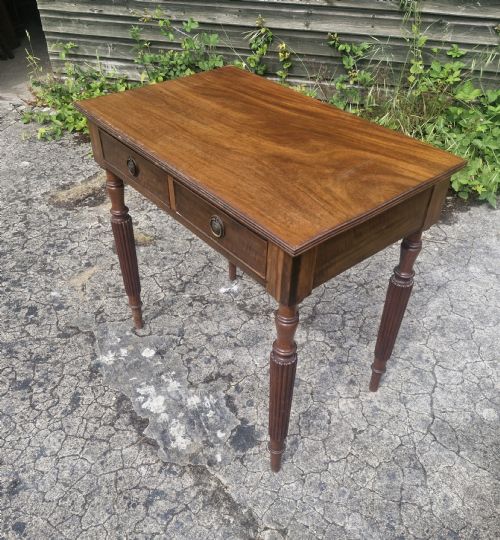
A rich mahogany writing desk spans several centuries of British and continental cabinet-making, appearing in forms from compact side tables to towering bureau bookcases. The Georgian and Regency periods dominate the selection, bringing architectural proportion and figured timbers to the domestic interior.
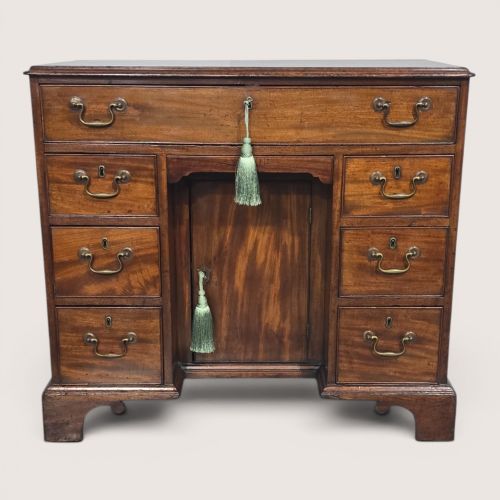
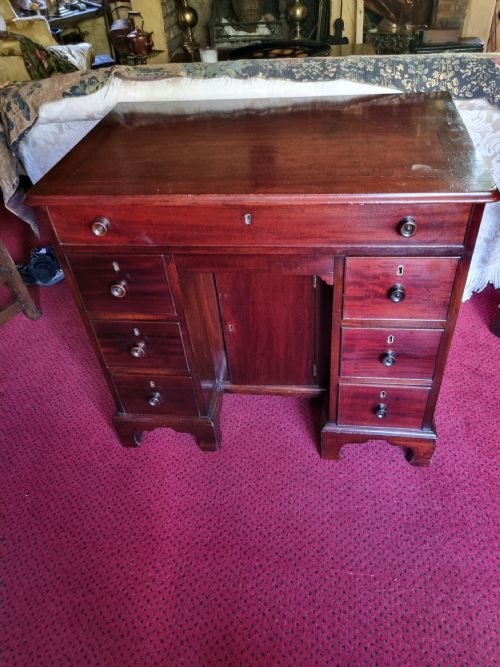
Buyers encounter numerous variations, including kneehole desks, cylinder bureaus, and library tables, alongside taller pieces featuring integrated shelving and secretaire drawers. Edwardian and Victorian iterations continue these classical forms, sometimes incorporating lighter satinwood stringing or specialised compartments.
The functionality of these pieces lies in their internal organisation, where pigeonholes, small drawers, and drop-front writing surfaces transform a simple table into a workstation. The selection ranges from modest side tables adapted for writing to monumental architectural desks designed for grand libraries.
Materials and construction
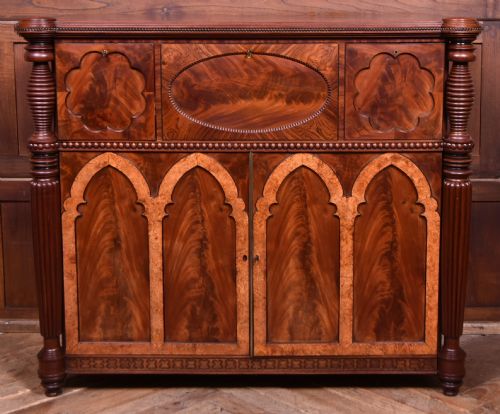
Cabinet-makers relied heavily on solid mahogany and flame mahogany veneers, prized for their deep colour and pronounced grain patterns, often supported by secondary timbers like oak and pine in internal drawer construction. Brass hardware, including drop handles, escutcheons, and casters, provides functional contrast to the dark timber.
Inlaid decorative elements frequently utilise contrasting woods such as satinwood, creating geometric borders and classical motifs across the drawer fronts and writing surfaces. Glass panels appear in the upper bookcase sections of taller bureau cabinets, framed in matching mahogany lattice work.
One exceptional nineteenth-century desk arrived carrying the shipping stamp of Currie and Co in Calcutta.
Judging the work
Quality rests in the selection of the timber, where figured or flame mahogany veneers display a deliberate symmetry and depth that lesser examples lack. The handling of secondary woods and the precision of dovetail joints on drawer construction signal the standard of workshop execution.
Design sophistication separates standard utility pieces from exhibition items, seen in architectural mouldings, well-integrated secretaire fittings, and the attribution to noted makers like Gillows. Original hardware, intact brass casters, and stable secondary framing elevate the standing of a desk.
Gillows·George Faulkner Armitage·Maple of London·Currie and Co
The Rich Mahogany Writing Desk Glossary
- Secretaire
- A desk or cabinet featuring a pull-down writing flap that conceals drawers and pigeonholes. This form allows a tall chest or bookcase to function as a writing place.
- Bureau bookcase
- A piece combining a slant-front writing desk at the base with enclosed shelving or glass doors above. These tall units served as combined workspaces and libraries.
- Kneehole desk
- A flat-topped desk featuring a central recess for the user's legs, flanked by pedestals of small drawers. They offer compact storage while maintaining a formal architectural presence.
- Flame mahogany
- A veneer cut from the fork of the mahogany tree where the branch meets the trunk, producing a distinctive flickering flame pattern. Cabinet-makers used this timber on primary display surfaces.
- Escritoire
- A small writing cabinet, often with a drop-front or sloping lid and internal compartments. The term derives from French and typically denotes refined continental or later nineteenth-century work.
Rich Mahogany Writing Desk: Frequently Asked Questions
What is a secretaire abattant?
A secretaire abattant is an upright cabinet featuring a vertical fall-front panel that drops down to create a writing surface. Inside, the piece contains a fitted interior of small drawers and compartments for stationery.
This vertical format allows the furniture to occupy less floor space than a traditional pedestal desk while offering substantial concealed storage. They appear in nineteenth-century continental and Biedermeier styles.
How do I identify a Georgian desk?
Georgian desks are characterised by solid proportions, classical architectural mouldings, and unpretentious yet robust construction using dense mahogany. Drawer linings are typically oak or pine, joined with hand-cut dovetails.
Hardware on these pieces usually consists of brass batwing or ring pull handles secured with hand-beveled screws. The overall aesthetic emphasises structural balance and timber grain over excessive surface ornament.
Where were cylinder desks used?
Cylinder desks were utilised in private studies, libraries, and formal drawing rooms as secure places for personal correspondence. The curved roll top could be pulled down to cover the entire writing surface and automatically lock the internal drawers.
This mechanism protected confidential papers from pams and dust when the desk was unattended. They became particularly popular during the Regency and later nineteenth-century periods.
Can I use an antique writing table daily?
Antique writing tables function well for daily tasks provided they are treated with care regarding moisture and heat. The spacious tops and stable frames accommodate modern writing materials without difficulty.
To preserve the finish, writers should use a blotter or leather pad to protect the historic polished mahogany surface from ink spills and indentations.