



Brown Wood Tambour Desk
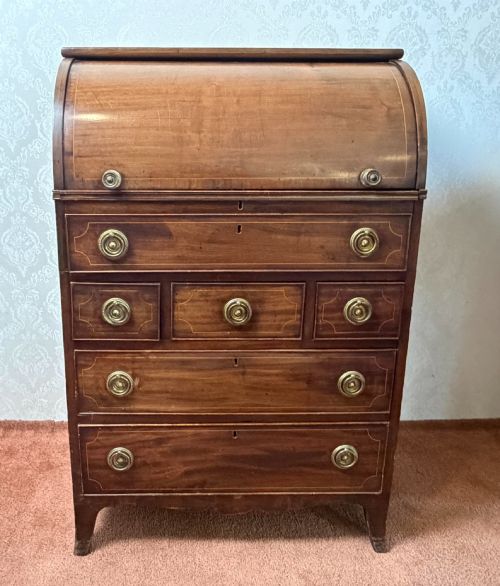
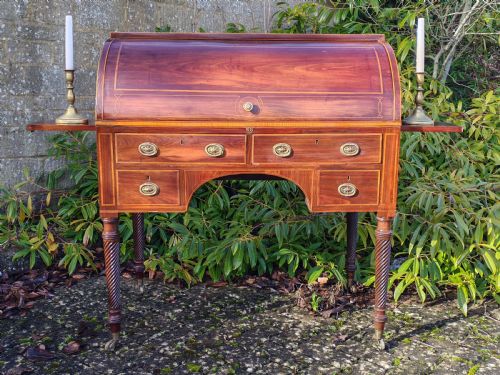
These brown wood tambour desk examples offer clever slatted closures that conceal your papers, spanning periods from the Georgian era through to Edwardian times.
Brown Wood Tambour Desk
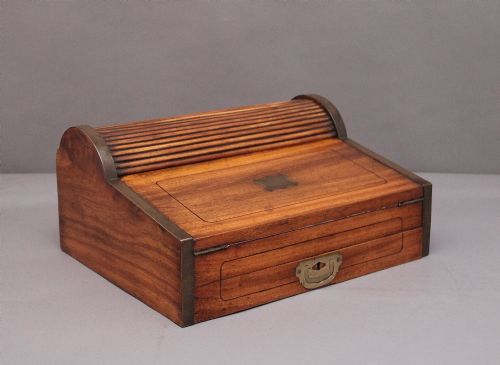
A brown wood tambour desk brings together traditional writing furniture and the ingenious slatted wooden curtain mechanism known as a tambour. Buyers seeking this phrase encounter a range of forms, from compact writing tables and slope desks to large pedestal rolltops and bureau cabinets.
The pieces listed span multiple eras, with Victorian and Georgian examples appearing alongside Edwardian pieces. Mahogany is particularly common, alongside walnut, camphor wood, oak, and yew wood.
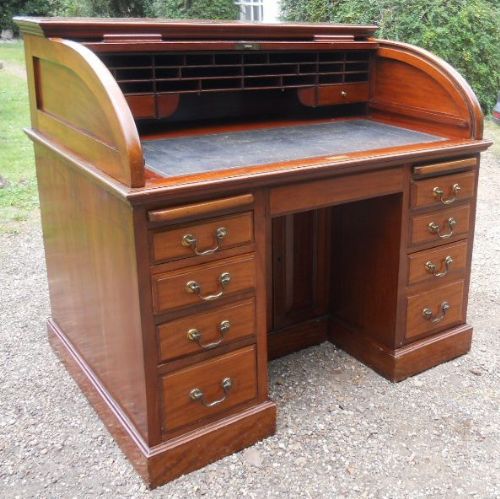
Roll top pedestal desks and smaller writing tables dominate the selection, often featuring interior stationery compartments. These hardworking pieces served estate owners, merchants, and writers who required secure storage for correspondence.
Materials and construction
Cabinetmakers built these desks primarily using solid hardwoods and veneers such as mahogany, walnut, and oak, occasionally incorporating contrasting satinwood inlay or brass hardware. The defining tambour mechanism relies on narrow strips of wood glued to a fabric or leather backing, allowing the flexible shutter to slide smoothly along grooved tracks.
Internal fittings required precise joinery to create functional pigeonholes, small drawers, and adjustable compartments within the desk superstructure. Larger pedestal versions utilised sturdy carcase construction to support the heavy rolling top and integrated banks of drawers.
Materials across these listings include mahogany, walnut, oak, camphor wood, yew wood, satinwood inlay, and brass.
Judging quality and craftsmanship
Superior quality rests in the precision of the tambour tracks and the smooth operation of the slatted curtain, which should glide without binding or sagging. The choice of timber grain, the crispness of any inlay work, and the integrity of the internal pigeonholes distinguish finer workshop production from standard utility pieces.
Age and original condition dictate the character of each desk, with period brass fittings, well-figured mahogany or walnut surfaces, and intact structural joints marking the higher tiers of craftsmanship.
Boston Chair Company of Massachusetts
The Brown Wood Tambour Desk Glossary
- Tambour
- A flexible sliding shutter formed of narrow vertical strips of wood attached to a canvas backing. This ingenious closure conceals the writing surface and pigeonholes when pulled shut.
- Pedestal desk
- A heavy freestanding writing desk comprising two supporting banks of drawers beneath a large top. These robust pieces provide substantial workspace and storage.
- Writing slope
- A portable or table-top box with a slanted writing lid that lifts to reveal storage space for paper and ink. Many examples include internal compartments and secret drawers.
- Bureau cabinet
- A tall piece of furniture combining a writing desk with upper shelving or enclosed cupboard space. They offer extensive storage for books and documents.
- Satinwood inlay
- Decorative contrasting woodwork set into the surface of the primary timber to create geometric or floral borders. It adds visual brightness to dark mahogany carcases.
Brown Wood Tambour Desk: Frequently Asked Questions
How does a tambour mechanism work?
The tambour consists of numerous thin wooden laths glued side by side onto a flexible fabric backing. This allows the entire shutter to curve along a hidden track and slide neatly away into the body of the desk.
When pulled forward, the laths lock together to form a solid protective curtain over the writing surface.
Are these desks suitable for daily use?
Most of these antique desks function well in modern studies or home offices, offering practical compartments for laptops, stationery, and paperwork. Their sturdy timber construction handles everyday writing tasks easily.
Care should be taken not to force the sliding tambour shutter if seasonal humidity causes the wood to expand slightly.
How do I distinguish Georgian from Victorian examples?
Georgian desks from the eighteenth and early nineteenth centuries often display restrained classical proportions, fine mahogany figuring, and delicate satinwood stringing. They reflect earlier cabinetmaking traditions focused on elegance and refined stationery interiors.
Victorian and later nineteenth-century pieces tend to be heavier, sometimes incorporating larger rolltops, extensive pedestal drawer arrangements, and oak or walnut construction.