


Mahogany Drafting Table
A mahogany drafting table brings architectural history into your room, offering adjustable surfaces and rich timber grain.
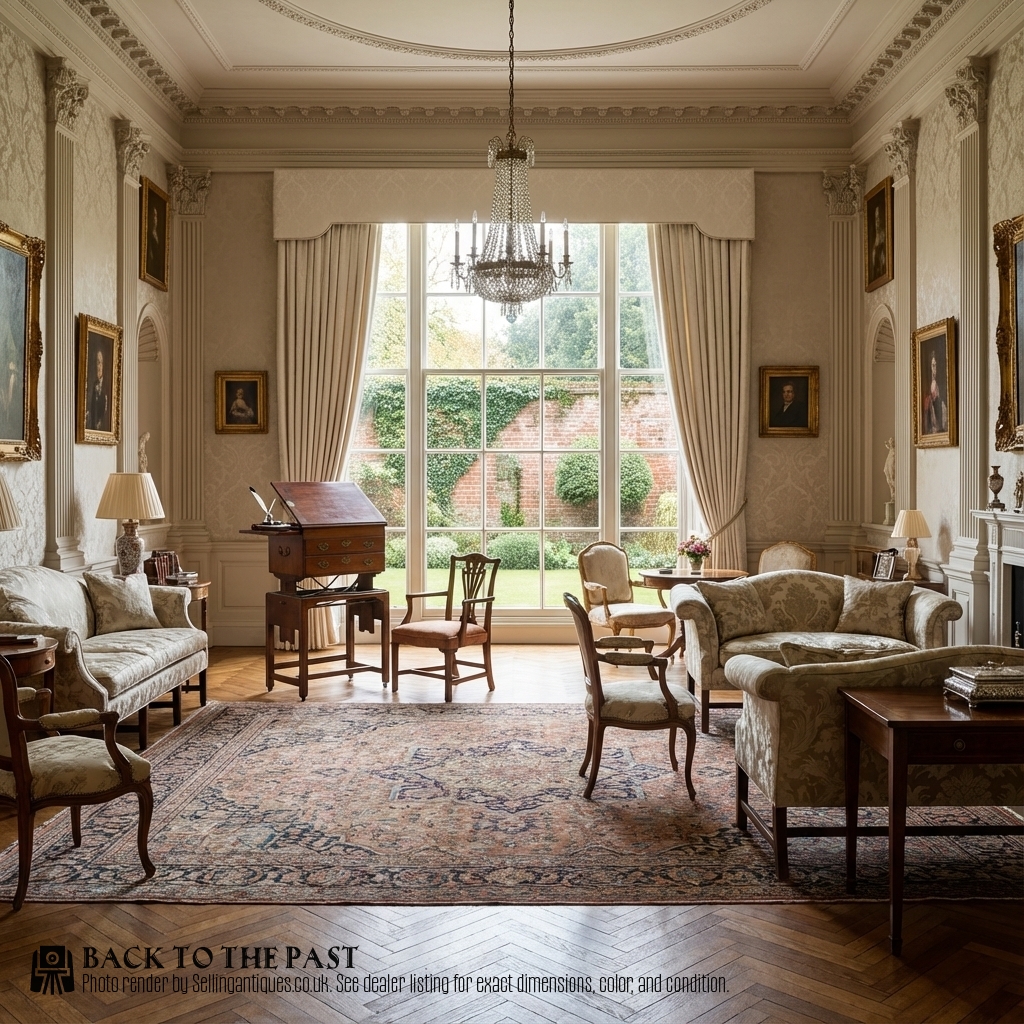
Mahogany Drafting Table
How they were made
Cabinet makers utilised dense, figured mahogany as the primary timber, occasionally incorporating contrasting stringing in satinwood and boxwood. Structural elements relied on solid joinery to support heavy, adjustable drawing boards and writing surfaces.
Functional metal components such as brass ratchets, hinges, and quadrant arms allowed the tops to tilt at various angles. Writing surfaces were frequently inset with tooled leather or baize, providing a durable plane for drawing and writing.
Mahogany Drafting Table Retail Price Guide 2026
Typical asking prices for mahogany drafting table among the pieces listed under this phrase on Sellingantiques today, from the lower quarter to the upper quarter. They describe what is for sale here now, not the wider market.
This site's listings show mahogany drafting tables spanning the Georgian, Regency, and 19th-century periods, often incorporating brass and leather.
What varies in quality
The sophistication of the mechanical action separates standard pieces from exceptional examples, with complex metamorphic risers and smooth brass ratchets commanding attention. The quality of the timber figure, from plain stock to highly figured mahogany, dictates visual depth.
Refinement in secondary details, such as inlaid boxwood and satinwood stringing, reveals the care taken during construction. Well-integrated drawer linings and well-preserved original hardware complete a cohesive, high-standard build.
Edwards and Roberts·Gillows
The Mahogany Drafting Table Glossary
- Metamorphic
- Describing a piece of furniture designed to transform into different forms or functions through clever mechanisms. This engineering allowed a standard desk to convert into a standing drafting surface.
- Baize
- A coarse woolen material resembling felt, commonly used to cover gaming and writing surfaces. It provides a soft, non-slip plane for drafting tools and paper.
- Quadrant
- A quarter-circle brass bracket used to support and secure adjustable desk tops at various angles. These fittings ensure the drawing surface remains stable during use.
- Stringing
- Thin inlay work of contrasting timber, such as boxwood or satinwood, set into the mahogany surface. This technique creates delicate linear borders around drawers and panels.
Mahogany Drafting Table: Frequently Asked Questions
What is a mahogany drafting table?
A mahogany drafting table is a period workspace featuring an adjustable top designed for drawing, drafting, and reading maps or architectural plans.
These pieces typically date from the Georgian through the Victorian periods and combine utilitarian mechanics with fine cabinet making.
How do the adjustable tops work?
Adjustable tops rely on internal brass ratchets and wooden support arms that lock the drawing surface at various inclined angles.
Users lift the hinged panel to engage the mechanism, allowing the table to function as both a flat desk and a sloping easel.
Where were these tables used?
These tables served in professional architects' offices, estate libraries, cartographer studios, and private artist studies.
Their specialised compartments and reading ledges accommodated large folios, loose paper sheets, and drawing instruments.
How do you date a drafting table?
Dating relies on stylistic markers such as leg forms, hardware types, and the overall cabinet construction methods of specific periods.
Georgian and Regency examples display different proportions and inlay traditions compared to later Victorian iterations.