
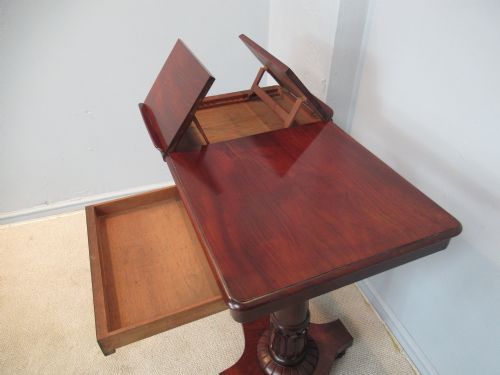


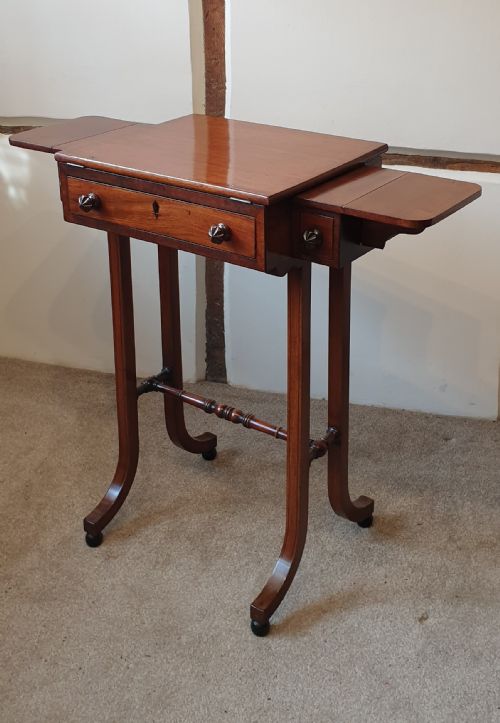


Ratcheted Reading Desk
A ratcheted reading desk is a mechanical writing and study surface designed for adjustment, offering a practical solution for hands-free reading.
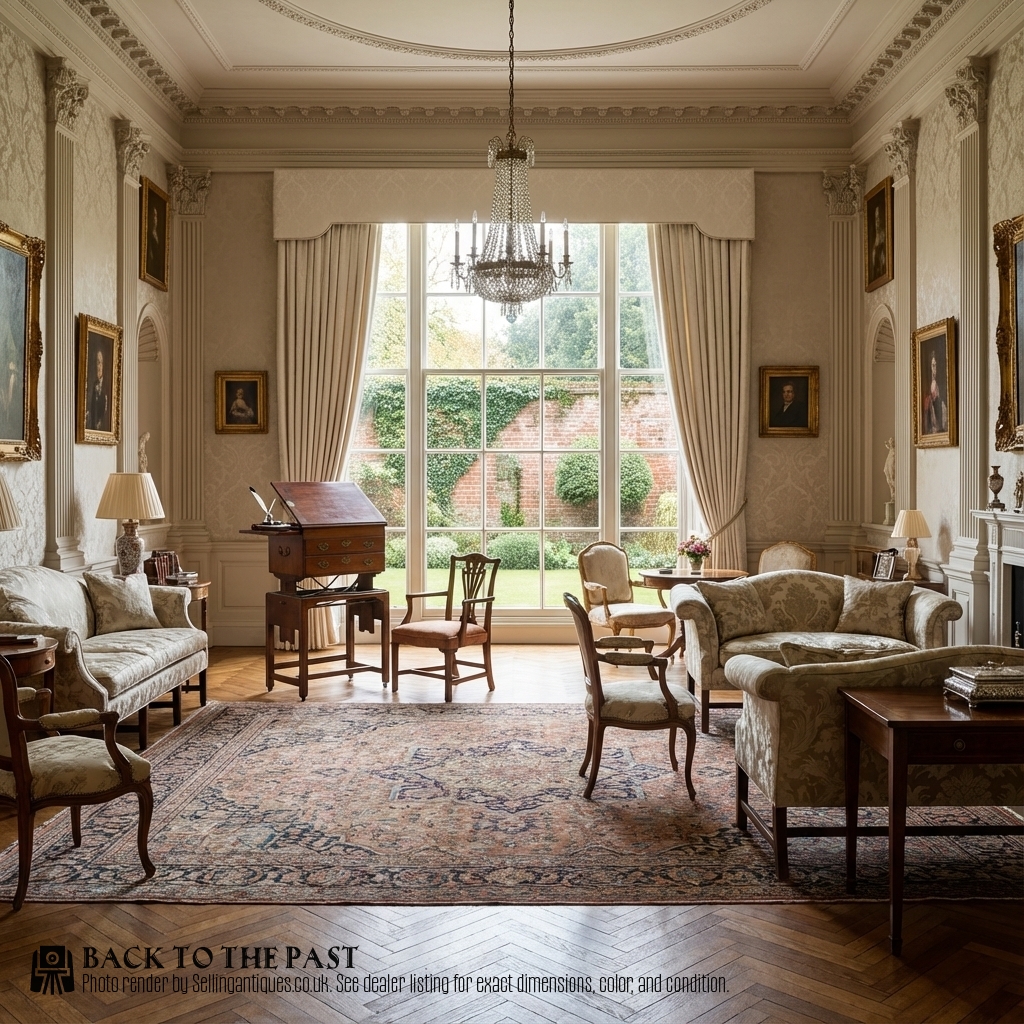
Ratcheted Reading Desk
A ratcheted reading desk is an adjustable piece of furniture designed for reading, writing, and drafting, often featuring a mechanism to alter the angle of the writing surface. These pieces appear in forms such as reading tables, music stands, and architect's desks.
The versions most commonly met on this page originate from the Georgian, Regency, and Victorian periods. They are constructed primarily in mahogany, walnut, and rosewood, reflecting the cabinet-making standards of the nineteenth century.

How they were made
Makers utilised solid timbers and veneers, predominantly mahogany and walnut, occasionally incorporating rosewood and ebony for decorative contrast. Secondary woods and structural elements often included boxwood and metal fittings.
Adjustable mechanisms rely on brass ratchets and metal supports integrated into the wooden framework. Surfaces frequently incorporate leather writing inserts, aligning with the functional requirements of libraries, studies, and drawing rooms.
Ratcheted Reading Desk Retail Price Guide 2026
Typical asking prices for ratcheted reading desk among the pieces listed under this phrase on Sellingantiques today, from the lower quarter to the upper quarter. They describe what is for sale here now, not the wider market.
Listings span the Georgian, Regency, and Victorian periods, utilising materials such as mahogany, walnut, brass, leather, and rosewood.
What varies in quality
Quality in these desks is determined by the precision of the mechanical ratchets and the integration of adjustable elements into the overall cabinet work. Finer examples display sophisticated metamorphic design and careful selection of timber grain.
The presence of specialised hardware and secondary materials such as ebony stringing or brass fittings separates standard production items from more ambitious library and architectural furniture.
Gillow·Marsh & Tatham·Carter
The Ratcheted Reading Desk Glossary
- Ratcheted
- Fitted with a notched mechanism that allows a surface or stand to be locked at various angles. This mechanism provides the primary adjustment for reading and writing desks.
- Metamorphic
- Furniture designed to transform from one form or use into another. These pieces often conceal functional compartments or adjustable stands within a standard table format.
- Architect's desk
- A specialised form of writing table featuring an inclined top for drawing or drafting plans. They frequently incorporate pull-out slides and adjustable ratchets.
- Campaign
- Portable furniture designed for travel, typically featuring recessed brass handles and robust construction. These pieces were utilised by military officers and travellers during the nineteenth century.
Ratcheted Reading Desk: Frequently Asked Questions
What is a ratcheted reading desk used for?
These desks are designed to hold books, music, or architectural drawings at an adjustable angle. The surface tilts via a mechanical rack to suit the user's eye level.
They served as functional furniture in nineteenth-century libraries, studies, and drawing rooms where reading and drafting took place.
How do you adjust the reading surface?
Adjustment is controlled by an internal or external metal ratchet mechanism located beneath the bookrest or desktop. Lifting the surface engages the catches at various positions.
Care should be taken when operating nineteenth-century mechanisms to ensure the brass supports engage evenly without undue pressure.
Which woods are most common?
Mahogany is the primary timber found across these nineteenth-century pieces, appearing in both solid form and veneer. Walnut and rosewood also occur frequently in the listings.
Secondary detailing often includes ebony stringing, boxwood inlay, and brass hardware alongside leather writing surfaces.
How do you identify a Regency period desk?
Regency desks typically display classical proportions, clean lines, and dark timbers such as mahogany or rosewood. Details often include brass mounts and ebony stringing.
They reflect the design influences of the early nineteenth century, bridging late Georgian forms and early Victorian manufacturing.