


Georgian Architect Desk
A georgian architect desk is a substantial working table built for drawing and reading, combining sliding surfaces and adjustable reading slopes.
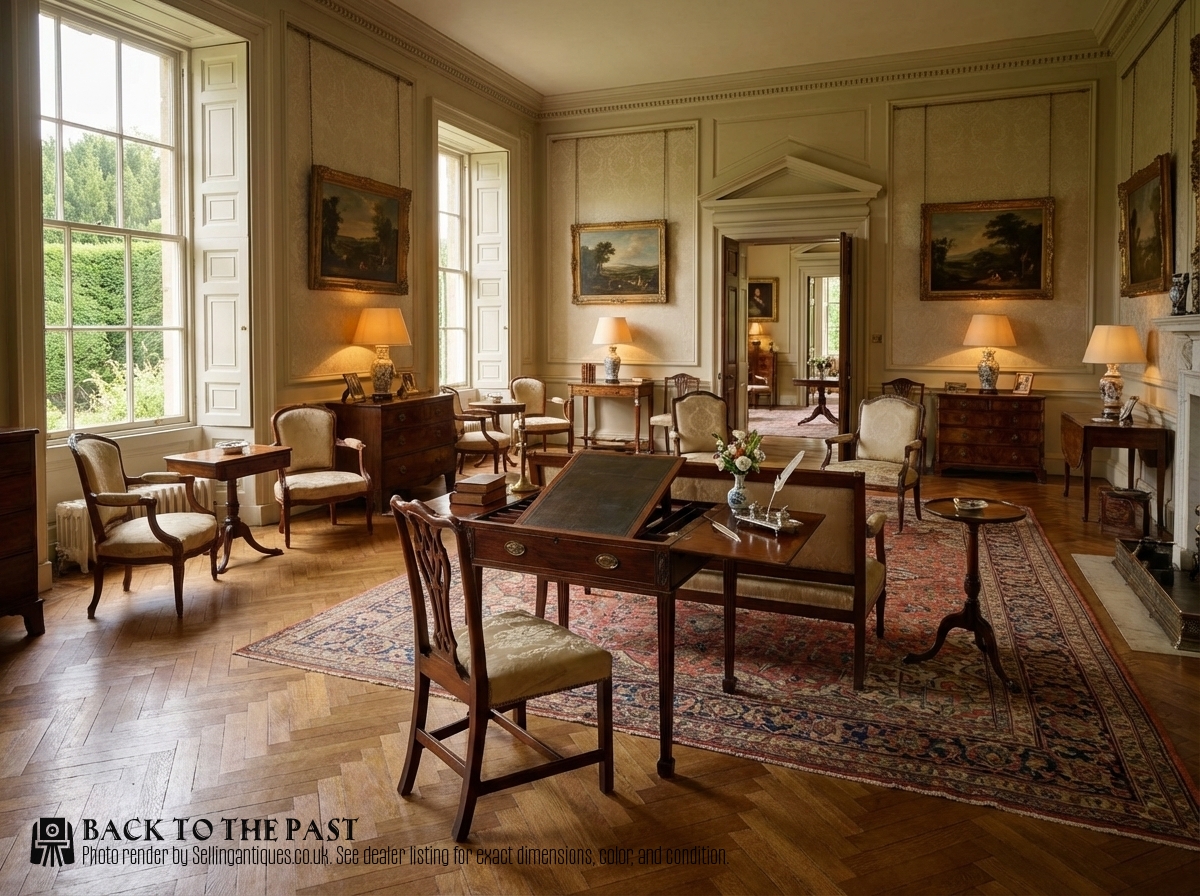
Georgian Architect Desk
A georgian architect desk is a specialised writing and drawing table designed to hold large plans, folios, and documents. The pieces found here span the eighteenth century and the regency period, taking the form of library tables, reading tables, and occasional tables alongside dedicated desks.
Most examples rely on solid timbers like mahogany and Cuban mahogany, often fitted with inset leather or baize writing surfaces. Forms range from simple rectangular centre writing tables to elaborate metamorphic pieces equipped with rising flaps, plan drawers, and lift-over mechanisms.
Makers of these tables engineered them for utility in offices, libraries, and drawing rooms. Buyers will encounter both single-sided and double-sided variations, some incorporating auxiliary drawers for cartographers, draftsmen, and estate managers.
Materials and construction methods
Cabinetmakers built a georgian architect desk primarily from dense timbers such as mahogany and rosewood, accented with finer woods like boxwood for stringing and brass for hardware and fittings. Structural integrity relied on robust joinery designed to support heavy folios and mechanical raising mechanisms.
Surfaces frequently featured inset leather or baize to provide a firm yet smooth plane for writing and drafting. Mechanical elements included ratchets, lifts, and Bramah locks, allowing tops to tilt and drawers to secure plans safely.
Listings for this phrase frequently feature mahogany and Cuban mahogany timber, alongside brass hardware and leather inserts.
Quality factors in construction and design
Quality in a georgian architect desk rests on the selection of timber, particularly the grain and figure of the mahogany or Cuban mahogany used for the primary surfaces. Superior examples display thoughtful timber matching across expansive tops and secondary drawer linings.
The sophistication of the mechanical parts separates standard tables from high-end pieces. Smoothly operating ratchets for reading slopes, well-fitted plan drawers, and integrated brass fittings demonstrate superior workshop execution.
Gillows
The Georgian Architect Desk Glossary
- Metamorphic
- Describing a piece of furniture that transforms from one form to another, such as a table that converts into a rising desk. These mechanisms require precise engineering to function smoothly.
- Cuban mahogany
- A dense, dark timber prized for its rich figure and durability, frequently utilised in high-end eighteenth-century cabinetmaking. It takes a deep polish that highlights the natural grain.
- Baize
- A coarse woollen fabric resembling felt, historically used to line the writing surfaces of desks and gaming tables. It provides a soft, durable pad for paperwork.
- Plan drawer
- A wide, shallow drawer specifically designed to hold architectural drawings, maps, and large sheets of paper flat. They are characteristic of tables built for draftsmen and cartographers.
- Bramah lock
- A high-security barrel lock invented by Joseph Bramah in the late eighteenth century, commonly fitted to quality desks and cabinets of the period. Its intricate mechanism offered exceptional protection for valuable documents.
Georgian Architect Desk: Frequently Asked Questions
How do I use one today?
These tables function well as writing desks, library tables, or statement centre tables in a modern study or living room. The adjustable reading slopes remain practical for holding books, laptops, or open sketchbooks.
Care should be taken to protect the leather or wood surfaces from excessive moisture and direct heat. Regular dusting and occasional wax maintenance will preserve the antique timber finish.
How do I date a georgian architect desk?
Dating relies on examining construction methods, hardware, and secondary timbers used in the drawers and framing. Pieces from the mid-eighteenth century often display simpler lines, while later georgian and regency examples introduce more complex metamorphic mechanisms.
Stylistic cues such as leg profiles, brass castors, and the presence of makers' marks or specific lock types help narrow the period of manufacture. Comparing the joinery to documented examples from the same era provides further clarity.
Are these desks suitable for daily work?
Many of these tables provide generous surface areas and practical storage drawers well suited to contemporary daily tasks. The incorporation of leather writing surfaces and sturdy wooden frames ensures they remain durable working environments.
Users should consider the fixed working height of older tables compared to modern ergonomic standards before using them for extended computer work. However, their solid construction easily accommodates paperwork and reading materials.