

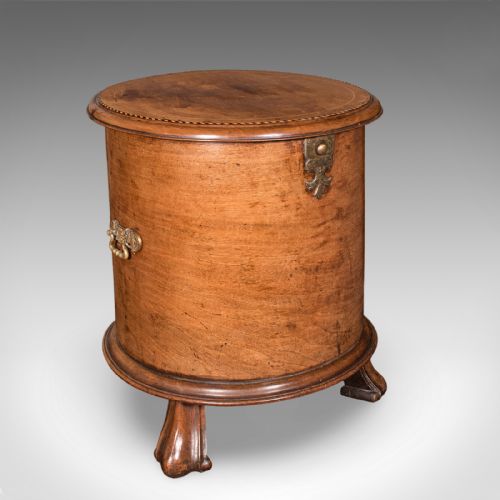


English Georgian Wine Cooler
An English Georgian wine cooler brings heavy mahogany, cool ceramic, and polished brass to the dining room to keep bottles chilled.
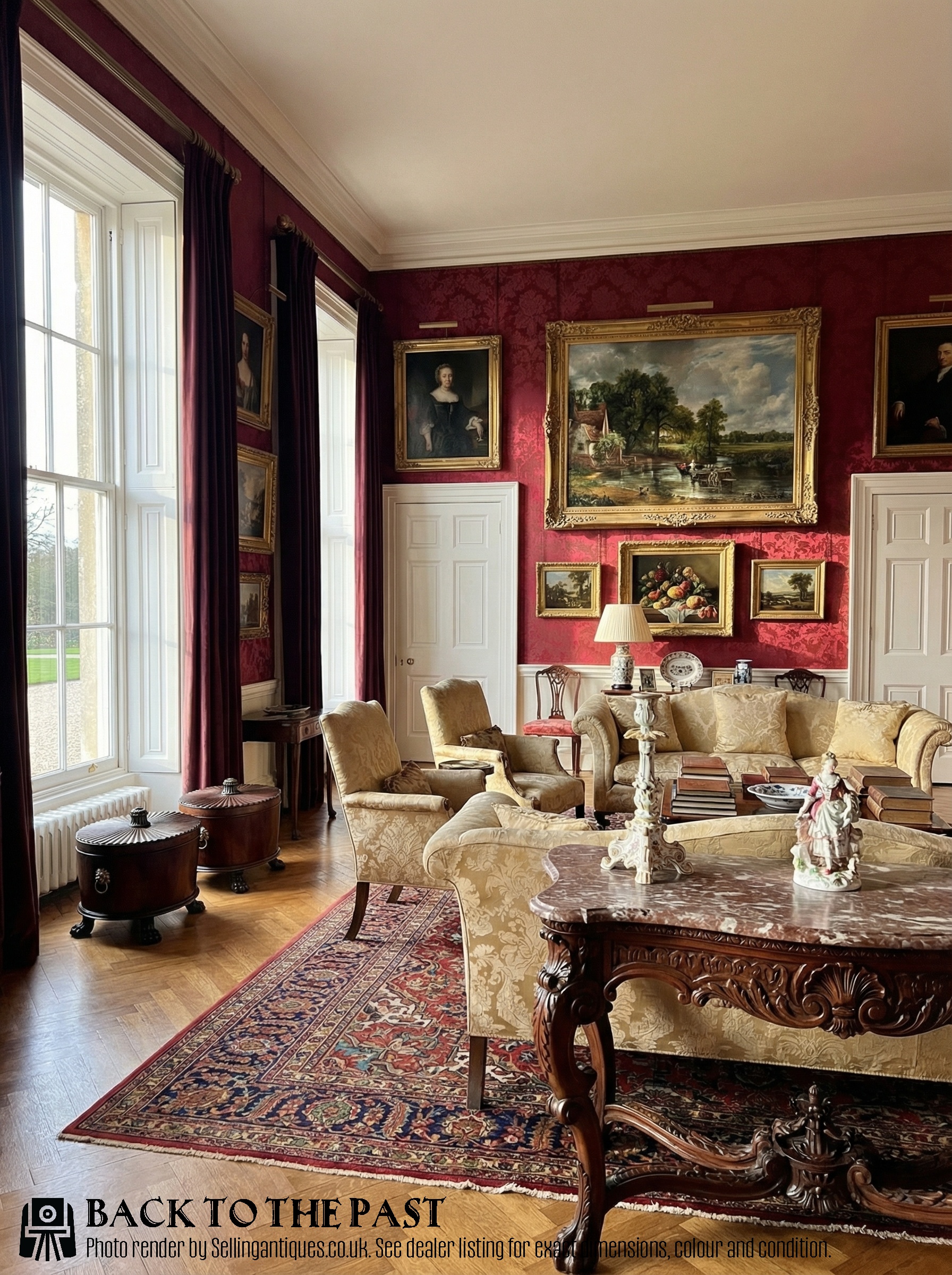
English Georgian Wine Cooler
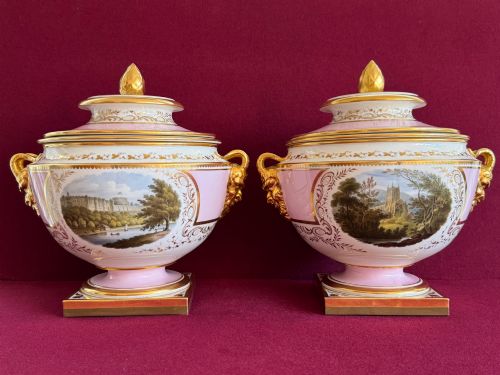
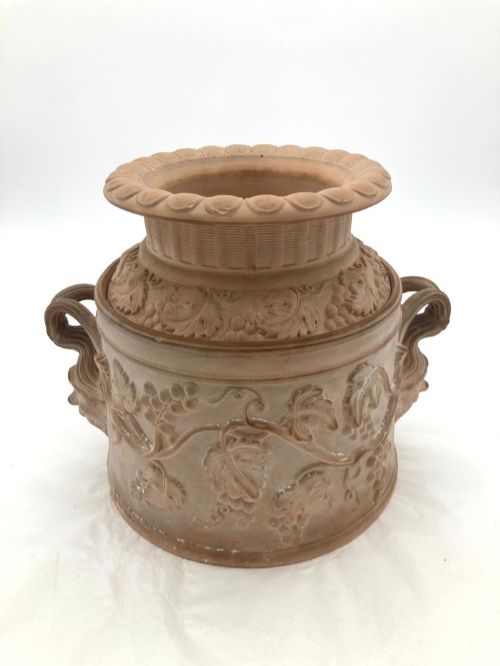
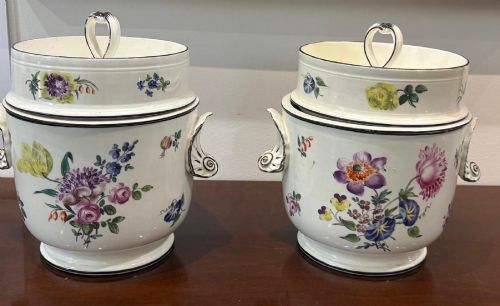
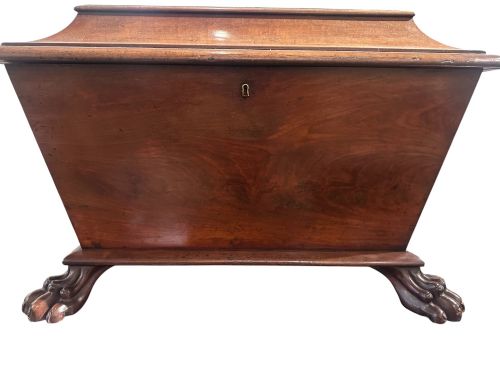
An english georgian wine cooler is a formal dining accessory designed to hold wine bottles in ice or water during grand meals. The pieces found here span the eighteenth and nineteenth centuries, taking the form of cellarettes, sarcophagus cases, oval tubs, and ceramic ice pails.
Most examples rely on rich timber construction, particularly flame mahogany fitted with brass bands and handles. Alongside these wooden containers, you will find earthenware, porcelain, terracotta, and cut crystal vessels designed for the same ceremonial purpose.
What varies in quality
Quality rests in the choice of timber and the precision of the joinery, where finely figured flame mahogany and tight cooperage separate standard utility items from elite dining furniture. The weight and finish of the brass fittings, from lion-mask handles to heavy straps, dictate the refinement of the piece.
In ceramic and porcelain coolers, the crispness of the moulding and the artistry of the painted patterns establish the grade of the work. Maker attribution to established porcelain houses adds a distinct layer of distinction to the ceramic examples.
Listings for this phrase include mahogany, brass, terracotta, and porcelain across the Georgian and Regency periods.
Chamberlain Worcester·Flight Barr And Barr·Adams
The English Georgian Wine Cooler Glossary
- Cellarette
- A lockable container used for storing wine bottles near the dining table. These wooden boxes often feature lead lining to hold ice.
- Sarcophagus
- A monumental container shape featuring a domed lid and tapered sides, popular during the Regency period for large wine coolers.
- Creamware
- A fine earthenware developed in England with a pale yellowish-white glaze, frequently used for ice pails and tableware.
- Campana
- A bell-shaped vessel design often seen in metal wine coolers and ice pails from the Regency era.
- Coopered
- Built using wooden staves joined side by side and bound by metal hoops, much like a traditional barrel.
English Georgian Wine Cooler: Frequently Asked Questions
How were english georgian wine coolers used?
These vessels stood beside the dining table, lined with lead or metal to hold ice and water that chilled wine bottles before pouring.
Servants retrieved bottles from the cellarette as needed during long, formal meals.
What is the difference between a cellarette and an ice pail?
A cellarette is typically a large wooden floor-standing box or chest, often lined with lead, designed to hold multiple wine bottles.
An ice pail is a smaller, often ceramic or glass vessel meant for chilling individual bottles at the table.
How do I date a mahogany wine cooler?
Dating relies on the overall shape, such as the architectural lines of the eighteenth century versus the sarcophagus forms of the Regency period.
Hardware styles, brass binding techniques, and the presence of stands also provide clear clues to the decade of manufacture.
Can I use an antique wine cooler today?
Many wooden cellarettes work well as storage chests, side tables, or decorative fireside log bins in modern rooms.
Ceramic and crystal ice pails can still function for serving drinks, provided their linings remain stable.