

Engine Turned Silver
Engine turned silver pieces bring precise geometric decoration to sterling silver boxes, frames and tableware, offering a tactile surface collectors prize.
Engine Turned Silver
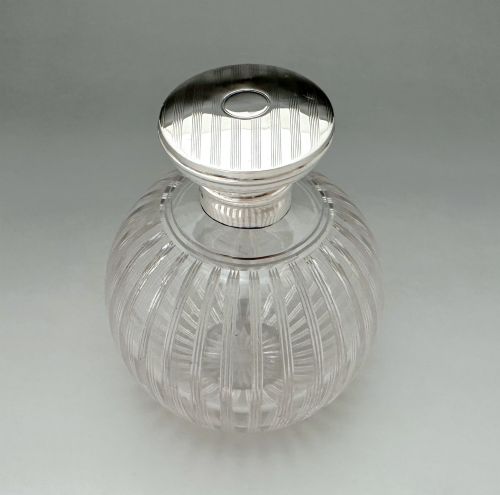
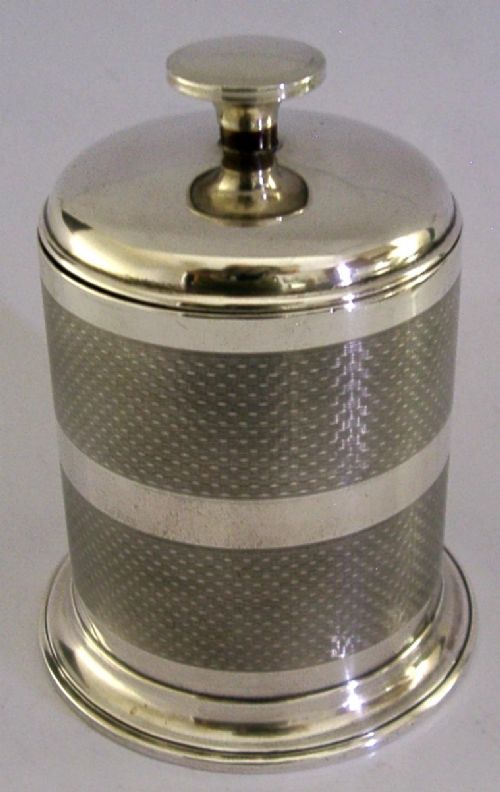
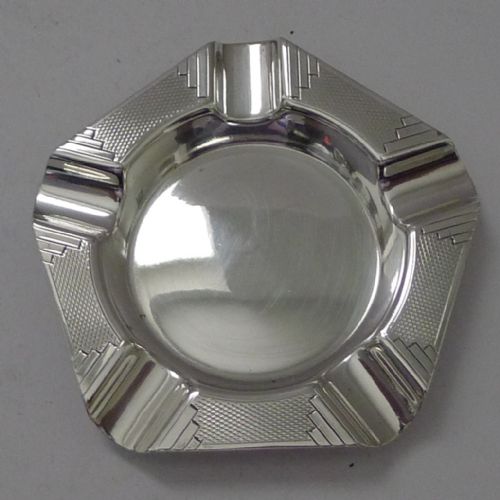
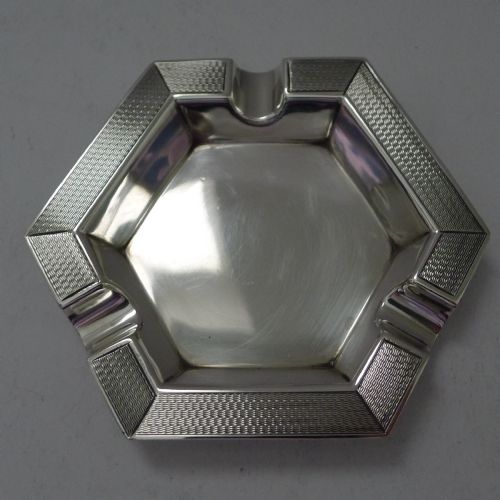
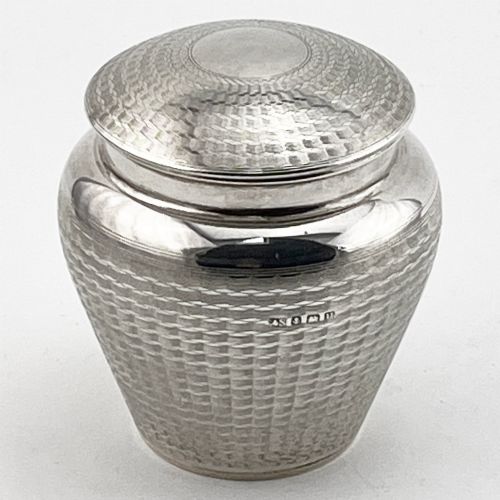
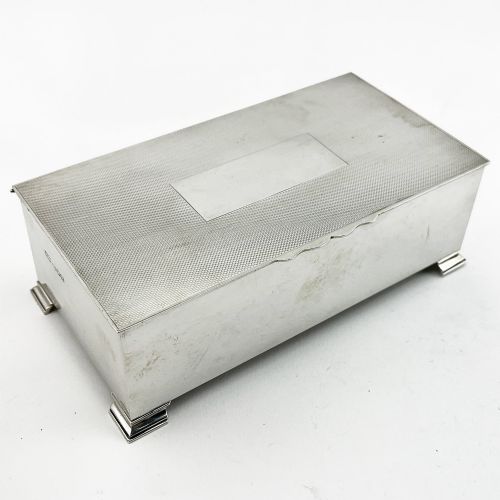
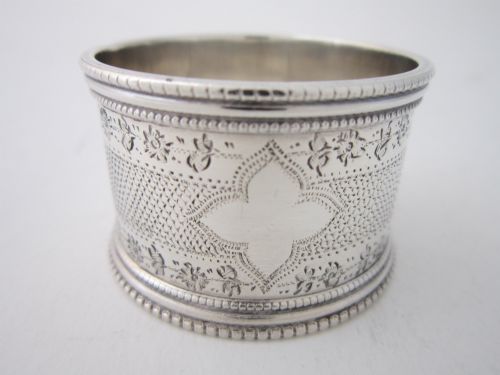
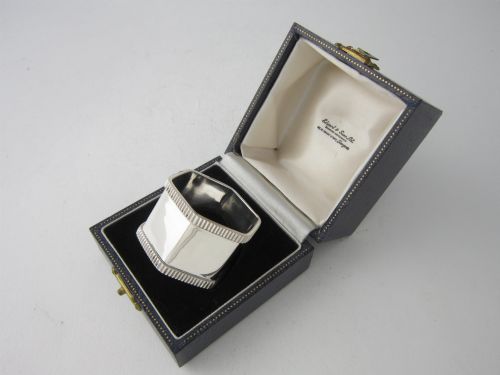
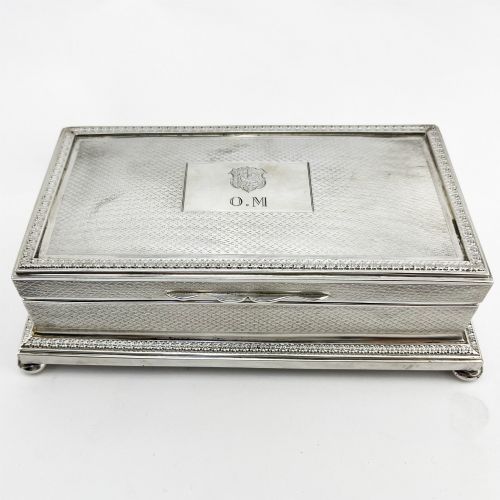
Engine turned silver items span practical objects and display pieces, encompassing rectangular photo frames, ashtrays, tea caddies, snuff boxes, napkin rings, scent bottles, and cheroot cases. These functional accessories reflect domestic habits across the Victorian, Edwardian, and Art Deco periods, showcasing mechanical surface decoration on solid sterling silver.
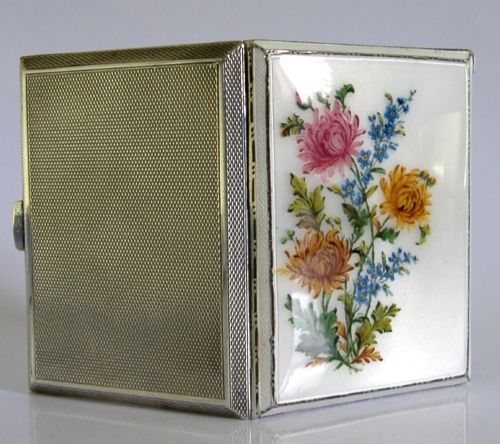
The most common survival among these domestic articles is the photograph frame, frequently found in rectangular or oval shapes dating from the George V era. Alongside frames, cigarette boxes, ashtrays, and enamel-topped dressing table bottles appear regularly, often enriched with coloured enamel layers over the geometric patterns.
Origins stretch from English workshops in Birmingham, Sheffield, and Chester to continental makers, with dates ranging from the early nineteenth century through to the mid-twentieth century. Pieces date from the 1800s onward, though the majority recorded belong to the early decades of the twentieth century and the height of the Art Deco movement.
Materials and Construction
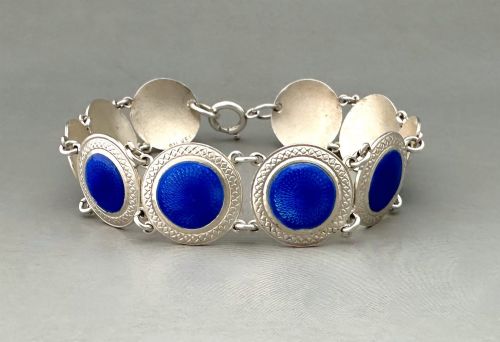
Makers utilised solid sterling silver for the primary body of these objects, occasionally incorporating parcel gilt finishes or combining the metal with cut crystal glass for scent bottles and powder bowls. In numerous instances, translucent enamel in shades of blue, yellow, green, and turquoise was applied directly over the patterned metal ground.
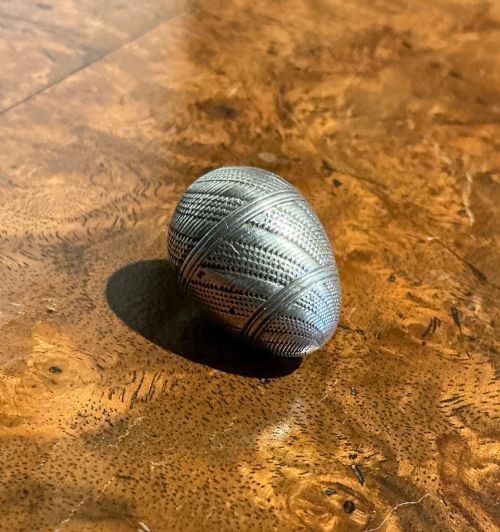
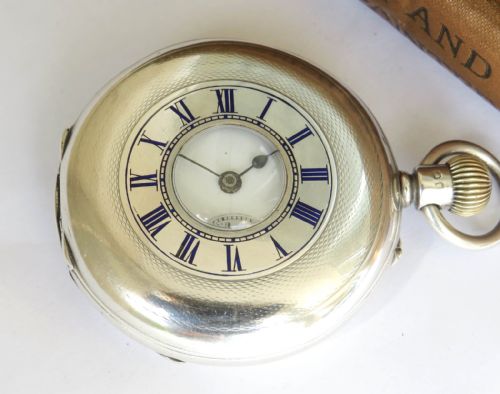
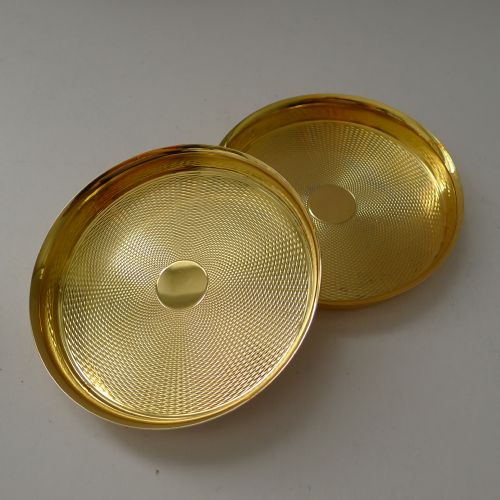
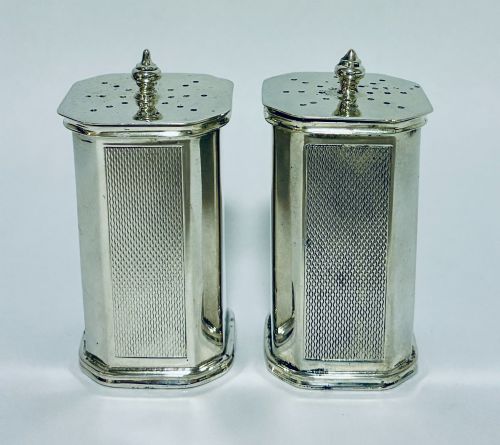
Production relied on mechanical rose engine lathes and straight-line machines to engrave precise, repetitive geometric patterns into the metal surface by cutting or abrading tiny chips away. This method produced intricate textures such as rosettes, waves, and chevrons that caught the light uniformly across the object.
One unexpected survival from the era is a miniature sterling silver pencil sharpener featuring precise engine turned panels.
Judging Quality
Quality rests upon the crispness and complexity of the mechanical pattern, where deeper, sharper incisions create a more luminous play of light across the sterling silver. Weaker examples show shallow or worn engraving that lacks definition.
The integration of supplementary materials elevates certain items, such as smooth hinges on boxes, unblemished enamel layers, or heavy-gauge silver that resists bending during daily handling. Pieces by established silversmiths demonstrate superior thickness in the metal plate and cleaner punch marks.
Walker & Hall·William Neale·Nathaniel Mills·William Comyns·Green & Cadbury Ltd·William Haseler·D Bros
The Engine Turned Silver Glossary
- Engine turning
- A mechanical method of ornamenting a metal surface using a lathe to cut precise geometric patterns. This technique ensures absolute symmetry across the decorated area.
- Sterling silver
- A silver alloy containing 92.5 percent pure silver and 7.5 percent other metals, usually copper, to increase durability. Most British items bear full hallmarks confirming this standard.
- Cheroot case
- A slim, rigid case designed to hold small cigars safely in a pocket or bag. These cases frequently feature full exterior surface engraving.
- Snuff box
- A small hinged container used for holding dry powdered tobacco. They were carried in pockets by gentlemen and ladies alike.
- Parcel gilt
- Silver objects that have been partially gilded with a thin layer of gold on the interior or selected exterior details. This provides a decorative contrast to the white silver.
Frequently Asked Questions
What is engine turned silver?
Engine turned silver refers to items decorated with precise geometric patterns cut into the metal by a specialised lathe. This mechanical engraving creates repetitive textures that catch the light.
The technique was widely applied to cigarette cases, photo frames, and dressing table accessories during the nineteenth and twentieth centuries to add visual interest to plain metal surfaces.
How do I clean engine turned silver?
Cleaning requires a soft brush and mild silver polish to remove tarnish without flattening the fine engraved grooves. Harsh abrasive cloths can wear away the sharp edges of the pattern.
Items with coloured enamel sections need extra care, avoiding strong chemical dips that might damage or discolour the delicate glass layers surrounding the silver.
When were these pieces made?
Most surviving pieces date from the Edwardian period and the 1920s or 1930s Art Deco era, though examples exist from the Victorian period and earlier. The style remained popular for dressing table sets and smoker's requisites for many decades.
Date letters within the silver hallmarks provide the exact year of manufacture for British items.
Are these items solid silver?
The majority of pieces recorded are made from solid sterling silver, indicated by standard hallmarks such as the lion passant. Some dressing table jars combine a solid silver lid with a cut crystal glass base.
A small number of larger items, such as cocktail shakers, were constructed from silver plate over a base metal.