



Enamelled Glass Goblets
Enamelled glass goblets bring together blown glass forms and detailed surface painting, offering rich colour and historic character for display or dining.
Enamelled Glass Goblets
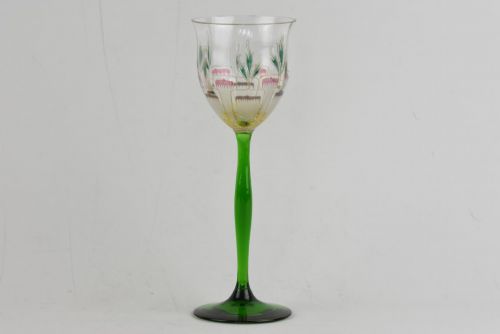
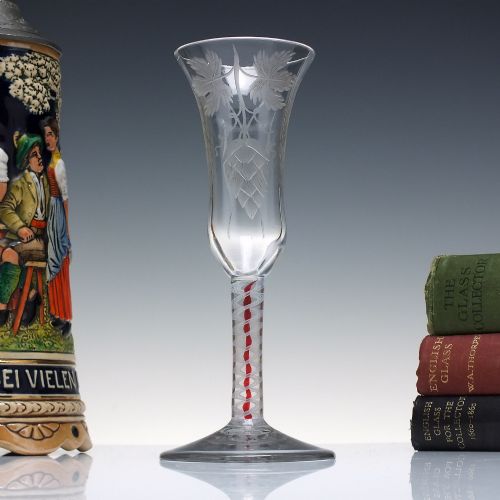
Enamelled glass goblets span several distinct periods, with examples appearing from the Georgian era through to the late nineteenth and early twentieth centuries. When searching for enamelled glass goblets, buyers encounter diverse forms ranging from eighteenth-century English drinking glasses to continental European hock glasses and armorial roemers.
The physical forms include traditional wine glasses, cordial glasses, champagne coupes, and large green or cranberry glass roemers. Many pieces combine blown lead glass or crystal with polychrome or white enamel decoration and occasional gold leaf detailing.
How They Were Made
Makers utilised blown glass and lead crystal as the foundational material for these vessels, shaping bowls and stems by hand. Clear glass, red colour twist, and green or cranberry tinted glass provide the contrasting base hues seen across the inventory.
Decorators applied opaque white and polychrome enamel paints directly onto the glass surface, frequently fusing the colours through a secondary firing process. Artisans added gold leaf accents and heraldic or floral motifs to complete the exterior ornamentation.
Period styles span Georgian, Victorian, Art Nouveau, Jugendstil, Venetian Revival, and German Historicism.
What Varies in Quality
The refinement of the glassblowing technique influences the weight, clarity, and balance of each piece. Thinner, more even vessel walls and crisply pulled stems distinguish superior examples from standard production glassware.
The precision and complexity of the enamel work dictate the artistic merit of the goblet. Crisp heraldic details, delicate floral lines, and well-preserved gold leaf indicate careful hand-painting by skilled decorators.
Theresienthal·Lobmeyer·Fritz Heckert·Frits Hechert
The Enamelled Glass Goblets Glossary
- Enamel
- Opaque vitreous paint applied to the surface of glassware and fixed by heat. It creates raised, colourful designs that stand out against the clear or tinted glass body.
- Roemer
- A traditional Germanic drinking vessel featuring a large bowl resting on a cylindrical stem decorated with applied prunts. These green glass goblets frequently display heraldic or polychrome enamel motifs.
- Lead Crystal
- A high-clarity glass containing metallic oxides that increase weight and brilliance. It provides a stable, clear substrate for detailed enamelling and cutting.
- Opaque Twist
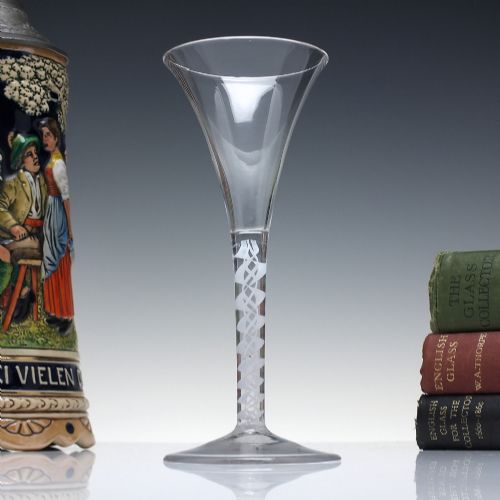
- A type of glass stem enclosing white or coloured enamel threads drawn into spiral patterns. This technique defines many eighteenth-century English wine glasses and ale glasses.
- Armorial
- A design incorporating coats of arms or heraldic crests. These motifs appear frequently on continental European historicist glassware from the nineteenth century.
Enamelled Glass Goblets: Frequently Asked Questions
Were these goblets used for drinking?
Most of these vessels served practical roles for wine, beer, cordials, and champagne during formal dining and social gatherings. Continental roemers and English wine glasses were regular table accessories in their respective periods.
Some highly decorated armorial and commemorative examples functioned primarily as display pieces or presentation items. Their survival often depends on whether they remained in cabinets or saw active service.
How can I distinguish eighteenth-century pieces?
Eighteenth-century examples often feature lead glass bodies with characteristic weight and optical properties. Stem formations frequently include opaque glass twists or air twists enclosed within the glass.
Continental nineteenth-century revival pieces tend to display heavier green or cranberry glass with dense polychrome or white enamel heraldic decoration. Comparing the manufacturing style and glass tint helps clarify the period of origin.
What is Historicism in these glasses?
Historicism refers to nineteenth-century decorative styles that consciously imitated or reinterpreted earlier historical eras, such as Renaissance or medieval aesthetics. German and Bohemian makers produced extensive ranges of historicist roemers and goblets.
These revival pieces utilised traditional enamelling methods to recreate the look of sixteenth and seventeenth-century drinking vessels. They represent a distinct nineteenth-century interpretation rather than original early modern production.