




Green Stem Glass
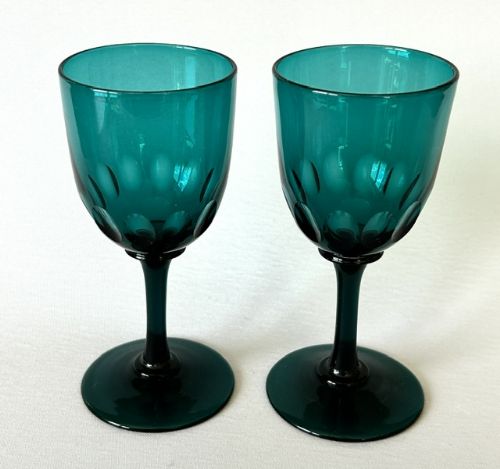
Green stem glass pieces bring brilliant colour to the table, spanning Georgian roemers through to Art Nouveau vessels.
Green Stem Glass
Green stem glass encompasses functional drinking vessels and decorative objects originating from the Georgian period up through the Edwardian era. When searching for green stem glass, collectors frequently encounter Victorian table sets, Georgian roemers, and continental European glassware.
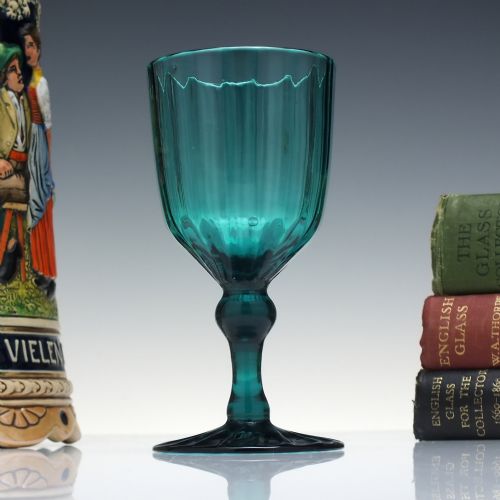
The selections range from tall hock glasses and cordial glasses to robust pedestal bowls and delicate wine goblets. Bristol green and pale aqua shades dominate the surviving examples, often accompanied by matching sets designed for formal dining.
Manufacturing and materials
Many of these items rely on blown glass and lead crystal formed through traditional furnace techniques. Makers utilised coloured glass compounds to achieve distinct hues such as olive, emerald, and turquoise.
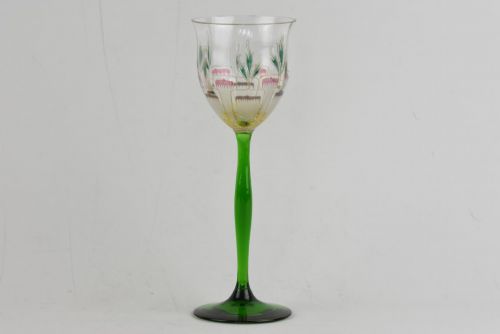
Surface ornamentation frequently incorporates hand-applied enamel decoration, delicate gold leaf details, and rib moulding. Certain pieces feature structural additions like sterling silver bases or hollow stems shaped through skilful manipulation while hot.
Earlier drinkers clearly appreciated a secure grip, given the generous handful of hollow stems left behind in the cupboards.
Evaluating craftsmanship and condition
Superior examples display crisp facet cutting, uniform colour saturation, and securely adhered enamel work without fading or loss. The weight and balance of the stem relative to the bowl indicate the maker's technical skill.
Makers such as Theresienthal and Fritz Heckert achieved notable refinement through meticulous hand-enamelling. Pieces showing crisp detail in floral motifs and smooth, polished pontil marks represent the upper tier of production.
Harry Powell·James Powell·Theresienthal·Frits Heckert
The Green Stem Glass Glossary
- Roemer
- A traditional Germanic drinking vessel featuring a wide bowl atop a cylindrical, hollow stem decorated with applied prunts or ribs. This form gained popularity across Europe for serving white wine.
- Hollow stem
- A tubular stem construction where the interior cavity extends from the bowl down into the foot. This technique required considerable skill by the glassblower.
- Enamel decoration
- An opaque glass mixture applied to the surface of a vessel and fired to fuse permanently with the base material. It often depicts botanical or heraldic motifs in polychrome.
- Rib moulding
- A decorative technique created by blowing molten glass into a ribbed mould to produce parallel ridges on the body or stem. These ridges catch the light and add texture to the piece.
- Pontil mark
- A rough scar left on the base of a vessel where the pontil rod was snapped off after finishing the piece. Skilled makers ground and polished this area smooth.
Green Stem Glass: Frequently Asked Questions
How do I date antique glassware?
Dating involves examining the pontil mark on the base, the composition of the glass, and stylistic indicators such as stem formation. Georgian pieces often exhibit rougher pontil scars and heavier metal.
Later Victorian and Edwardian examples show greater uniformity through improved manufacturing standards. Comparing decorative motifs like Art Nouveau enamel work also helps narrow the production window.
Are these glasses safe to use?
Most antique drinking vessels can handle beverages when treated with proper care and washed by hand. Sudden temperature changes should be avoided to protect the aged material from thermal shock.
Harsh detergents and mechanical dishwashers will damage delicate enamel and gold leaf decorations. Gentle handling preserves both the structural integrity and the decorative surface.
Why are some stems hollow?
Hollow stems allowed glassblowers to reduce the weight of large drinking vessels while maintaining a substantial visual presence on the table. This technique required precise temperature control during shaping.
Georgian and 19th-century makers frequently utilised this method on roemers and wine glasses. The open interior permitted liquid to flow into the stem during use.