


Enamel Brass Decorative Dish
These enamel brass decorative dish pieces bring intricate botanical and avian motifs into interiors through detailed Japanese and Chinese craftsmanship from the eighteenth and nineteenth centuries.
Enamel Brass Decorative Dish
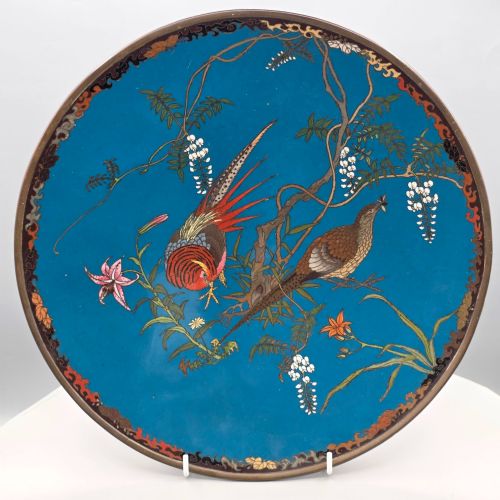
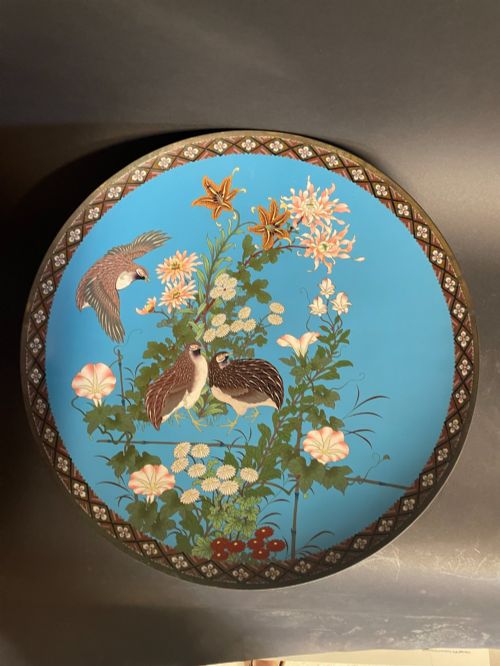
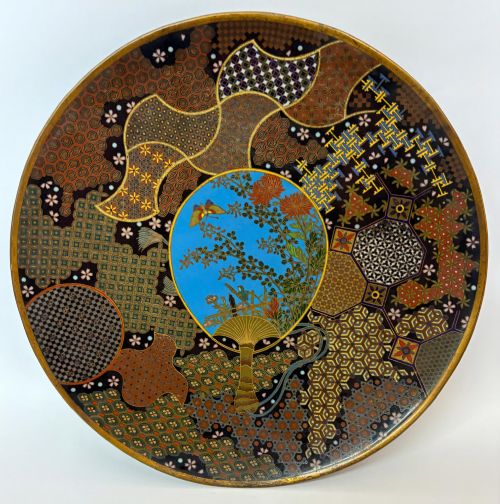
When you search for an enamel brass decorative dish, you encounter substantial chargers, plates, bowls, and trays originating primarily from nineteenth-century Japan alongside select Qing Dynasty pieces. The selection on this page consists heavily of Meiji period Japanese cloisonne chargers and trays depicting birds, flowers, landscapes, and dragons.
Forms span from large wall-hanging chargers measuring over forty centimetres down to lidded bowls and medium display plates. Japanese examples dominate the listings, showing periods from the Edo era through the late Meiji period alongside eighteenth-century Oriental display plaques.
Materials and construction methods
These pieces are built using metal bases of brass, copper, and bronze decorated with vitreous enamel. Artisans applied thin metal wires to form individual cells, known as cloisons, which were then filled with coloured enamel pastes before firing.
The technique relies on precise wire bending to create complex pictorial motifs such as chrysanthemums, irises, phoenixes, and Mount Fuji. Successive firings and polishings yielded smooth surfaces that integrated the metallic framework with vibrant coloured designs.
Among the avian residents inhabiting these metal surfaces, a solitary tiny frog occasionally shares the charger with giant chrysanthemums.
Assessing quality in decorative enamel work
Quality rests upon the intricacy of the wirework and the depth of the pictorial subject matter. Pieces featuring elaborate natural scenes, including birds, butterflies, frogs, and detailed landscapes, demonstrate higher artisan skill than simpler geometric patterns.
The smoothness of the polished enamel surface, the complexity of the colour palette, and the scale of the charger indicate the level of workshop expertise. Larger formats with finely rendered subject matter represent the upper tier of the range.
The Enamel Brass Decorative Dish Glossary
- Cloisonne
- Enamelwork in which coloured pastes are separated by thin metal wires soldered to a metal base. This technique creates distinct compartments for each shade of colour.
- Charger
- A large decorative plate or platter intended for display rather than dining use. These substantial pieces often feature elaborate pictorial designs across a wide centre.
- Meiji Period
- A Japanese historical era spanning from eighteen sixty-eight to nineteen twelve. Work from this time is noted for high technical proficiency in metalwork and ceramics.
- Mon
- A Japanese heraldic badge or emblem used to identify families or clans. These crests frequently appear incorporated into the decorative borders of chargers.
- Qing Dynasty
- The final imperial dynasty of China, lasting from sixteen forty-four to nineteen eleven. Objects from this period demonstrate distinct traditional decorative conventions.
Enamel Brass Decorative Dish: Frequently Asked Questions
How were large chargers displayed originally?
Large chargers were traditionally exhibited on wooden stands or mounted directly onto walls as focal points within principal rooms.
Their substantial weight and decorative pictorial subjects made them suitable for prominent display rather than utilitarian table use.
What subjects appear most frequently on these pieces?
Motifs drawn from nature dominate the designs, including birds such as ibises, owls, and phoenixes alongside flora like chrysanthemums and irises.
Narrative elements also incorporate landscapes featuring Mount Fuji, dragons, and traditional Japanese family crests known as mons.
How do I distinguish Meiji period work?
Meiji period metalwork is identified by particularly fine wirework and complex pictorial compositions depicting natural history subjects with high realism.
The era spans the late nineteenth and early twentieth centuries, marked by increased refinement in cloisonne enamelling techniques.
Are these items intended for food use?
These pieces function purely as decorative art objects rather than tableware for serving food. The delicate enamel surfaces and wire structures are susceptible to wear from cutlery and moisture.
Care should be taken to keep them dry and clean them only with a soft, dry cloth.