

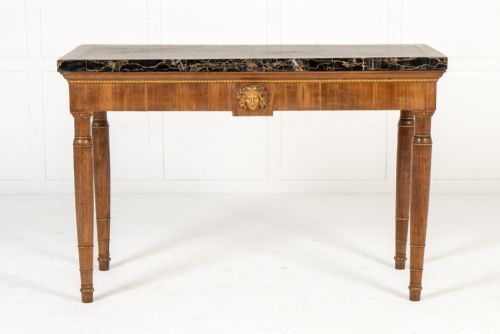


Empire Style Side Table
An empire style side table brings neoclassical dignity to a room, offering striking mahogany and marble surfaces framed by classical mounts.
What these pieces are
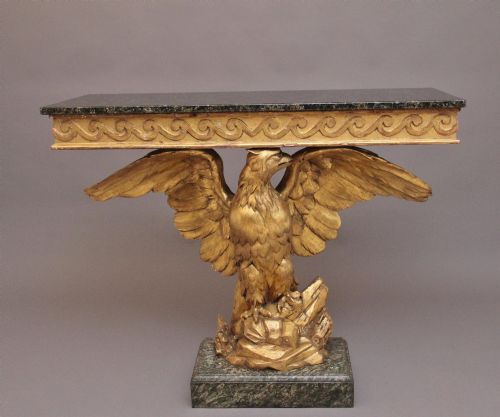
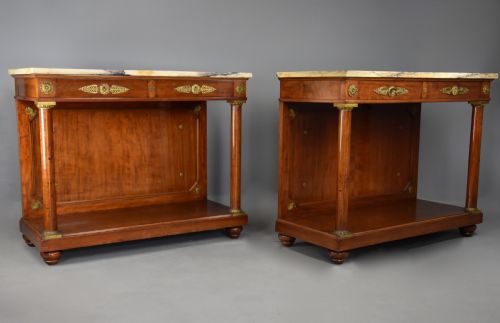
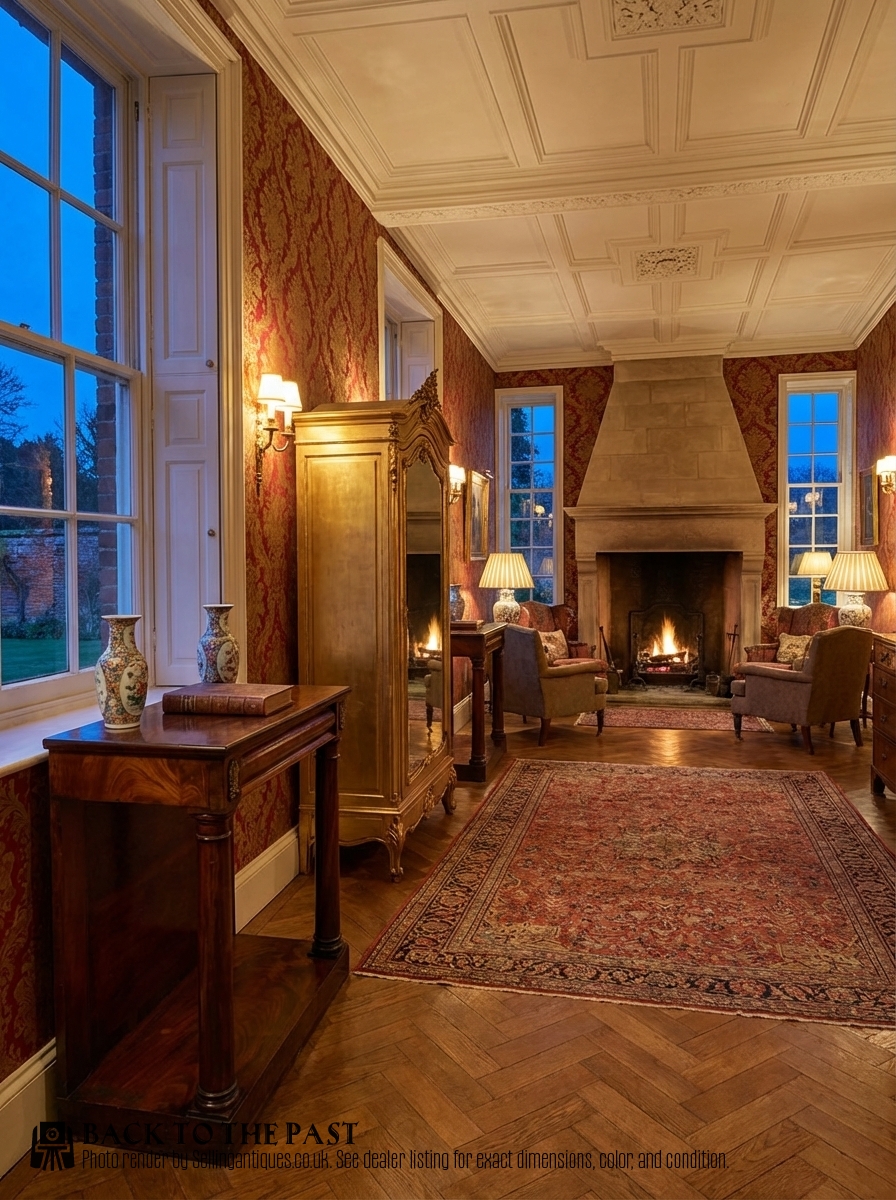
An empire style side table encompasses tripod guéridons, console tables, bedside cabinets, and occasional coffee tables rooted in nineteenth-century classicism. Pieces frequently originate from French workshops or later revival periods, adopting characteristic architectural proportions and substantial circular or rectangular tops.
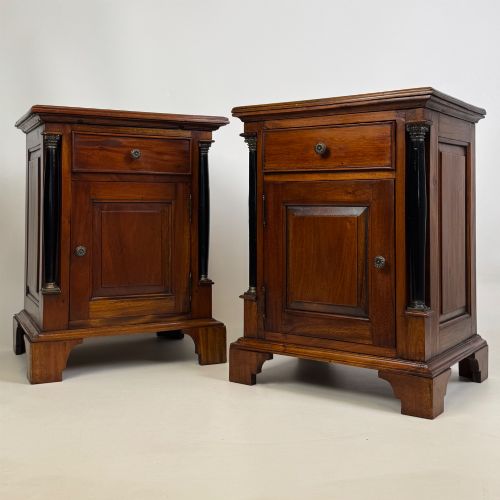
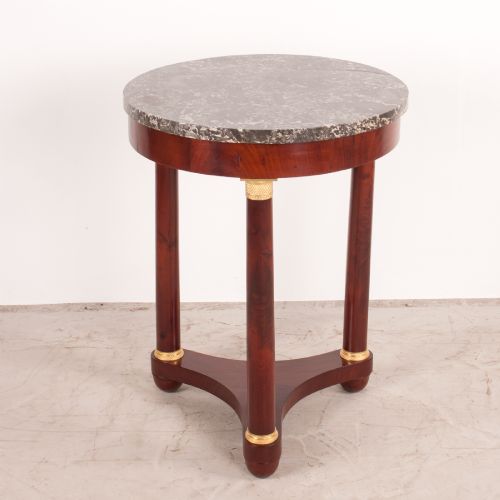
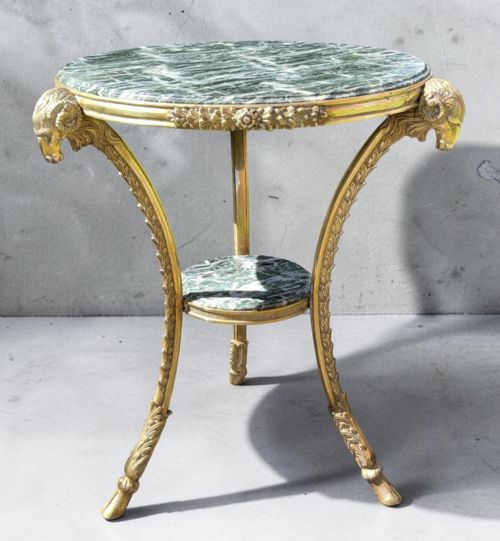
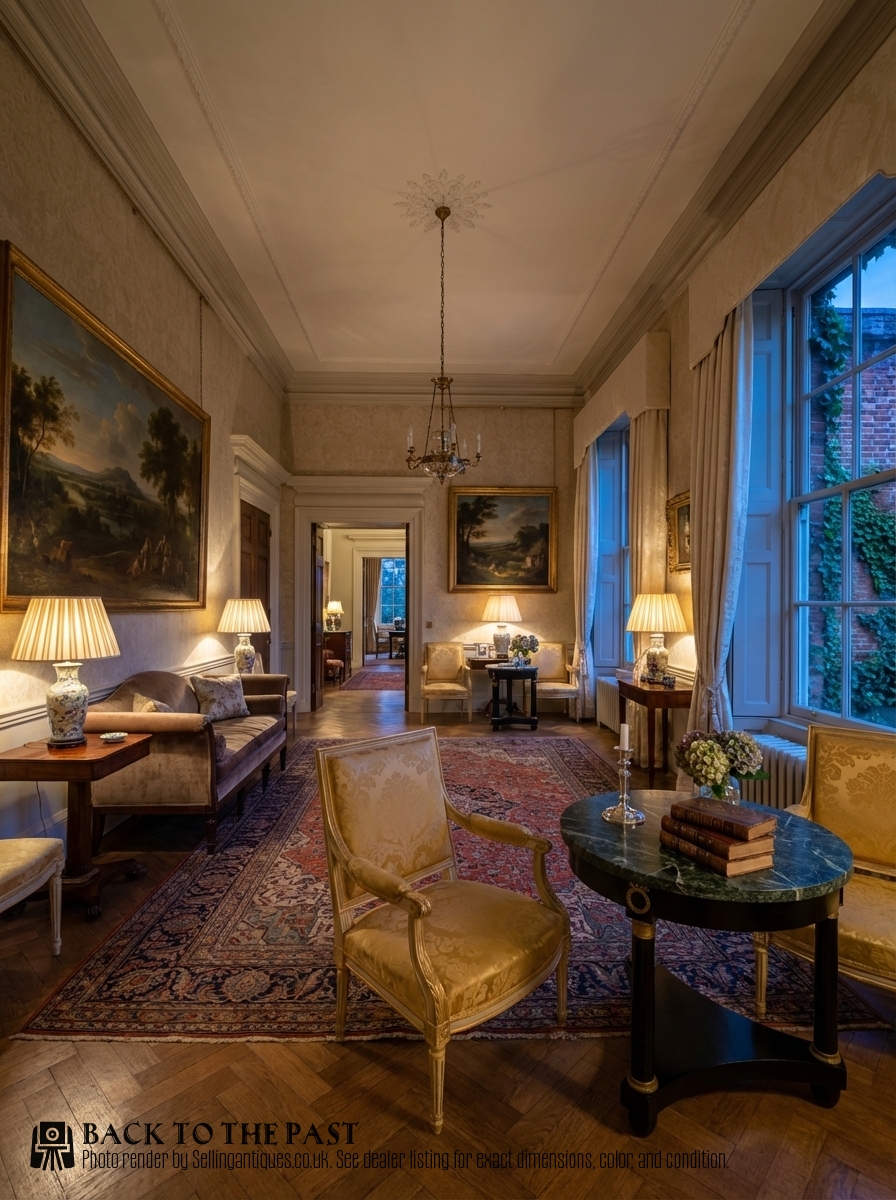
The version most commonly encountered on this page is the French-influenced mahogany guéridon or bedside table, frequently topped with black or white marble and supported on column or sabre legs. Buyers also encounter Swedish and English interpretations of the design, alongside twentieth-century revivals.
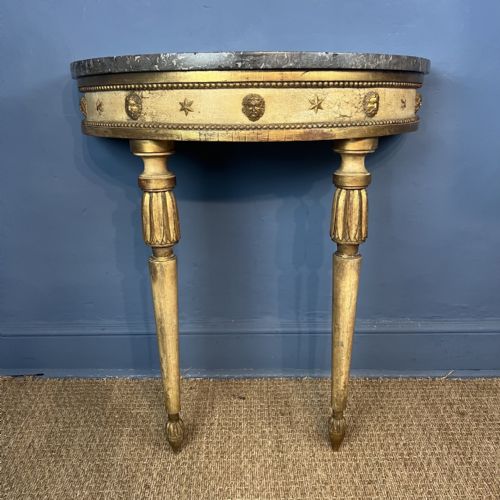
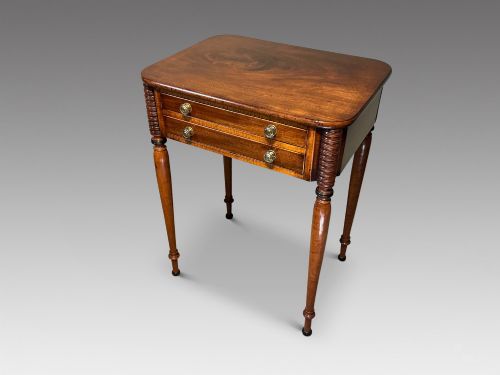
Forms span from slender three-drawer bedside tables to substantial centre tables and wall-anchored console tables. Each piece balances utility with the austere geometric dignity associated with the style.
How they were made
Construction relies heavily on dense mahogany timber, sometimes ebonised or painted and parcel silvered, shaped into structural frames and veneered tabletops. Marble inserts sit flush into fitted wooden frames, providing a cool, hard-wearing surface.
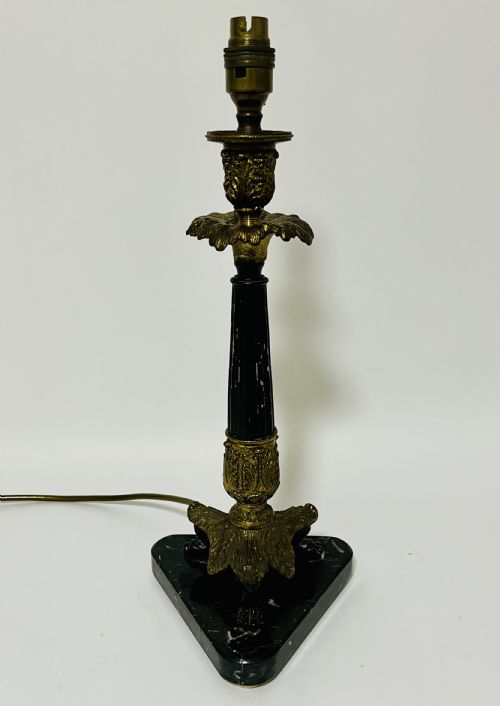
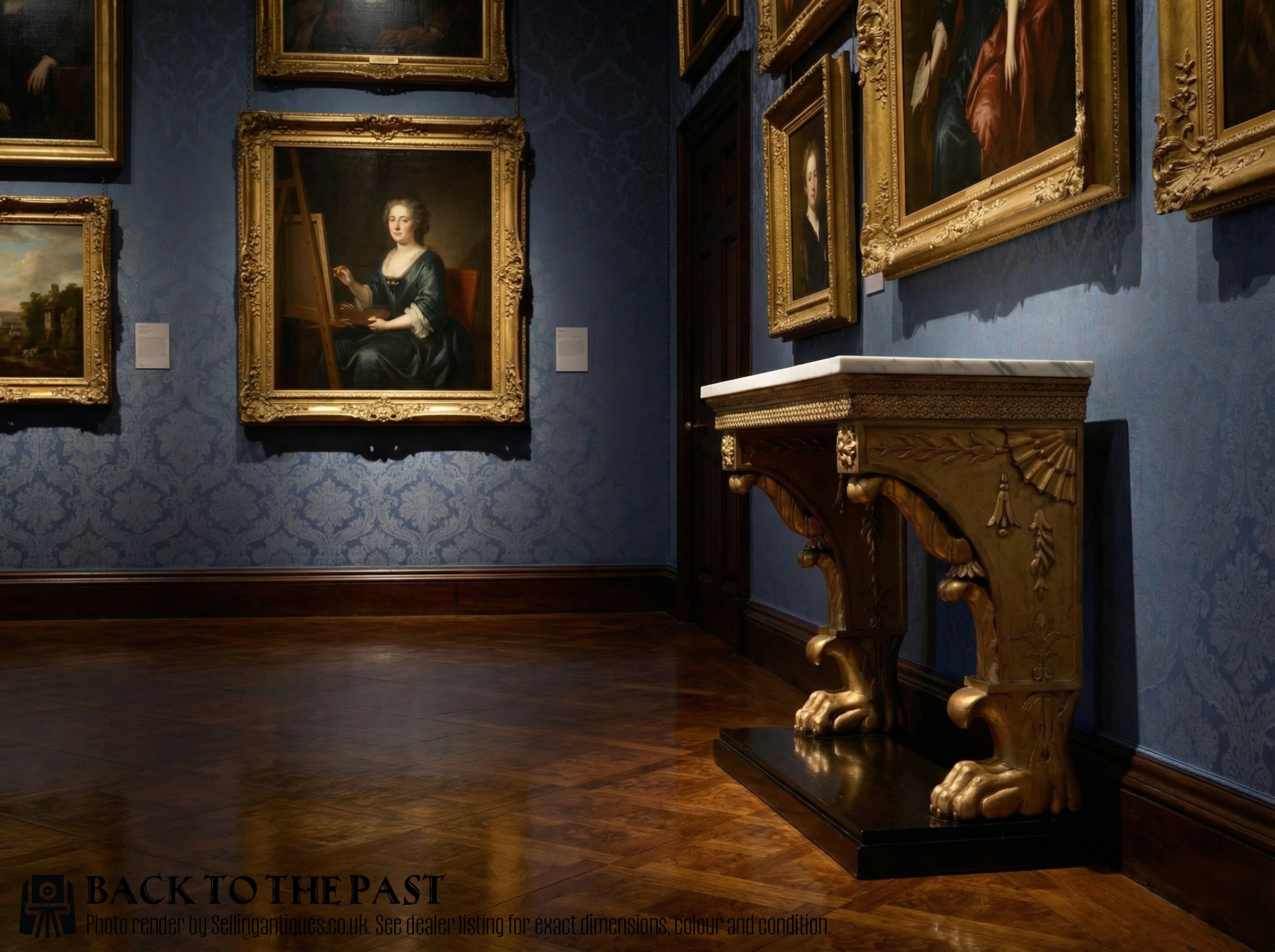
Metal ornament defines the aesthetic, utilising cast brass and gilt bronze, often known as ormolu, for mounts, paw feet, and swan details. Giltwood and gesso are additionally employed on frames to create gilded decorative highlights.
Retail Price Guide 2026
Typical UK retail prices for empire style side table, calculated from the Sellingantiques database of over a million retail prices indexed since 2003. This retail price guide relies exclusively on Sellingantiques data; no external sources or auction records are used, so the figures do not describe the wider market.
Swan details frequently curve along table supports, bringing an unexpected touch of avian grace to austere neoclassical frames.
What varies in quality
Quality rests in the crispness of the cast brass and ormolu mounts, where finely chased details distinguish superior items from coarser commercial work. The weight and selection of the timber, particularly figured mahogany veneers, further separate workshop standards.
The integration of stone tops demonstrates the maker's skill, with accurately fitted marble slabs indicating superior cabinet work. Structural harmony between the classical proportions and the timber base determines the visual success of each piece.
The Empire Style Side Table Glossary
- Ormolu
- Gilt bronze ornamentation applied to furniture. The technique involves coating bronze in a gold amalgam and firing it to leave a rich metallic finish.
- Console table
- A table designed to stand against a wall, traditionally supported by wall brackets or front legs. These pieces often feature rectilinear proportions suited to grand interiors.
- Ebonised wood
- Timber treated to resemble ebony. Dark finishing techniques create a dense black surface that contrasts sharply with gilt bronze mounts.
Frequently Asked Questions
What is an empire style side table?
An empire style side table is a neoclassical piece inspired by early nineteenth-century French design, characterised by formal symmetry and dark woods.
These tables typically feature mahogany construction, marble tops, and classical bronze mounts, serving as functional stands or decorative accents.
Where were these tables made?
Many examples originate from French workshops, though makers across Sweden and England also produced pieces following the aesthetic.
Production spans from the original nineteenth-century period through to later revival periods in the twentieth century.
How do I identify the materials?
Listings commonly record solid or veneered mahogany, alongside inset marble slabs for tabletops and brass or gilt bronze for mounts.
Alternative finishes include ebonised wood, gesso, and painted surfaces with silver or gold highlights.
How do these tables function today?
Buyers use these tables as bedside cabinets, occasional lamp tables, or central display surfaces in living spaces.
Their compact footprints and sturdy stone tops make them practical for everyday use while maintaining a formal period appearance.