




Egyptian Revival Bronze
Egyptian revival bronze pieces capture the enduring fascination with ancient pharaonic motifs, translating monumental forms into domestic sculptures, clocks and decorative objects.
Egyptian Revival Bronze
When you search for egyptian revival bronze, you encounter decorative objects and functional pieces informed by Nile aesthetics, spanning from the Regency period through to the Art Deco era.
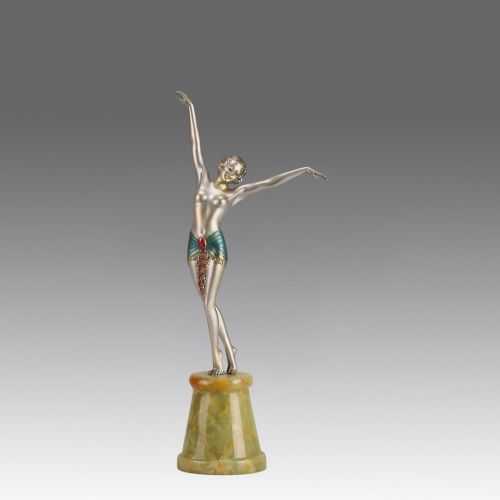
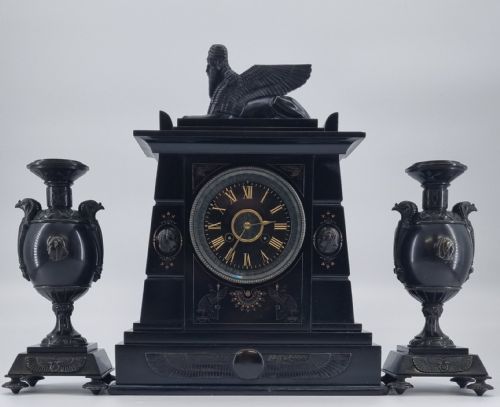
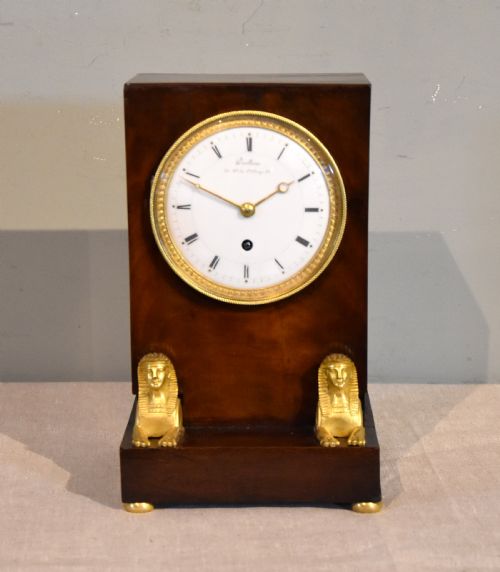
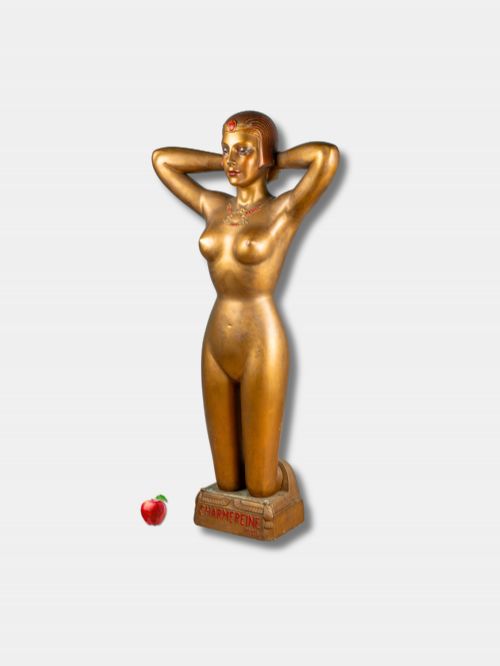
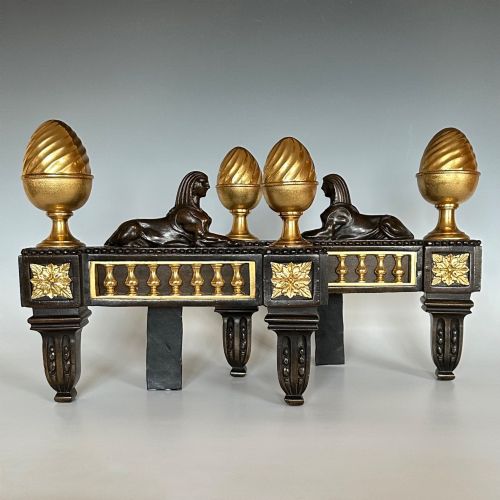
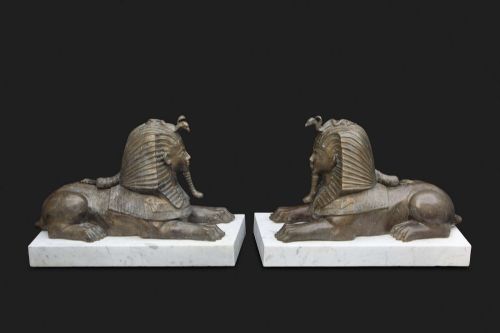
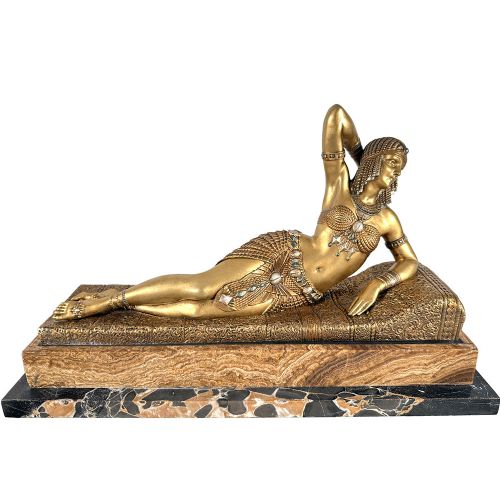
The selections on this page are most frequently encountered as nineteenth-century mantel clocks flanked by sphinxes, patinated sphinx figures on marble plinths, and twentieth-century bronze dancers inspired by ancient themes.
Makers drew directly upon archaeological discoveries, channeling figures like Cleopatra, temple cats and hieroglyphic motifs into domestic French and British interiors.
How They Were Made
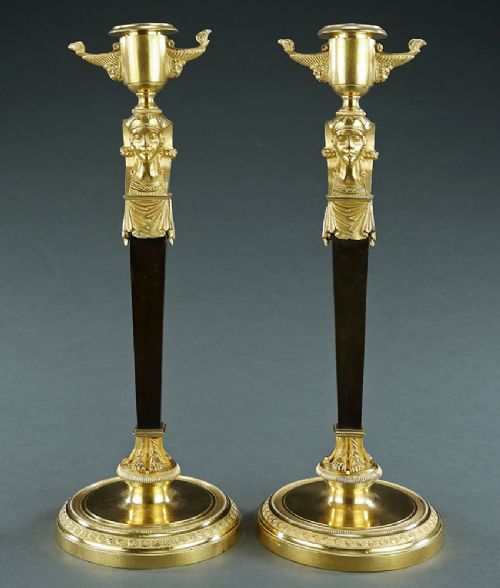
Foundries utilised traditional casting methods to shape bronze, often combining patinated or cold-painted surfaces with gilt bronze highlights to emphasise the intricate costume and architectural details.
Plinths and bases frequently incorporate contrasting materials such as white Carrara marble, black slate, and onyx to elevate the metalwork.
Inlaid metals, including silver and copper upon bronze chargers, demonstrate the skilled hand-finishing present in Cairo Ware and allied workshops.
Egyptian Revival Bronze Retail Price Guide 2026
Typical asking prices for egyptian revival bronze among the pieces listed under this phrase on Sellingantiques today, from the lower quarter to the upper quarter. They describe what is for sale here now, not the wider market.
Listings feature egyptian revival bronze objects spanning the Regency, Victorian, and Art Deco periods, utilising marble, slate, and onyx bases.
What Varies in Quality
The choice and integration of the mounting plinth matter greatly; substantial veined marble or slate bases executed with precision elevate the overall architectural presence of the bronze.
Original surface patination, whether rich cold-painted enamel, dark patination, or fire gilding, preserves the integrity of the piece without obscuring the underlying metalwork.
Josef Lorenzl·Demetre Chiparus·Achille Brocot·Barraud And Lund·Paul Auguste Gagne
The Egyptian Revival Bronze Glossary
- Sphinx
- A mythical creature with the body of a lion and the head of a human, frequently utilised as a dominant sculptural support on clocks, chenets, and mantel garnitures.
- Garniture
- A set of ornamental objects for a mantelpiece, typically comprising a central clock paired with matching candelabras or urns.
- Patination
- The chemical or natural surface coloration of bronze developed over time or applied by the foundry to accentuate depth and detail.
- Ormolu
- Gilt bronze mounted decoratively on furniture, clocks, or sculptures, created by applying a mercury-gold amalgam to the bronze base.
- Shabti
- A small funerary figurine placed in ancient Egyptian tombs, rendered here in bronze or gilt metal on marble plinths during the nineteenth century.
Egyptian Revival Bronze: Frequently Asked Questions
How do I identify a nineteenth-century piece?
Nineteenth-century examples frequently rely on architectural bronze casting paired with black slate or marble bases, often incorporating neoclassical French movements or Grand Tour motifs.
Clocks and candelabras from this period demonstrate heavier metal gauges and deep patination consistent with Regency and Victorian archaeological enthusiasm.
Where were these bronzes produced?
The majority of these decorative objects originate from specialised foundries in Paris and London, which dominated the European market for revivalist mantel clocks and sculptural editions.
Craftsmen in these urban workshops combined classical European casting techniques with newly discovered Pharaonic iconography.
How do Art Deco pieces differ?
Art Deco interpretations from the nineteen-twenties and thirties focus heavily on theatrical figures, such as dancers portraying Cleopatra or the Egyptian Helen, rendered with sleek lines.
These later works frequently employ cold-painted bronze alongside stepped marble or onyx bases rather than the architectural clock cases of the previous century.
What is a Grand Tour bronze?
Grand Tour bronzes were acquired by travellers visiting Mediterranean antiquities during the nineteenth century, serving as portable mementoes of archaeological sites.
These smaller figures and lion fountain heads capture the direct study of ancient relics popular among collectors of the era.