

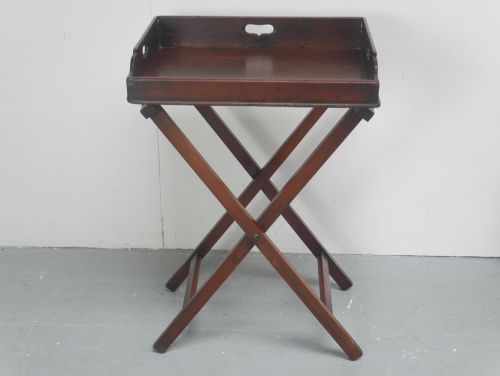
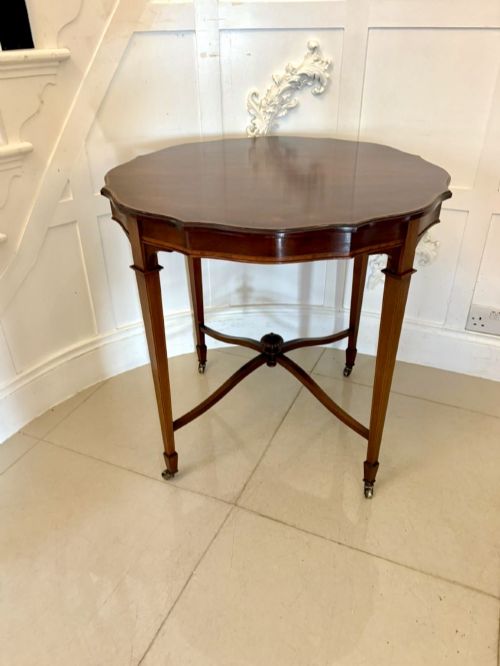
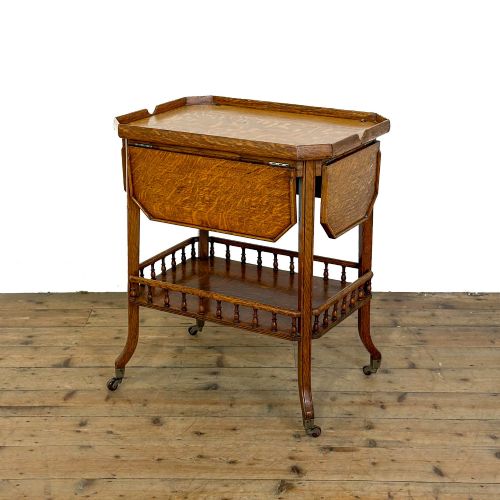
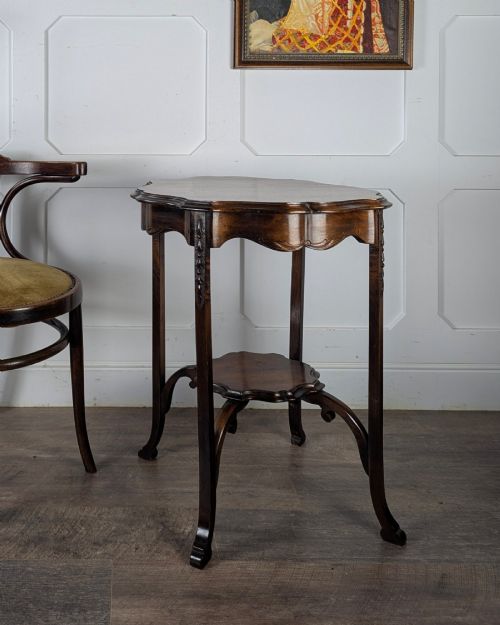
Edwardian Wooden Tea Table
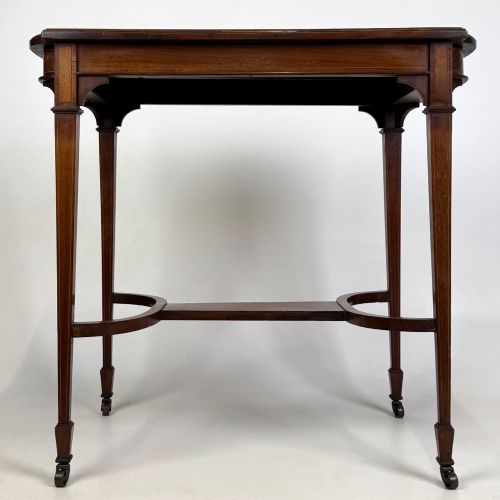
An edwardian wooden tea table brings afternoon hospitality into the room, combining practical surface space with refined period cabinetmaking.
Edwardian Wooden Tea Table
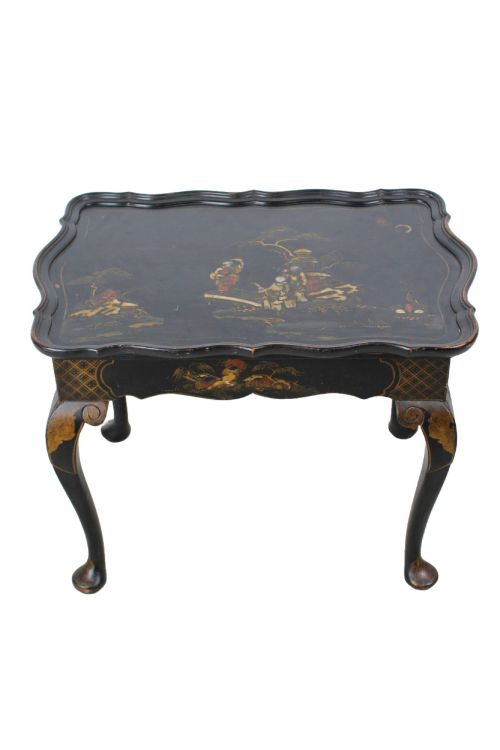
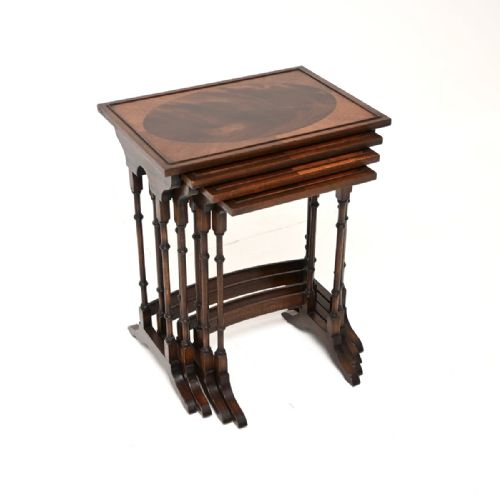
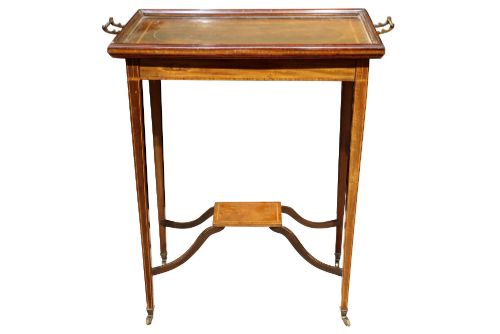
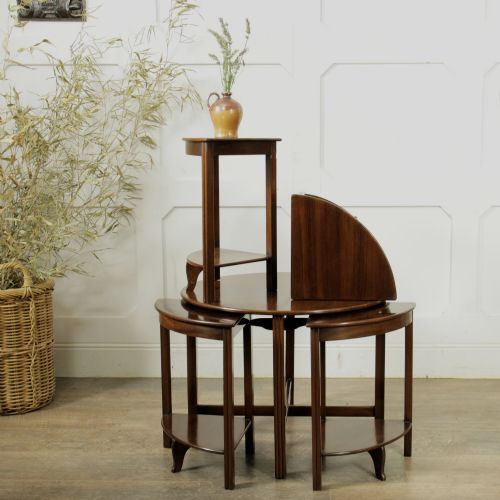
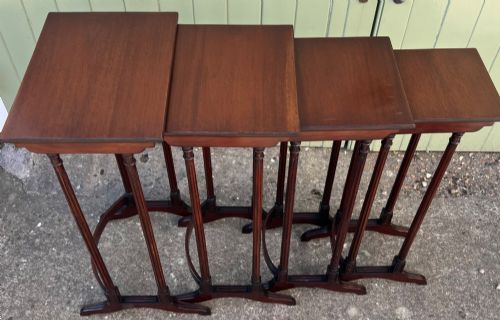
An edwardian wooden tea table encompasses various domestic serving and display surfaces, including occasional tables, nests of tables, tray tops, and trolleys designed for the drawing room. These pieces reflect the leisurely social habits of the early twentieth century, offering portable or fixed platforms for hosting visitors.
While many items date strictly to the Edwardian period, related pieces span from the late nineteenth century into the 1930s, incorporating Georgian styles and revival aesthetics.
Materials and construction
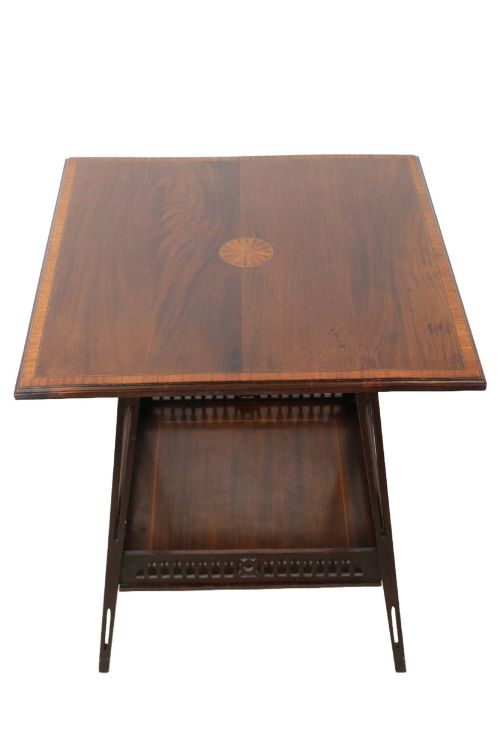
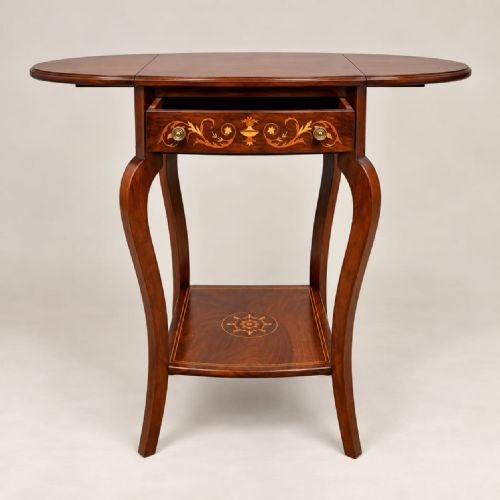
Makers relied principally on timber such as mahogany, oak, and walnut, frequently enhancing plain surfaces with contrasting satinwood and boxwood inlay or marquetry. Brass fittings and glass components also appear on trolleys and tray tables.
Joinery methods reflect durable workshop practices of the era, utilising stable frames for folding mechanisms, drop leaves, and multi-tiered trolleys. Surfaces were finished to highlight natural wood grains alongside decorative stringing and geometric banding.
Listings feature oak, mahogany, walnut, and satinwood across side tables, nests, and tea trolleys.
Assessing craftsmanship and finish
Quality rests upon the crispness of the timber selection, particularly in figured mahogany or burr walnut veneers, and the precision of the contrasting inlay work. Finer items demonstrate careful attention to edge banding and structural stability in legs and joints.
The sophistication of the hardware and the integrity of the mechanism distinguish standard production from superior workshops. Original patination and intact surface polish hold greater appeal than heavy restoration.
Trevor Page & Co·Shapland and Petter
The Edwardian Wooden Tea Table Glossary
- Satinwood
- A light-yellow timber often utilised for contrasting stringing and decorative marquetry panels. It provides a bright visual accent against darker woods like mahogany.
- Sutherland table
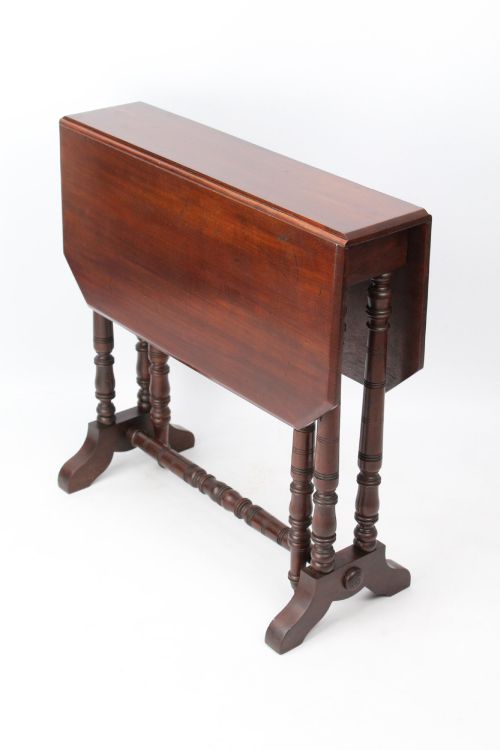
- A narrow drop-leaf table with hinged flaps that fold down almost vertically. This design allows the piece to occupy minimal floor space when not in use.
- Marquetry
- The art of applying pieces of veneer to a structure to form decorative patterns and pictorial designs. It requires high technical skill from the cabinetmaker.
- Barley twist
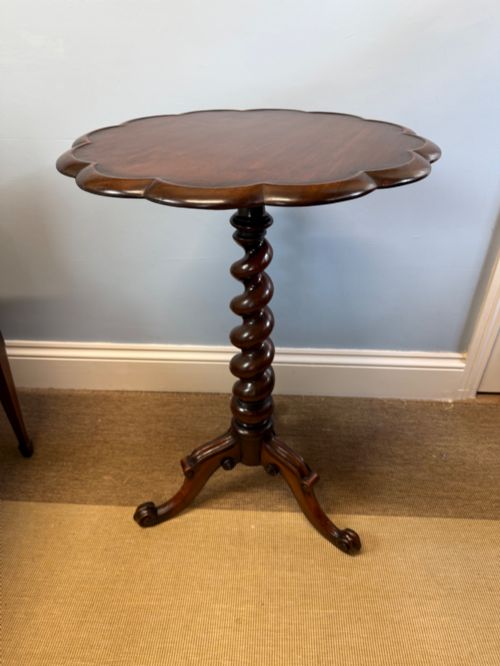
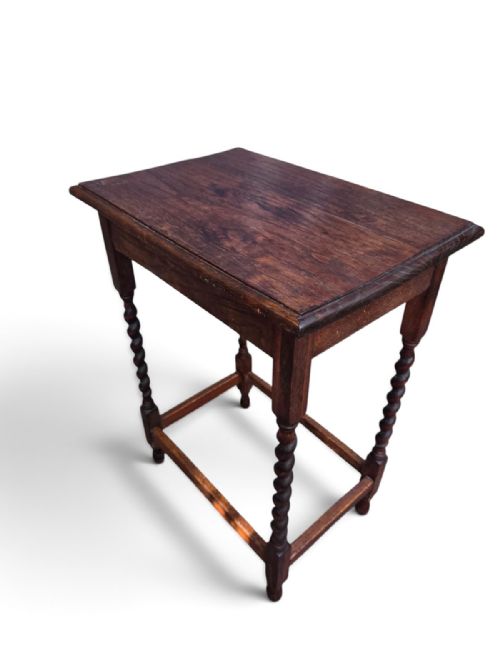
- A type of turning shaped like a helix, resembling a twisted rope. This decorative woodworking detail appears frequently on the legs and supports of oak pieces.
- Drop leaf
- A hinged tabletop section that can be raised and supported by swinging brackets or legs. It offers flexibility in surface area for serving and dining.
Edwardian Wooden Tea Table: Frequently Asked Questions
What is an edwardian wooden tea table used for?
These tables served primarily for afternoon tea service, holding teapots, cups, and porcelain plates in the drawing room or parlour.
Today, they function flexibly as lamp tables, display surfaces, or occasional furniture in sitting rooms.
Are nest of tables practical?
A nest of tables provides multiple surfaces that stack neatly together to save floor space when guests depart.
Individual tables can be easily distributed around a room to hold drinks, books, or lamps.
What woods were used?
Makers most frequently worked with mahogany, oak, and walnut as primary framing and surface materials.
Satinwood and boxwood frequently provided contrasting details for stringing and geometric inlays.